

A profitable backtest does not prove that a trading strategy works. It proves only one thing: the strategy performed well under a specific set of historical market conditions. Many trading systems produce impressive historical results before failing within weeks of being deployed in live markets.
Others survive for years because they have been thoroughly tested across different market environments, data sets, and validation methods. The difference is rarely luck — it is usually strategy validation.
Trading strategy validation is the process of determining whether a trading strategy is genuinely robust or simply appears profitable because of favorable historical data, chance, or over-optimization. Professional traders, quantitative researchers, and hedge funds rarely trust a strategy after a single successful backtest. Instead, they subject it to multiple layers of validation designed to answer one critical question: will this strategy still perform when the future looks different from the past?
“Backtests are necessary, but they are far from sufficient.” — Marcos Lopez de Prado
That statement captures one of the most important principles in systematic trading: historical profitability is the starting point, not the finish line. In this guide, you’ll learn what trading strategy validation is, why it matters, the professional validation workflow, the most common mistakes traders make, and how experienced strategy developers decide whether a trading system is ready for live deployment.
- What Is Trading Strategy Validation?
- Validation vs Verification
- Why Validation Matters
- The Validation Lifecycle
- Why a Profitable Backtest Is Not Enough
- How Do You Validate a Strategy?
- How Long Does Validation Take?
- The Core Components of Validation
- What Each Stage Answers
- Why Most Strategies Fail Validation
- More Than Performance Metrics
- Why Robust Validation Matters
- Can AI Replace or Improve Validation?
- When Is a Strategy Ready for Live Trading?
- Common Mistakes
- Validation Checklist
- Final Verdict
- FAQ
- References
What Is Trading Strategy Validation?
Trading strategy validation is the systematic process of evaluating whether a trading strategy is reliable, repeatable, and capable of performing beyond the historical data used during development. The objective is not simply finding profitable strategies; it is determining whether those profits are likely to be sustainable under changing market conditions.
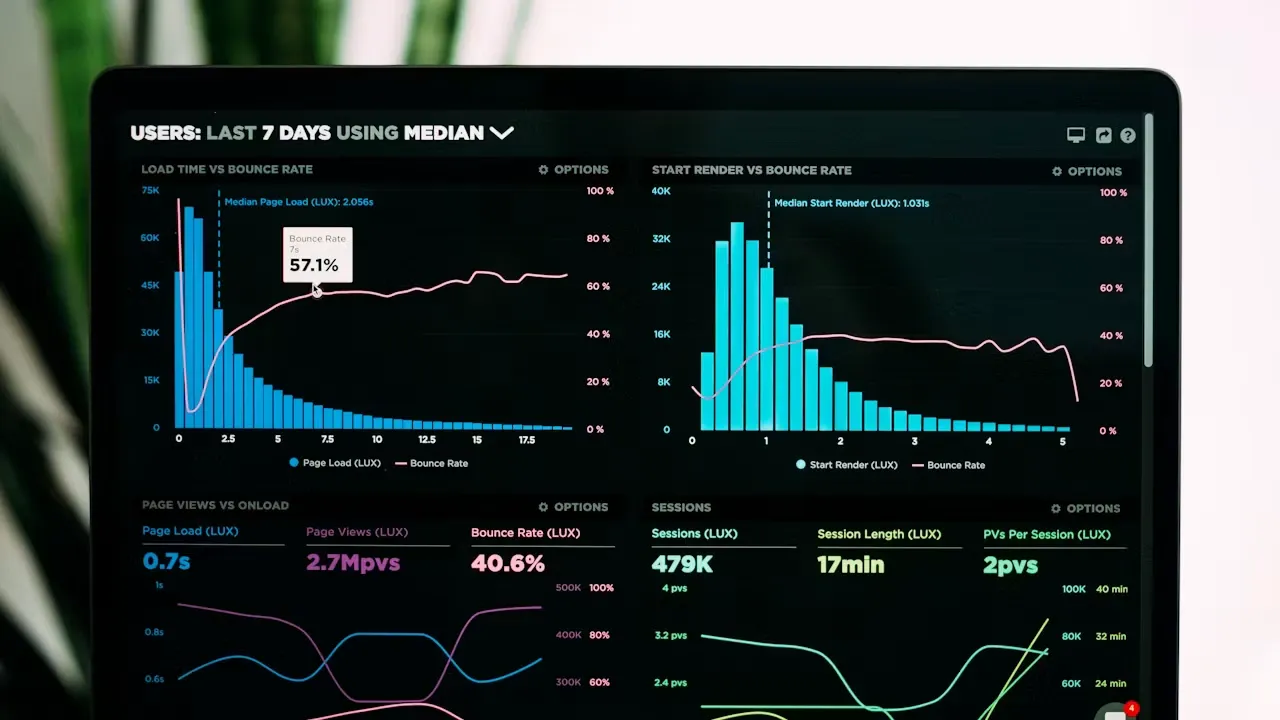
Validation attempts to answer questions such as: Does the strategy rely on genuine market behavior? Can it survive unseen market data? Is performance consistent across different time periods? Is profitability the result of robust logic or overfitting? Are the results realistic after commissions, slippage, and execution costs? A validated strategy has demonstrated evidence that its historical performance is not merely the product of chance — it has been challenged from multiple perspectives before risking real capital. This is why professional strategy validation extends far beyond backtesting alone. A complete process often includes historical backtesting, out-of-sample testing, walk forward analysis, forward testing, performance metric evaluation, stress testing, and ongoing monitoring after deployment. Each stage reduces uncertainty while increasing confidence in the strategy’s robustness. No validation process can eliminate risk entirely; its purpose is to reduce avoidable mistakes before they become expensive.
Validation vs Verification: What’s the Difference?
The terms validation and verification are often used interchangeably, but they describe different stages of evaluating a trading strategy. Verification asks whether the strategy has been implemented correctly. Validation asks whether the strategy is actually worth trading. In simple terms, verification focuses on correctness while validation focuses on robustness.
| Verification | Validation |
|---|---|
| Is the strategy implemented correctly? | Is the strategy robust enough for live trading? |
| Focuses on software correctness | Focuses on trading performance |
| Usually performed during development | Continues throughout strategy evaluation |
| Answers “Did we build it correctly?” | Answers “Did we build the right strategy?” |
For example, a developer may verify that entry rules execute correctly, stop-loss orders trigger as expected, calculations are accurate, and the algorithm behaves according to its specifications. Validation begins after that: it evaluates whether those correctly implemented rules produce reliable results across different market conditions. A trading system can pass verification and still fail validation if its underlying logic lacks a genuine market edge.
Why Trading Strategy Validation Matters
Financial markets constantly evolve. Liquidity changes, volatility changes, and participants change. Even strategies that performed exceptionally well in previous years may struggle when market conditions shift. Without proper validation, traders often deploy strategies that appear profitable but fail almost immediately in live trading. Some of the most common reasons include overfitting historical data, unrealistic execution assumptions, insufficient historical samples, market regime changes, survivorship bias, and data quality issues.
Validation helps identify these weaknesses before real money is exposed. It also improves decision-making by replacing assumptions with measurable evidence. Rather than asking “Did this strategy make money?”, professional traders ask “Has this strategy earned the right to trade live?” That subtle difference often separates disciplined research from speculative experimentation.
The Trading Strategy Validation Lifecycle
Professional strategy development follows a structured algorithmic trading workflow. Validation is not a single test — it is a sequence of increasingly demanding evaluations. Each stage answers a different question: Backtesting asks whether the idea worked historically, while forward testing verifies behavior using live market data without meaningful financial risk. A direct comparison of backtesting vs forward testing explains what each stage can and cannot prove.
Only after successfully completing these stages do professional traders generally consider allocating real capital. Skipping steps increases uncertainty; completing each layer improves confidence — not certainty — that the strategy is sufficiently robust.

Professional trading strategies pass through multiple validation stages before capital is committed to live markets.

Each successful validation stage increases confidence in a strategy. Confidence grows through accumulated evidence — not through a single successful backtest.
Why a Profitable Backtest Is Not Enough
One of the most common misconceptions among new traders is believing that a profitable backtest automatically validates a strategy. It does not. A backtest evaluates performance using historical data; it cannot determine whether the same strategy will remain effective when future market conditions differ. For example, a strategy may produce a Sharpe Ratio of 2.1, a Profit Factor of 1.9, and a Maximum Drawdown of only 8% during historical testing. Those statistics appear impressive. However, they may have resulted from overfitting, look-ahead bias, survivorship bias, unrealistic assumptions, or simple statistical luck.
Without additional validation, it is impossible to know whether the apparent edge is genuine. This is why experienced quantitative researchers view backtesting as the beginning of validation, not its conclusion.
“All models are wrong, but some are useful.“ — George Box
The objective of validation is determining whether a trading model is useful enough to survive the uncertainty of real markets.
How Do You Validate a Trading Strategy?
Validating a trading strategy is not about proving that it made money in the past. It is about determining whether the strategy is likely to continue performing under conditions that differ from those used during development. Professional validation follows a structured framework rather than relying on a single test.
Step 1: Build the Strategy
Every validation process begins with a clearly defined trading strategy. Traders who need to formalize objective entry, exit, and position-sizing rules can use AlgoBuild as a no-code trading strategy builder before beginning validation. If two traders following the same rules produce different trades, the strategy is not yet ready for validation.
The entry rules, exit conditions, position sizing, and risk management rules should all be objective and repeatable. These controls belong to a broader algorithmic trading risk management framework.
Step 2: Run a Historical Backtest
Backtesting evaluates how the strategy would have performed using historical market data. The complete backtesting guide explains how data quality, costs, and execution assumptions affect those results.
This stage helps answer questions such as whether the strategy was historically profitable, how large historical drawdowns were, whether performance was consistent, and which market environments produced the best results. A strong backtest is encouraging, it is not confirmation.
Step 3: Test on Out-of-Sample Data
The strategy should then be evaluated using historical data that was never used during development. Out-of-sample testing helps determine whether the trading logic generalizes beyond the data used for optimization. Strategies that perform well both in-sample and out-of-sample are generally more robust than those succeeding only during development.
Step 4: Perform Walk Forward Analysis
Walk Forward Analysis repeatedly re-optimizes and validates the strategy across multiple historical periods. Instead of asking whether the strategy worked once, it asks whether the strategy continues adapting successfully as markets evolve. This step often reveals whether profitability depends on a single favorable market period or reflects a durable trading edge.
Step 5: Forward Test the Strategy
Historical testing eventually reaches its limit. Forward testing evaluates the strategy using live market data without risking meaningful capital. This stage verifies signal generation, execution logic, market behavior, and operational stability. Unexpected issues frequently appear during forward testing even when historical validation looked excellent.
Step 6: Monitor Before Scaling
Even after successful validation, professional traders rarely deploy maximum capital immediately. Instead, they monitor execution quality, slippage, order fills, changing market conditions, and performance stability. Validation continues after deployment because markets never stop changing. Successful strategy validation is therefore an ongoing process rather than a one-time event.
How Long Does Strategy Validation Take?
There is no fixed timeframe for validating a trading strategy. The required duration depends on the trading frequency, the available historical data, the complexity of the strategy, and the markets being traded. For example, an intraday strategy may generate hundreds of trades within a few months, allowing statistical confidence to build relatively quickly. A long-term trend-following strategy may require years of historical data and extended forward testing before meaningful conclusions can be drawn.
Rather than validating a strategy for a predetermined number of days or months, professional researchers focus on collecting sufficient evidence across multiple market environments. Validation should continue until the strategy demonstrates both consistency and robustness — not simply profitability.
The Core Components of Trading Strategy Validation
Although every research team has its own workflow, most professional validation processes include the same core components. Each answers a different question about the strategy, and none of these methods replaces another — each provides a different layer of evidence. The strongest trading strategies perform well across multiple validation techniques rather than excelling in only one.
| Validation Method | Primary Purpose |
|---|---|
| Backtesting | Tests historical profitability |
| Out-of-Sample Testing | Evaluates unseen historical data |
| Walk Forward Analysis | Measures robustness across changing markets |
| Forward Testing | Verifies performance using live market data |
| Paper Trading | Confirms operational readiness before risking capital |
| Performance Metrics | Evaluates profitability, risk, and consistency |
| Robustness Testing | measures resilience under adverse market conditions
by challenging parameters, costs, execution assumptions, and market regimes. |

Confidence increases as a strategy successfully passes each additional stage of validation before reaching live trading.
What Each Validation Stage Answers
Each stage reduces uncertainty from a different perspective. Skipping one stage increases the likelihood that important weaknesses remain undiscovered.
| Validation Stage | Question Answered |
|---|---|
| Backtesting | Did it work historically? |
| Out-of-Sample Testing | Does it generalize to unseen data? |
| Walk Forward Analysis | Is it stable across changing market conditions? |
| Forward Testing | Does it behave correctly in live markets? |
| Paper Trading | Is execution operationally reliable? |
| Live Trading | Does the strategy survive real market conditions? |
Why Most Strategies Fail Validation
Many strategies appear profitable during development but fail long before reaching live deployment. These weaknesses help explain why trading bots fail after deployment even when the original backtest appears strong.
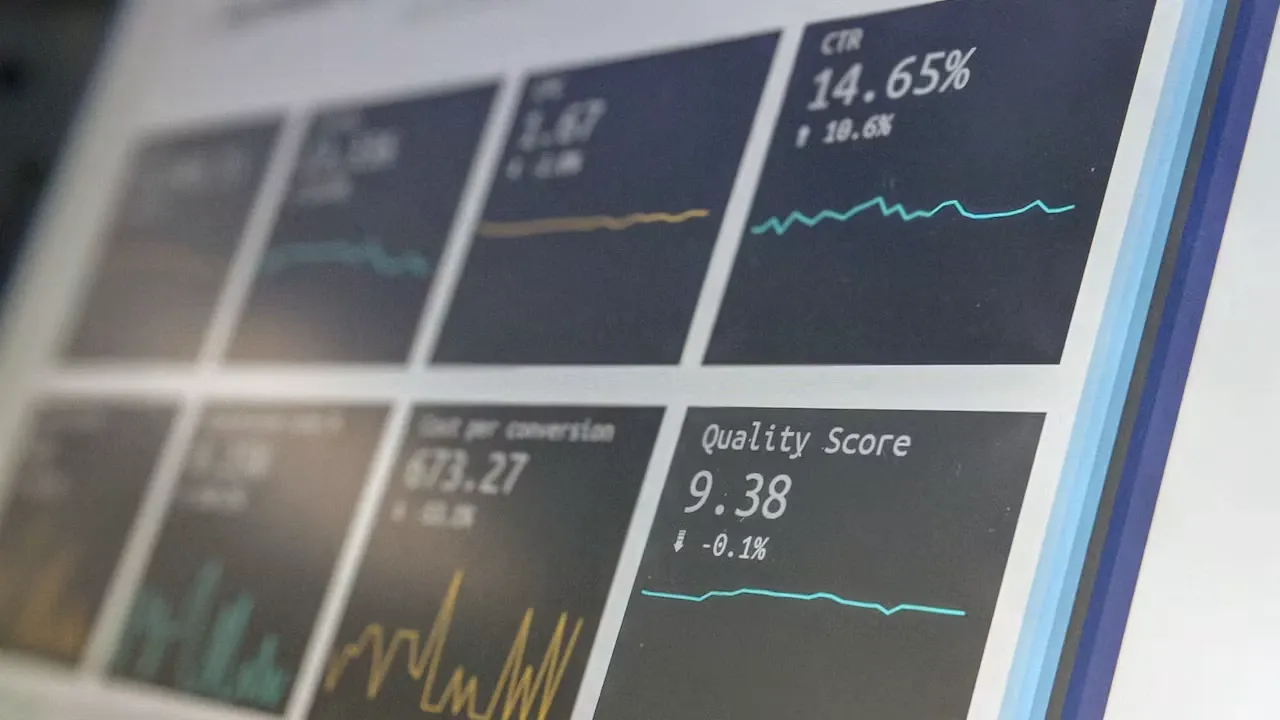
Overfitting
One of the biggest causes of validation failure is overfitting. An overfitted strategy learns historical market noise instead of genuine market behavior. As a result, it performs exceptionally well in a backtest but struggles when market conditions change.
Insufficient Historical Data
Strategies tested over only a few months — or during a single market regime — may produce misleading results. A longer testing period generally provides greater confidence that performance is not the result of chance.
Unrealistic Execution Assumptions
Ignoring commissions, slippage, spreads, and execution delays can significantly inflate historical performance. A strategy that appears profitable under perfect execution may become unprofitable once realistic trading costs are included.
Market Regime Changes
Markets evolve continuously. Strategies optimized for trending markets may struggle during ranging environments. Validation should therefore include multiple market conditions rather than a single favorable period.
Ignoring Risk Metrics
Many traders focus almost exclusively on returns. Professional researchers evaluate trading strategy performance metrics such as Maximum Drawdown, Sharpe Ratio, Profit Factor, Recovery Factor, trade expectancy, and portfolio volatility. Strong returns accompanied by excessive risk often fail professional validation standards.
Strategy Validation Is More Than Performance Metrics
Many traders assume that excellent statistics automatically validate a strategy. They do not. A strategy may report a Profit Factor above 2, a Sharpe Ratio above 2, and a Maximum Drawdown below 10% and still fail validation. Why? Because strong historical metrics do not necessarily prove that the underlying trading logic is robust.
Professional validation examines both results and process. A strategy should produce attractive performance metrics because its logic captures a repeatable market behavior — not because it was excessively optimized to historical data. Validation therefore combines quantitative measurements with critical analysis of how and why the strategy performs under different market conditions.
Data Insight: Why Robust Validation Matters
Successful trading strategies are not defined by impressive backtests alone. They are defined by their ability to continue performing when market conditions inevitably change.
Academic research has repeatedly shown that strategies optimized exclusively on historical data often fail to deliver similar results out of sample. For this reason, institutional investors rely on layered validation rather than a single historical simulation. Robert Pardo, widely regarded as one of the pioneers of Walk Forward Analysis, has argued that the objective is not to find the best historical strategy, but the strategy most likely to survive the future. Similarly, Marcos Lopez de Prado emphasizes that robust validation is essential because historical success can easily result from statistical luck rather than genuine market inefficiencies.
These perspectives reflect a common principle across quantitative finance: confidence should be earned through multiple independent validation methods — not through one impressive equity curve.
Can AI Replace or Improve Strategy Validation?
Artificial intelligence cannot replace validation, but it can accelerate it. AI can identify patterns, detect anomalies, and compare large numbers of simulations far faster than manual analysis. However, a trading strategy must still demonstrate robustness through independent testing across historical data, unseen market conditions, and live market observations.
AI improves the efficiency of validation; it does not eliminate the need for it. Traders using complex models should also understand the risks of AI trading systems, including model drift, data quality problems, and feature decay.
In practice, AI-assisted validation can help detect parameter instability, identify potential overfitting, compare multiple optimization results, analyze strategy robustness across market regimes, recognize unusual changes in performance, and summarize weaknesses discovered during testing. Even so, AI should be viewed as an analytical assistant rather than a replacement for rigorous validation. A model cannot guarantee that a trading strategy will succeed in live markets, and human judgment remains essential when interpreting validation results and deciding whether a strategy is ready for deployment.
When Is a Trading Strategy Ready for Live Trading?
There is no single statistic that determines whether a strategy is ready. Instead, professional traders look for a combination of evidence.

A strategy is generally considered ready only after it demonstrates consistent historical profitability, acceptable drawdown, stable performance metrics, successful out-of-sample and walk-forward results, satisfactory forward testing, and realistic execution assumptions. Buyers comparing verified trading strategies on AlgoNetwork should review this evidence before allocating capital.
Even then, experienced traders typically begin with limited capital. The objective is not eliminating uncertainty — it is reducing unnecessary uncertainty before meaningful capital is exposed.
Common Mistakes in Trading Strategy Validation
Even experienced traders sometimes undermine their own research by making avoidable validation mistakes. The most common include:
Relying Only on Backtesting
Historical profitability alone does not validate a strategy. Additional testing is essential.
Optimizing Until the Strategy Looks Perfect
Excessive optimization often produces strategies that fit historical data exceptionally well while performing poorly in live markets.
Ignoring Execution Costs
Strategies should always include commissions, spreads, slippage, financing costs, and realistic execution assumptions. Ignoring these factors frequently produces misleading results.
Evaluating Only Returns
Returns alone provide an incomplete picture. Professional validation always considers risk, consistency, robustness, recovery, and capital preservation.
Stopping Validation Too Early
Validation should continue after deployment. Markets evolve continuously, and strategies that worked last year may require adjustments as market conditions change.
Trading Strategy Validation Checklist
Before allocating significant capital, many professional traders verify that every major validation step has been completed: objective trading rules, sufficient historical data, realistic backtesting assumptions, out-of-sample testing, Walk Forward Analysis, forward testing, paper trading, performance metric review, stress testing, validated risk management, verified execution assumptions, and post-deployment monitoring. A strategy that satisfies each item has generally earned significantly greater confidence than one evaluated solely through historical profitability.

A robust trading strategy passes multiple independent validation stages before capital is deployed.

Professional traders treat validation as a sequence of evidence rather than a single pass-or-fail test.
Final Verdict
Trading strategy validation is not about proving that a strategy worked yesterday. It is about determining whether there is sufficient evidence to believe it may continue working tomorrow. A profitable backtest is an encouraging first step, but it represents only one stage of a much broader validation process. Professional strategy developers combine historical testing with out-of-sample analysis, Walk Forward Analysis, forward testing, paper trading, performance metrics, and ongoing monitoring to evaluate both profitability and robustness.
Modern strategy research platforms increasingly bring these validation methods together, automatically calculating metrics such as Maximum Drawdown, Sharpe Ratio, Profit Factor, Recovery Factor, and other validation statistics. Evaluating these measurements as a complete framework helps traders make more informed deployment decisions instead of relying on any single number. The objective of validation is not to eliminate uncertainty — that is impossible. The objective is to reduce avoidable risk, identify weaknesses before they become expensive mistakes, and build confidence that a strategy deserves the opportunity to trade with real capital.
Frequently Asked Questions
What is trading strategy validation?
Trading strategy validation is the process of determining whether a trading strategy is robust enough to perform beyond the historical data used during development. It combines multiple testing methods rather than relying on a single backtest.
How do you validate a trading strategy?
Professional validation typically includes historical backtesting, out-of-sample testing, Walk Forward Analysis, forward testing, paper trading, performance metric evaluation, and ongoing monitoring.
Why is backtesting alone not enough?
A backtest measures historical performance only. It cannot determine whether a strategy will continue performing under future market conditions or reveal problems such as overfitting and unrealistic execution assumptions.
What is the difference between backtesting and strategy validation?
Backtesting is one component of strategy validation. Validation is a broader framework that combines several independent methods to evaluate whether a trading strategy is robust enough for live trading.
When is a trading strategy ready for live trading?
A strategy is generally considered ready only after demonstrating consistent results across multiple validation stages, including acceptable risk metrics, successful forward testing, and robust performance under different market conditions.
What is the difference between validation and optimization?
Optimization adjusts strategy parameters in an attempt to improve performance. Validation evaluates whether the resulting strategy is genuinely robust and capable of performing beyond the data used during development. Optimization seeks improvement; validation seeks evidence.
Can a strategy pass validation and still fail?
Yes. Even thoroughly validated strategies can underperform because financial markets evolve continuously. Validation reduces uncertainty, but it cannot eliminate unexpected market events, structural changes, or the possibility that a previously profitable edge disappears over time.
Can a profitable backtest still fail in live trading?
Yes. Many historically profitable strategies fail after deployment because of overfitting, market regime changes, execution costs, or insufficient validation.
How long should a strategy be validated?
There is no universal timeframe. Validation should include enough historical data to cover multiple market conditions, followed by forward testing and continuous monitoring after deployment.
Can AI help validate trading strategies?
Yes. AI can assist with detecting overfitting, analyzing robustness, comparing optimization results, and identifying weaknesses more efficiently. However, it cannot replace disciplined validation or guarantee future trading performance.
References
- Marcos Lopez de Prado, Advances in Financial Machine Learning
- Robert Pardo, The Evaluation and Optimization of Trading Strategies
- George E. P. Box, Robustness in the Strategy of Scientific Model Building
- CFA Institute — Quantitative Investment & Methods Resources
About the Author
The Algorier Research Team researches systematic trading, quantitative strategy development, algorithmic trading, and AI-assisted validation workflows. This guide references work from the CFA Institute, Robert Pardo, Marcos Lopez de Prado, and leading quantitative finance research to explain how professional traders evaluate strategies before committing real capital.