

A trading strategy produces extraordinary backtest results.
The annual return exceeds expectations.
The Sharpe Ratio looks exceptional.
Drawdowns remain surprisingly low.
Everything suggests the strategy has discovered a profitable market edge.
Then the strategy is deployed in live trading.
Within weeks, performance deteriorates dramatically.
In many cases, the problem is not the trading idea itself.
The problem is that the backtest accidentally used information that would not have been available at the time the trade was made.
This mistake is known as look-ahead bias.
It is a serious source of error in quantitative trading because it creates the illusion of predictive power where none actually exists.
As physicist Richard P. Feynman famously warned:
Few mistakes illustrate that principle better than look-ahead bias.
A strategy may appear remarkably successful simply because it unknowingly “peeked into the future” during historical testing.
The resulting performance can look convincing, yet it is impossible to reproduce in live markets.
In this guide, you’ll learn what look-ahead bias is, why it produces misleading backtest results, where it commonly occurs, and how professional quantitative researchers prevent future information from contaminating historical simulations.
- What Is Look-Ahead Bias in Backtesting?
- Why Look-Ahead Bias Matters
- A Simple Example of Look-Ahead Bias
- Signal Time vs Execution Time
- Can a Profitable Backtest Be Completely Wrong?
- Why Look-Ahead Bias Is So Difficult to Detect
- Common Sources of Look-Ahead Bias
- Common Look-Ahead Bias Patterns
- Using Future Price Data
- Data Alignment Errors
- Revised Economic Data
- Indicator Calculation Mistakes
- Data Leakage in Machine Learning
- Look-Ahead Bias vs Overfitting
- Look-Ahead Bias vs Survivorship Bias
- Look-Ahead Bias vs Data Snooping
- Can AI Trading Systems Suffer From Look-Ahead Bias?
- How to Detect Look-Ahead Bias
- A Practical Look-Ahead Bias Audit
- How to Prevent Look-Ahead Bias
- Research Insight: Why Backtest Integrity Matters
- Common Mistakes That Create Look-Ahead Bias
- Backtest Integrity Checklist
- Final Verdict
- Frequently Asked Questions
- Risk Disclaimer
- About the Author
- Richard P. Feynman, Cargo Cult Science, California Institute of Technology Commencement Address (1974).
- Marcos López de Prado, Advances in Financial Machine Learning. Wiley, 2018.
What Is Look-Ahead Bias in Backtesting?
Look-ahead bias occurs when a backtest uses information that would not have been known at the moment a trading decision was made.
In other words, the strategy unknowingly benefits from future data.
Because historical datasets already contain complete information, it is surprisingly easy to introduce this mistake without realizing it.
The result is a backtest that appears highly profitable but cannot be reproduced in real trading because the strategy relied on information that was unavailable in real time.
Professional researchers consider look-ahead bias a form of data leakage.
Instead of evaluating what the strategy could actually have known, the backtest unintentionally gives it access to future information.
This can distort trading strategy performance metrics, including:
- returns,
- Sharpe Ratio,
- Profit Factor,
- win rate,
- and drawdown.
The strategy appears smarter than it truly is.
Why Look-Ahead Bias Matters
Even a small amount of future information can dramatically distort historical performance.
Imagine testing a strategy that buys stocks immediately before companies report stronger-than-expected earnings.
If the backtest already “knows” which earnings announcements will surprise the market, the strategy will appear remarkably accurate.
In reality, those earnings surprises were unknown before the announcement.
The backtest therefore evaluates an impossible trading scenario.
This is what makes look-ahead bias so dangerous.
The strategy may satisfy every traditional performance metric while possessing no genuine predictive ability.
Once deployed in live markets, the artificial advantage disappears.
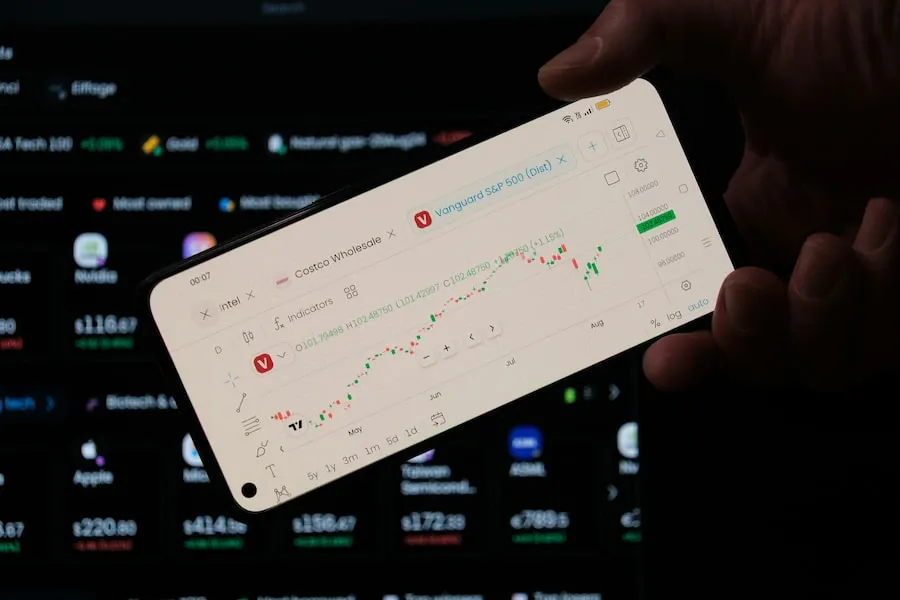
The strategy does not suddenly become worse.
Its historical performance was simply unrealistic from the beginning.
A Simple Example of Look-Ahead Bias
Suppose a trader creates the following rule:
Buy today’s market open if today’s closing price finishes above the 50-day moving average.
At first glance, the rule appears reasonable.
However, there is a critical problem.
The trader makes the decision at the market open, but the strategy evaluates the signal using the closing price, which will not be known until hours later.
The backtest has therefore used future information.
A realistic implementation would require waiting until the close before confirming the signal and placing the trade afterward.
Although the difference seems small, it fundamentally changes the validity of the backtest.
This type of error can dramatically inflate historical performance while remaining almost invisible to inexperienced researchers.
Signal Time vs Execution Time
One of the most common sources of look-ahead bias is confusing signal generation time with trade execution time.
A trading signal can only use information that is available at the moment the signal is generated.
Likewise, the trade itself cannot be executed before the information used to generate that signal becomes known.
For example:
If a signal depends on the closing price of bar t, the strategy normally cannot execute at the opening price—or any earlier price—of that same bar.
Correct backtesting therefore requires both the signal timestamp and the execution timestamp to reflect how trading would occur in reality.
| Signal Uses | Earliest Realistic Execution |
|---|---|
| Today’s opening price | After the opening price becomes available |
| Today’s closing price | Next bar, unless a realistic market-on-close process is modeled |
| Completed hourly candle | After that candle has closed |
| Quarterly earnings report | After its actual publication timestamp |
| Revised macroeconomic data | Never before the revised values became publicly available |
Can a Profitable Backtest Be Completely Wrong?
Yes.
A profitable backtest can produce entirely misleading conclusions if future information influences historical decisions.
Look-ahead bias is one of the primary reasons this happens.
Consider the following illustrative example.
| Metric | With Look-Ahead Bias* | After Removing the Bias |
|---|---|---|
| Annual Return | 34% | 11% |
| Sharpe Ratio | 2.05 | 0.96 |
| Profit Factor | 2.10 | 1.31 |
| Maximum Drawdown | 9% | 18% |
*Illustrative example only. These figures demonstrate the potential impact of look-ahead bias and are not based on a specific trading strategy.
Nothing about the underlying market changed.
The only difference was removing information that would not have existed during live trading.
This illustrates why impressive historical performance should never be accepted at face value.
Professional researchers first verify that the backtest itself is free from structural errors before interpreting any performance metrics.
Why Look-Ahead Bias Is So Difficult to Detect
Unlike coding errors, look-ahead bias often produces better results rather than obvious failures.
The strategy appears:
- more profitable,
- more stable,
- more accurate,
- and less risky.
Nothing immediately suggests that something is wrong.
In fact, the better the results look, the easier it becomes to overlook the underlying mistake.
As a result, look-ahead bias frequently survives until the strategy is tested under real market conditions.
By then, the historical advantage has disappeared.
This is one reason professional quantitative research emphasizes backtest integrity before strategy optimization.
Reliable research begins by confirming that historical simulations accurately reflect the information that would have been available at every decision point. The complete backtesting guide covers the broader process for designing, running, and evaluating historical simulations.

A valid backtest only uses information available at the time each trading decision is made. Any use of future data introduces look-ahead bias and produces unrealistic historical results.
A valid backtest only uses information available at the time each trading decision is made. Any use of future data introduces look-ahead bias and produces unrealistic historical results.
Common Sources of Look-Ahead Bias
Look-ahead bias rarely appears because traders intentionally use future information.
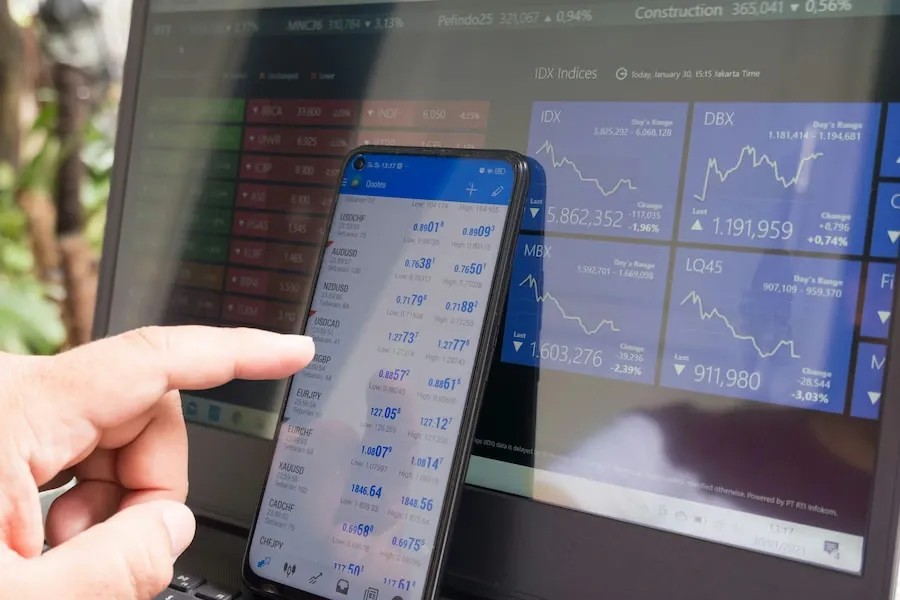
Instead, it usually results from subtle mistakes in data preparation, indicator calculations, timestamp alignment, or research workflows.
Understanding where these errors originate is one of the most effective ways to prevent them.
Common Look-Ahead Bias Patterns
| Biased Implementation | Correct Implementation |
|---|---|
| Buy at today’s open using today’s closing price | Generate the signal at the close and execute on the next available bar |
| Normalize the entire dataset before splitting | Fit preprocessing parameters using the training data only |
| Assign earnings data to the quarter-end date | Use the actual filing or publication timestamp |
| Randomly split financial time-series data | Preserve chronological training, validation, and testing periods |
| Use an unfinished higher-timeframe candle | Wait until that candle has fully closed |
| Select features using the complete dataset | Perform feature selection only within the training window |
Using Future Price Data
The most obvious form of look-ahead bias occurs when a trading decision depends on prices that were unavailable when the decision should have been made.
For example:
A strategy buys at today’s market open because today’s closing price finishes above a moving average.
The closing price does not exist when the market opens.
Yet the backtest unknowingly allows the strategy to use that future information.
Even a single-bar timing mistake like this can significantly inflate historical performance.
Well-designed backtesting systems can enforce chronological processing, but researchers must still verify data availability, feature construction, timestamp alignment, and execution timing. Even sophisticated software cannot automatically eliminate every source of look-ahead bias.
Data Alignment Errors
Many look-ahead bias problems are caused by incorrect timestamp alignment rather than incorrect trading logic.
Suppose a trader combines:
- daily price data,
- quarterly earnings,
- macroeconomic indicators,
- analyst estimates.
If those datasets are merged using their publication dates incorrectly, the strategy may gain access to information before it actually became public.
For example, a quarterly earnings report announced after market close should not influence trades executed earlier that same day.
Small timestamp mistakes like these can completely invalidate an otherwise well-designed backtest.
Revised Economic Data
Economic indicators are often revised after their initial publication.
Examples include:
- GDP growth,
- employment statistics,
- inflation reports,
- industrial production.
Historical databases frequently store the latest revised values, not the values that traders originally saw.
If a backtest unknowingly uses revised data, it effectively gives the strategy information that did not exist at the time of the trade.
Professional quantitative researchers therefore distinguish between:
- as-reported data, and
- revised historical data.
Only the information available at the original decision date should influence the simulation.
Indicator Calculation Mistakes
Technical indicators can also introduce look-ahead bias when calculated incorrectly.
For example:
A moving average should only include prices available before the current trading decision.
If future observations accidentally enter the calculation—even indirectly—the resulting signals become unrealistic.
Similar problems can occur with:
- rolling volatility,
- standard deviation,
- z-scores,
- machine learning features,
- normalization procedures.
Correct feature engineering always respects chronological order.
Every calculated value should depend only on information that already existed.
Using the current bar’s closing price is not automatically look-ahead bias. The bias occurs when a backtest assumes execution at a price that was available before that closing price became known. Correct signal timing and realistic execution timing must always be evaluated together.
Data Leakage in Machine Learning
Look-ahead bias is especially common in machine learning applications.
Researchers often refer to this problem as data leakage.
Data leakage occurs whenever information from the testing period unintentionally influences model training.
Examples include:
- scaling the entire dataset before splitting training and testing data,
- selecting features using future observations,
- optimizing hyperparameters using test results,
- random train-test splits for time-series data,
- improperly engineered target variables.
As Marcos López de Prado emphasizes throughout Advances in Financial Machine Learning, financial datasets require validation methods that preserve chronological order because future observations are fundamentally different from randomly shuffled samples.
Time matters.
Ignoring temporal structure almost always produces overly optimistic performance estimates.
Look-Ahead Bias vs Overfitting
Look-ahead bias and overfitting are often confused because both produce unrealistic backtest results.
However, they arise for very different reasons.
| Look-Ahead Bias | Overfitting |
|---|---|
| Uses information from the future | Learns historical noise rather than persistent market behavior |
| Creates impossible historical decisions | Creates overly specialized trading rules |
| Primarily caused by data leakage | Primarily caused by excessive optimization |
| Performance disappears because future data is unavailable | Performance disappears because the learned patterns do not generalize |
A strategy may suffer from one problem, both problems, or neither.
For example:
A perfectly coded strategy may still be overfitted.
Likewise, a simple moving-average crossover can suffer from look-ahead bias if indicator calculations incorrectly include future prices.
Professional strategy research therefore checks for both independently.
Look-Ahead Bias vs Survivorship Bias
| Look-Ahead Bias | Survivorship Bias |
|---|---|
| Uses information unavailable at the trade time | Excludes assets that disappeared or failed |
| Distorts timing and predictive ability | Distorts the historical investment universe |
| Example: future earnings information | Example: testing only stocks that still exist today |
Both biases produce overly optimistic backtests, but they arise for different reasons and should be evaluated independently.
Look-Ahead Bias vs Data Snooping
Another concept frequently confused with look-ahead bias is data snooping.
Although both can inflate historical performance, they describe different research errors.
| Look-Ahead Bias | Data Snooping |
|---|---|
| Future information leaks into historical decisions | Excessive testing identifies patterns that occurred by chance |
| Usually caused by incorrect data handling | Usually caused by repeated hypothesis testing |
| Produces impossible historical simulations | Produces misleading statistical confidence |
| Fixed by correcting data availability | Reduced through robust validation and proper statistical controls |
A backtest may therefore be completely free from look-ahead bias while still suffering from severe data snooping.
Likewise, eliminating data snooping does not guarantee that future information has been removed from the dataset.
Both problems require independent controls.
Can AI Trading Systems Suffer From Look-Ahead Bias?
Absolutely.
Artificial intelligence does not eliminate look-ahead bias. Future-data leakage is one of several AI trading bot risks that must be controlled at the data and validation layers.
In many cases, it makes detecting the problem even more difficult.
Machine learning models can unknowingly exploit tiny pieces of leaked future information that human researchers would never notice.
Examples include:
- improperly engineered features,
- incorrect timestamp alignment,
- future-normalized variables,
- leakage during feature selection,
- hyperparameter tuning performed on evaluation data.
Because AI models are exceptionally good at identifying statistical relationships, they can also become exceptionally good at exploiting accidental data leakage.
This often results in outstanding historical performance that disappears immediately during forward testing.
For this reason, professional AI research pipelines separate:
- training,
- validation,
- testing,
- and forward evaluation
using strict chronological boundaries.
AI changes the tools used for research.
It does not change the fundamental requirement that every trading decision must rely only on information available at that moment in history.
How to Detect Look-Ahead Bias
Detecting look-ahead bias is often more difficult than creating it.
Unlike coding errors, look-ahead bias rarely causes a backtest to fail.
Instead, it usually makes the strategy appear better than it really is.
Professional quantitative researchers therefore use several diagnostic checks before trusting any historical results.

Some of the most effective include:
- verifying that every input was available before the trading decision,
- checking timestamp alignment across multiple datasets,
- confirming that indicators use only historical observations,
- reviewing feature engineering pipelines,
- comparing backtest behavior with forward-testing results,
- and independently reproducing the simulation.
A useful question to ask is:
“Could this trading decision actually have been made with the information available at that exact moment?”
If the answer is uncertain, the backtest deserves further investigation.
A Practical Look-Ahead Bias Audit
- Record the actual publication time of every data source.
- Separate the signal timestamp from the order execution timestamp.
- Shift important features or signals forward and backward by one bar to determine whether performance changes unexpectedly.
- Fit all preprocessing steps—including scaling, normalization, and feature selection—using only the training window.
- Reproduce the backtest using an event-driven or strictly chronological simulation.
- Compare backtesting and forward-testing results to investigate discrepancies between historical and unseen-market behavior.
- Manually reconstruct several randomly selected trades to verify exactly which information would have been available at the decision time.
How to Prevent Look-Ahead Bias
Preventing look-ahead bias begins long before strategy optimization.
It starts with disciplined research design.
Professional researchers typically follow several best practices:
Preserve Chronological Order
Historical simulations should process observations exactly as they occurred.
Future information should never influence earlier trading decisions.
Use Point-in-Time Data
Whenever possible, use datasets that preserve the information actually available on each historical date rather than later revisions.
This is particularly important for:
- earnings announcements,
- analyst estimates,
- macroeconomic indicators,
- fundamental financial statements.
Separate Training and Evaluation
Machine learning workflows should maintain strict separation between:
- training data,
- validation data,
- testing data,
- forward-testing periods.
Information must never flow backward through the research pipeline.
Validate Using Independent Data
Even a correctly designed backtest should be confirmed through:
- out-of-sample testing,
- Walk Forward Analysis,
- forward testing,
- paper trading.
Independent validation helps expose problems that historical simulations alone may overlook. Independent validation should also include trading strategy robustness testing, because removing future-data leakage does not by itself show that an edge is stable across parameters, costs, or market conditions.
Research Insight: Why Backtest Integrity Matters
Preventing look-ahead bias is not simply a technical programming issue.
It is a fundamental requirement for credible quantitative research.
David H. Bailey and his co-authors argue in The Probability of Backtest Overfitting that unreliable research procedures can produce apparently successful strategies that fail when exposed to genuinely unseen market data.
Similarly, Halbert White’s influential paper A Reality Check for Data Snooping demonstrates how repeated testing and methodological errors can create false confidence in historical performance.
Although these studies address different forms of research bias, they share an important conclusion:
Reliable investment research depends on rigorous testing procedures—not impressive historical returns.
The quality of the research process ultimately determines the quality of the conclusions.
- David H. Bailey et al., The Probability of Backtest Overfitting. Journal of Computational Finance, 2014.
- Halbert White, A Reality Check for Data Snooping. Econometrica, 2000.
- Richard P. Feynman, Cargo Cult Science, Caltech Commencement Address, 1974.
Common Mistakes That Create Look-Ahead Bias
Even experienced traders occasionally introduce look-ahead bias without realizing it.
Some of the most common mistakes include:
Using Revised Data Instead of Point-in-Time Data
Historical revisions often contain information unavailable at the original decision date.
Misaligned Timestamps
Combining datasets with different reporting schedules can accidentally expose future information.
Optimizing Before Cleaning Data
Incorrect preprocessing frequently introduces hidden leakage into machine learning features.
Ignoring Execution Timing
Signals generated after market close cannot be executed at that day’s opening price.
Trusting Exceptional Backtests Too Quickly
Extremely strong historical performance should encourage additional verification—not immediate confidence.
Feynman’s Cargo Cult Science emphasizes scientific integrity and the need to expose ways a conclusion may be wrong rather than presenting only confirming evidence.
That mindset is one of the strongest defenses against look-ahead bias.
Backtest Integrity Checklist
Before trusting any historical simulation, verify the following:
✓ Every trading decision uses only information available at that point in time.
✓ All timestamps are correctly aligned.
✓ Economic and fundamental data are point-in-time datasets.
✓ Indicators exclude future observations.
✓ Machine learning features contain no data leakage.
✓ Out-of-sample testing has been completed.
✓ Walk Forward Analysis confirms stable performance.
✓ Forward testing supports historical expectations.
Passing this checklist does not guarantee profitability.
It significantly improves confidence that the backtest itself is trustworthy.


Final Verdict
Look-ahead bias is one of the most dangerous errors in quantitative trading because it creates the illusion of predictive ability by allowing future information to influence historical trading decisions.
The resulting backtests often look exceptionally profitable while being impossible to reproduce in live markets.
Preventing this problem requires more than accurate coding.
It requires disciplined data management, correct timestamp alignment, point-in-time datasets, and independent validation through out-of-sample testing, Walk Forward Analysis, and forward testing.
Professional strategy research treats backtest integrity as a prerequisite—not an afterthought.
Modern quantitative research platforms increasingly standardize historical testing workflows and combine backtest evidence with forward-test results and validation metrics to reduce the risk of misleading conclusions. Consistent with the principles described in the Algorier whitepaper, standardized evidence is more valuable than relying on a single impressive backtest because it allows strategies to be evaluated through multiple independent forms of validation rather than historical performance alone.
Ultimately, the most valuable question is not:
“How profitable is this backtest?”
It is:
“Could this result have been achieved without knowing the future?”
If the answer is no, the strategy has not demonstrated a genuine trading edge.
Traders can use AlgoBuild to build and backtest a trading strategy without coding, but the resulting historical evidence still needs the same timestamp, data-integrity, and independent validation checks described in this guide.
Frequently Asked Questions
What is look-ahead bias in backtesting?
Why is look-ahead bias dangerous?
How can I detect look-ahead bias?
Is look-ahead bias the same as overfitting?
Look-ahead bias results from future information leaking into the backtest, while overfitting occurs when a strategy becomes excessively tailored to historical data.
Can AI trading models suffer from look-ahead bias?
Machine learning models are particularly vulnerable to data leakage if chronological boundaries are not maintained throughout feature engineering, model training, and evaluation.
Can look-ahead bias make a losing strategy appear profitable?
Even small amounts of future information can substantially inflate historical returns, Sharpe Ratio, Profit Factor, and win rate.
How do professional traders avoid look-ahead bias?
Can Using Today’s Closing Price Create Look-Ahead Bias?
Using today’s closing price is not automatically look-ahead bias. The problem arises when the backtest assumes a trade could be executed before that closing price was actually known.
For example, generating a signal from today’s closing price and buying at today’s opening price is unrealistic because the closing price was unavailable at the time of execution. A realistic backtest would either execute using a market-on-close order or enter the trade on the next available bar.
Does Shifting a Signal by One Bar Prevent Look-Ahead Bias?
Shifting a signal by one bar can eliminate many common forms of look-ahead bias, particularly when signals are generated using completed candles. However, it does not solve every source of future data leakage. Researchers must also verify timestamp alignment, point-in-time data availability, feature engineering, and preprocessing workflows.
Can Forward Testing Detect Look-Ahead Bias?
Poor forward-testing performance may be consistent with look-ahead bias, but it does not prove that future data leakage caused the discrepancy. Other factors—including overfitting, changing market regimes, execution costs, and strategy decay—can produce similar differences between historical and live results. Forward testing should therefore be viewed as complementary evidence rather than a diagnostic test for look-ahead bias.
What Is the Difference Between Look-Ahead Bias and Survivorship Bias?
Survivorship bias occurs when historical datasets exclude assets that failed, were delisted, or no longer exist, making historical performance appear stronger than it actually was.
Both biases can produce overly optimistic backtests, but they distort results in different ways and should be evaluated independently.
Can Higher-Timeframe Indicators Create Look-Ahead Bias?
A higher-timeframe indicator should only influence trading decisions after the higher-timeframe candle has fully closed. Using values from an unfinished daily or weekly candle during intraday trading can unintentionally introduce future information and create look-ahead bias.
Is Using Revised Economic Data a Form of Look-Ahead Bias?
Many macroeconomic indicators are revised after their initial publication. If a backtest uses revised values that were unavailable when historical trades were made, it effectively gives the strategy access to future information. Whenever possible, professional researchers use point-in-time or as-reported datasets that preserve the information actually available on each historical date.
Risk Disclaimer
Historical simulations are only as reliable as the data and methodology used to produce them. Eliminating look-ahead bias improves the credibility of a backtest, but it does not guarantee future trading performance. Every strategy should go through a broader trading strategy validation process using multiple independent methods before live deployment.
About the Author
Written by: Algorier Research Team
Reviewed by: Quantitative Research & Strategy Validation Specialist
Last Updated: July 2026
The Algorier Research Team researches algorithmic trading, quantitative finance, AI-assisted strategy development, and validation methodologies. This guide is based on established research in systematic trading and statistical testing to explain how professional traders identify and prevent look-ahead bias in historical backtesting.
Algorier’s standardized backtest and forward-test evidence helps users compare strategies using consistent evaluation outputs. Forward testing provides an additional independent source of evidence, but no testing framework should be viewed as a guarantee against every possible data, modeling, or research error.