
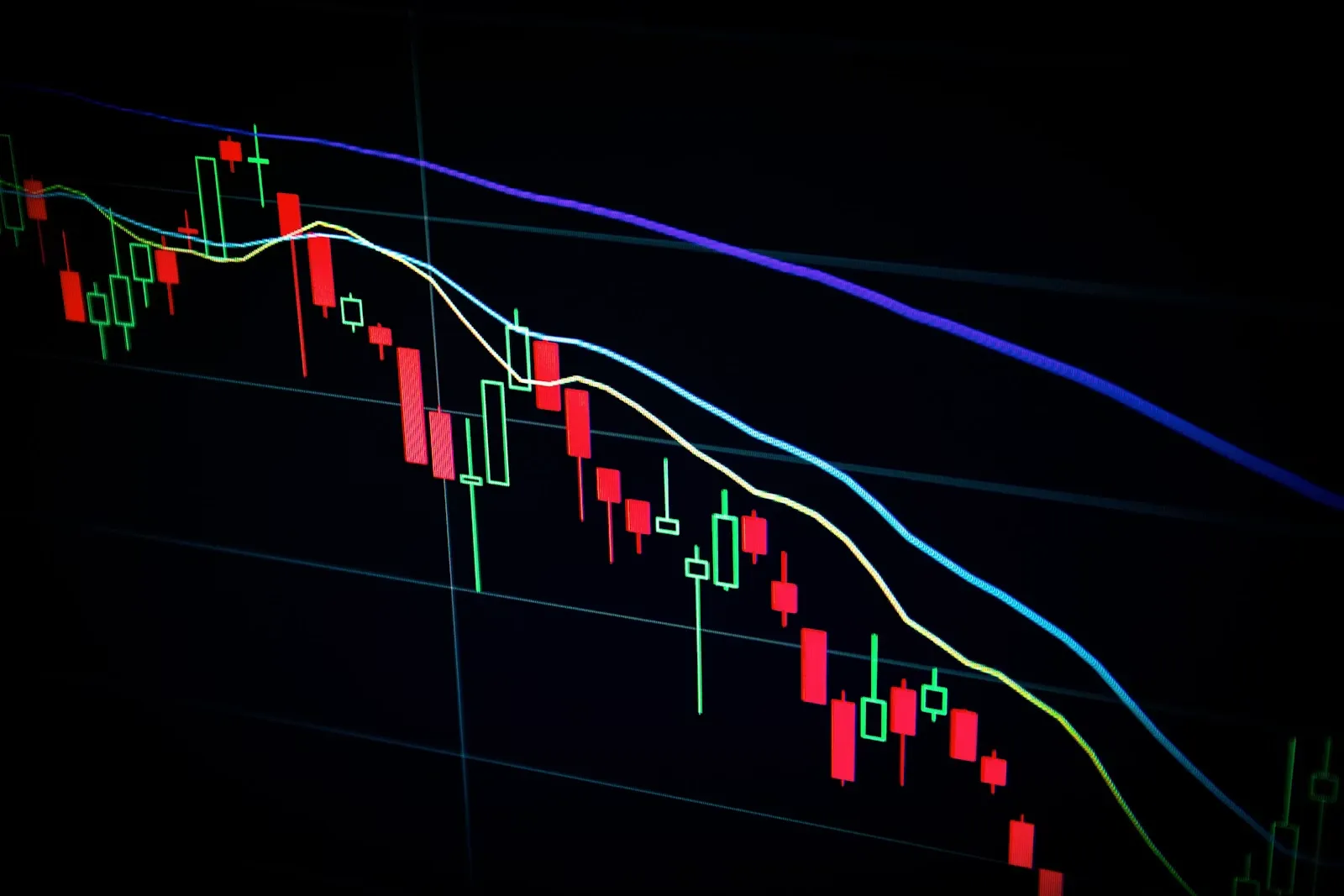
Every year, thousands of traders learn how to build a trading bot. Some use Python, some use no-code platforms, some buy pre-built systems, and others deploy AI-powered models. Most begin with the same expectation: if I can automate a profitable strategy, I can automate profits. Unfortunately, reality is far less forgiving.
A surprising number of trading bots fail within months of deployment. Some never survive beyond backtesting; others perform well initially before gradually deteriorating; many generate promising results on historical data only to lose money in live markets. Most people assume the answer is simple . a bad strategy. But professional traders know the reality is more complicated. In many cases, the strategy itself is not the primary problem. The real issue is that successful trading requires far more than generating signals. A trading bot is not merely a strategy; it is part of a broader algorithmic trading workflow, and every stage of that workflow can fail.
- Why Bots Fail More Than Expected
- The Biggest Myth
- The Seven Reasons Bots Fail
- Why Backtests Often Lie
- Why Bots Fail After Deployment
- Strategy Failure vs System Failure
- Why Good Strategies Still Lose
- Example: Strategy Worked, System Failed
- Can a Bot Be Profitable Long-Term?
- Can Trading Bots Adapt?
- Why AI Trading Bots Fail
- Retail vs Institutional Systems
- Success Is Not Automatic
- Infrastructure-Driven Trading
- Why Retail Bots Never Scale
- What Successful Systems Do
- Case Study: Two Bots
- From Bots to Systems
- How Platforms Change the Equation
- Failure Prevention Checklist
- Final Verdict
- FAQ
Why Trading Bots Fail More Often Than Traders Expect
One reason automated trading appears deceptively easy is that most educational content focuses on strategy creation — indicators, machine learning, AI models, entry signals, optimization. Far less attention is given to deployment, monitoring, execution, infrastructure, and risk management. Yet these operational components frequently determine success or failure. A trading strategy can be profitable; a trading bot built around that strategy can still fail. Professional firms rarely evaluate strategies in isolation — they evaluate complete systems. The stronger the system, the greater the probability of survival when markets become difficult.
The Biggest Myth About Automated Trading
Perhaps the most dangerous misconception in algorithmic trading is that a profitable backtest equals a profitable trading bot. This belief has destroyed more trading systems than almost any other mistake.
A dedicated algorithmic trading platform can connect strategy creation, testing, deployment, and monitoring within a more structured operating environment.

Backtesting is useful and essential, but it is not reality. Backtests typically operate in environments that are clean, structured, predictable, and fully observable. Live markets are not — they contain slippage, latency, liquidity constraints, infrastructure failures, market regime changes, and unexpected events. A strategy that performs well historically may struggle significantly when exposed to real-world conditions. The objective is not creating the best backtest; it is building a system capable of surviving reality.
The Seven Reasons Most Trading Bots Fail
While every failure is unique, certain patterns appear repeatedly.
1. Overfitting
Overfitting occurs when a strategy becomes excessively optimized for historical data. The result is often impressive backtesting performance, until deployment. Markets change, relationships evolve, and the optimized strategy struggles because it learned historical noise rather than durable market behavior. Symptoms include exceptional backtests, poor live performance, unstable results, and sensitivity to small parameter changes.
2. Poor Risk Management
Many traders devote enormous effort to entries and far less to risk. A profitable strategy can fail if position sizing is excessive, leverage is uncontrolled, or drawdowns become unsustainable. Effective algorithmic trading risk management defines position sizing, leverage, exposure, and drawdown limits before deployment.
3. Execution Friction
Many strategies appear profitable until realistic execution conditions are introduced: slippage, spreads, partial fills, latency, liquidity constraints. Individually minor, these factors can dramatically impact profitability across hundreds or thousands of trades.
4. Infrastructure Failures
Trading systems depend on exchanges, brokers, APIs, cloud services, and monitoring systems. Failures occur — missed trades, duplicated orders, synchronization errors, unexpected exposure. A profitable strategy cannot compensate for broken infrastructure. This is why infrastructure design matters as much as signal quality.
5. Market Regime Changes
Strategies often assume certain relationships remain stable. Eventually those assumptions break through volatility shifts, liquidity changes, macroeconomic transitions, or behavioral changes among participants. A strategy that thrives in one environment may struggle in another. Walk-forward analysis helps test whether performance survives changing market conditions instead of one fixed historical period.
6. Lack of Monitoring
Many traders assume automation eliminates oversight. In reality, successful automation often requires more monitoring than discretionary trading. Without it, small issues — execution degradation, performance drift, infrastructure problems — often become large losses. Automation removes manual execution; it does not remove responsibility. Traders should map the full operating process to identify where breakdowns occur.
7. Unrealistic Expectations
Many traders expect immediate profitability, passive income, and fully autonomous performance. When reality fails to match, they over-optimize, increase leverage, abandon valid strategies, and chase short-term performance. Successful trading systems are usually built gradually; patience often becomes a competitive advantage.

Why Backtests Often Lie
Backtests are one of the most valuable tools available to traders — and one of the most misunderstood. A backtest answers how a strategy would have behaved historically. It does not answer how it will behave tomorrow. Several factors create gaps between backtests and reality: historical bias (past conditions may not repeat), execution assumptions (backtests often assume perfect execution), data quality issues (incomplete or inaccurate data distorts results), hidden costs (slippage and transaction costs are underestimated), and optimization bias (strategies become tailored to history). The strongest traders treat backtests as a starting point, not a guarantee. The complete backtesting guide explains how data quality, execution assumptions, costs, and evaluation choices shape historical results.

Why Most Bots Fail After Deployment
One of the least discussed realities in algorithmic trading is that deployment often marks the beginning of the challenge, not the end. Many traders assume success occurs once the strategy is built, the backtest is complete, and the bot goes live. In reality, deployment introduces entirely new variables: execution conditions, infrastructure reliability, changing market behavior, and operational complexity. This explains why many bots appear successful during development but struggle in production. The market does not reward theoretical performance, it rewards operational performance. The gap becomes clearer when comparing backtesting vs forward testing, because forward testing introduces live-market timing and execution behavior.
The Difference Between Strategy Failure and System Failure
One of the biggest misconceptions in algorithmic trading is assuming every losing bot failed because the strategy stopped working. In reality, many trading bots fail even when the strategy remains valid. A strategy failure and a system failure are not the same thing.
The underlying edge disappears. The conditions that supported the strategy no longer exist:
- Changing volatility regimes
- Structural market changes
- Increased competition
- Disappearing inefficiencies
The strategy remains valid but the surrounding environment breaks down:
- Execution degradation & latency
- API failures & outages
- Monitoring failures
- Poor risk controls
Professional firms spend enormous resources separating these problems. If a strategy fails, research teams investigate the edge; if a system fails, infrastructure and operations teams investigate the workflow. Retail traders often combine both into one category — “the bot lost money” — which makes diagnosis difficult. Before making changes, successful traders ask: did the strategy fail, or did the system fail?
Why Good Strategies Still Lose Money
A strategy can be statistically valid, historically profitable, logically sound — and still lose money. The reason is simple: profitability is probabilistic, not deterministic. Even strong strategies experience drawdowns, losing streaks, adverse conditions, and temporary underperformance. Many traders abandon systems during perfectly normal periods of weakness — often shortly before performance recovers. Professionals evaluate performance across market cycles, volatility regimes, risk-adjusted returns, and long-term consistency, not individual weeks. The objective is not eliminating losses; it is surviving them.
Real Example: A Strategy That Worked but a System That Failed
Historical testing looked robust: a 24% annual return, a 1.7 Sharpe Ratio, a 15% maximum drawdown, and a 54% win rate. These are trading strategy performance metrics, not proof that live execution will match the backtest.
The edge was real. After deployment, however, performance deteriorated. Investigation revealed several issues: API latency increased during volatile periods, market orders generated larger-than-expected slippage, monitoring alerts failed during exchange outages, and position sizing exceeded original assumptions. Live performance differed dramatically from research expectations. The strategy did not fail — the system failed. This is why professional firms increasingly focus on infrastructure and operational workflows alongside strategy development.
Can a Trading Bot Be Profitable Long-Term?
A trading bot can be profitable long-term, but the broader question of whether algorithmic trading is profitable depends on costs, risk controls, execution quality, and adaptation — not automation alone. Professional firms assume every strategy will eventually face challenges.
The objective is therefore not finding a strategy that works forever, but building a process capable of maintaining performance as conditions evolve. Long-term profitable systems typically share several traits: adaptability (responding to changing conditions), risk discipline (capital preservation as a priority), continuous monitoring (detecting degradation early), infrastructure reliability (consistent execution quality), and research pipelines (continuously testing new ideas). The most successful traders rely on a repeatable process rather than a single strategy.
Can Trading Bots Adapt to Changing Markets?
The answer depends on system design.
Rule-Based Systems
Traditional systems operate using predefined logic. They do not learn, evolve, or adapt automatically; when markets change, the strategy must be modified manually.
Adaptive Systems
More advanced systems incorporate dynamic parameters, regime detection, volatility adjustments, and portfolio rebalancing. These improve adaptability, though adaptation remains limited by design constraints.
AI-Driven Systems
Machine learning models add flexibility, identifying changing relationships within data. However, they also introduce model drift, overfitting risk, feature decay, and explainability challenges. Adaptation improves resilience; it does not eliminate uncertainty, which is why continuous monitoring remains essential regardless of technology.
Why AI Trading Bots Fail
Artificial intelligence has become one of the most heavily marketed concepts in trading. Many traders assume AI solves the problems traditional bots face. It does not — in many cases, AI introduces entirely new risks.

Common AI failure modes include model drift (relationships learned during training gradually weaken), feature decay (previously useful signals lose predictive power), data quality problems, black-box behavior (decisions become difficult to explain), and overconfidence (users place excessive trust in predictions). The strongest AI operations treat machine learning as one component of a broader trading system — not as a replacement for risk management. For a deeper analysis of model drift, feature decay, data quality, and black-box behavior, review the main AI trading bot risks.
Why Retail Trading Bots Fail More Often Than Institutional Systems
Many retail traders focus primarily on strategies. Institutions focus on systems.
| Factor | Retail Trading Bots | Institutional Systems |
|---|---|---|
| Strategy Development | Moderate | Extensive |
| Risk Management | Often Limited | Multi-Layered |
| Monitoring | Manual or Minimal | Continuous |
| Infrastructure | Basic | Enterprise Grade |
| Execution Optimization | Limited | Advanced |
| Research Resources | Limited | Extensive |
| Operational Controls | Inconsistent | Structured |
| Failure Recovery | Reactive | Proactive |
The lesson is not that institutions possess better strategies — it is that they typically operate better systems. This difference compounds over time.

Data Insight: Automated Trading Success Is Not Automatic
Research across quantitative trading communities, proprietary trading firms, and systematic investing ecosystems consistently reveals a similar pattern: building a trading strategy is significantly easier than operating a profitable trading system over time. Industry studies and practitioner surveys have repeatedly shown that many algorithmic trading projects are abandoned within their first year due to performance deterioration, overfitting, infrastructure challenges, operational complexity, and unrealistic expectations. This pattern is not unique to retail traders — even professional firms regularly retire strategies as conditions evolve. In practice, strategy degradation is often a normal part of systematic trading rather than an exception, which is why the most successful organizations focus less on finding a perfect strategy and more on building processes capable of identifying, adapting, and replacing strategies when necessary.
The Rise of Infrastructure-Driven Trading
For years, retail traders viewed trading bots as simple automation tools: build a strategy, connect an exchange, automate execution. Modern markets have proven otherwise. As algorithmic trading has matured, successful firms have shifted focus away from individual strategies and toward operational infrastructure, reflecting a simple reality: most long-term advantages come from system quality rather than signal quality alone. Today, professional operations typically include research environments, risk engines, execution layers, monitoring systems, deployment workflows, and recovery procedures. The objective is no longer “build a trading bot” — it is “build a trading operation.”
Why Most Retail Trading Bots Never Scale
Many bots perform reasonably well when trading small accounts in favorable conditions with infrequent trades. Problems often emerge as complexity increases.
Capital Scaling
Larger position sizes can impact liquidity, execution quality, and slippage. A strategy that works at $5,000 may behave differently at $500,000.
Operational Scaling
Additional markets create monitoring challenges, infrastructure demands, and execution complexity.
Portfolio Scaling
Multiple strategies require correlation management, exposure controls, and allocation frameworks.
User Scaling
Strategy providers using AlgoNetwork as a trading strategy marketplace also need consistent reporting, reliable execution, and clear risk controls as allocations grow. Many retail bots fail because they were never designed for these realities.
What Successful Trading Systems Do Differently
When analyzing successful long-term trading operations, several patterns emerge — and they are often surprisingly operational rather than predictive.

Successful systems prioritize risk before returns (asking “what can go wrong?” before “how much can we make?”), measure execution quality (treating execution as a performance variable), monitor continuously (expecting problems and identifying them quickly), accept market change (continuously evaluating performance rather than assuming strategies last forever), and build processes (repeatable workflows rather than isolated decisions). Consistency creates survivability.
Mini Case Study: Two Trading Bots, Two Outcomes
Consider two traders using similar momentum strategies with comparable predictive power. Yet their outcomes differ dramatically.
Focuses on signals, optimization, and backtests. Limited attention to monitoring, execution analytics, and infrastructure. Performance looks strong at first, then slippage increases, alerts fail, execution deteriorates — and profitability gradually disappears.
Focuses on strategy, monitoring, risk controls, execution quality, and infrastructure reliability. Performance also fluctuates — but operational issues are identified quickly and the system stays adaptable. Over several years, Trader B significantly outperforms.
The difference is not strategy quality. The difference is operational maturity.
The Evolution From Bots to Systems
One of the biggest trends in modern algorithmic trading is the shift from isolated bots toward integrated workflows. Historically, traders thought in terms of indicators, signals, and automation. Today, leading systematic traders increasingly think in terms of workflows, infrastructure, deployment pipelines, monitoring environments, and portfolio systems. As competition increases, operational quality becomes a larger component of performance.

How Infrastructure Platforms Change the Equation
Historically, traders needed to assemble multiple tools — strategy development software, deployment environments, monitoring systems, execution frameworks — and this fragmentation increased complexity. Modern infrastructure platforms attempt to simplify the process. Instead of focusing exclusively on signal generation, they help traders manage the full lifecycle of systematic trading: development, validation, deployment, monitoring, and optimization. Before deployment, traders can use AlgoBuild to create a trading bot without coding, formalize its rules, and evaluate the strategy through backtesting.
Trading Bot Failure Prevention Checklist
Most trading bot failures originate from predictable causes. Before deploying a system, confirm that it has passed a structured trading strategy validation process, then review these areas carefully.
- ✓ Tested across multiple market conditions?
- ✓ Overfitting addressed?
- ✓ Assumptions documented?
- ✓ Position sizing defined?
- ✓ Exposure limits in place?
- ✓ Drawdown thresholds monitored?
- ✓ Slippage measured?
- ✓ Latency monitored?
- ✓ Fill rates tracked?
- ✓ APIs monitored?
- ✓ Backup procedures available?
- ✓ Deployment documented?
- ✓ Alerts configured?
- ✓ Performance drift tracked?
- ✓ Abnormal behavior detected automatically?
- ✓ Profitability expectations realistic?
- ✓ Long-term prioritized over short-term optimization?
Final Verdict: Most Trading Bots Fail Because Trading Is a System
Most traders assume trading bots fail because the strategy is weak. Sometimes that is true; often it is not. Many failures originate from execution, risk management, monitoring, infrastructure, and operational processes. This explains why professional organizations invest heavily in systems rather than relying exclusively on strategy development. A strategy creates potential; a system determines whether that potential becomes realized performance. The future of algorithmic trading is unlikely to be won by traders with the most indicators or the most complex AI models — it will likely be won by those who build resilient, adaptable, and operationally mature systems. In modern markets, the edge is increasingly found not only in prediction, but in execution, reliability, and infrastructure.
Frequently Asked Questions
Why do trading bots fail?
For many reasons, including overfitting, poor risk management, execution issues, infrastructure failures, market regime changes, and unrealistic expectations.
Why does algorithmic trading fail?
Often when traders focus exclusively on strategy development while ignoring operational factors such as monitoring, execution quality, and risk controls.
Can profitable trading bots stop working?
Yes. Market conditions change over time, and strategies that were previously effective may lose their edge or require adaptation.
Why do backtests fail in live trading?
Backtests often assume ideal conditions. Live markets introduce slippage, latency, liquidity constraints, and changing behavior that can significantly affect performance.
Can AI trading bots fail?
Absolutely. AI systems face additional risks such as model drift, feature decay, data quality issues, and explainability challenges.
Do professional trading firms use bots?
Yes. Many institutional firms rely heavily on algorithmic systems, but they also invest extensively in infrastructure, monitoring, execution, and risk management.
How do you prevent trading bot failure?
By combining robust validation, risk management, execution monitoring, infrastructure controls, and realistic expectations. Successful systems are built as complete operational workflows rather than isolated strategies.
About the Author
The Algorier research team focuses on algorithmic trading systems, trading infrastructure, execution workflows, systematic investing, risk management frameworks, and strategy deployment methodologies. Research for this guide included analysis of trading bot failures, systematic trading operations, quantitative risk controls, infrastructure reliability practices, and institutional algorithmic trading workflows.