

One of the most dangerous moments in algorithmic trading is not when a strategy starts losing money — it is when a strategy appears almost perfect. Many traders have lived the same scenario: they develop a strategy, run a backtest, and see extraordinary metrics. The equity curve rises smoothly, drawdowns look manageable, returns look impressive, and everything seems ready for deployment. Then reality arrives. The strategy goes live, performance deteriorates, signals stop working, and losses begin to appear. The trader assumes the market changed.
In many cases, something else happened: the strategy was overfitted long before deployment. Overfitting is one of the most common causes of trading bot failures , not because the strategy lacked intelligence, but because the backtest measured historical noise rather than genuine market behavior. A strategy that looks perfect on historical data may be exactly the strategy you should avoid.
- What Is Overfitting in Trading?
- Why Overfitting Happens
- Optimization vs Overfitting
- How Many Parameters Is Too Many?
- Why Overfitted Strategies Look Amazing
- The Hidden Cost of Overfitting
- Example of an Overfitted Strategy
- Why Retail Traders Overfit
- Strategy Degradation & Overfitting Risk
- How to Detect Overfitting
- Why Professionals Try to Break Strategies
- Can AI Systems Overfit?
- Retail vs Professional Validation
- Overfitting & Strategy Failure
- How Overfitting Creates False Confidence
- Why It Connects to Every Failure
- Failure Begins Before Deployment
- How to Build Robust Strategies
- Robust Strategy Checklist
- Final Verdict
- FAQ
What Is Overfitting in Trading?
Overfitting occurs when a trading strategy becomes excessively optimized for historical data. Instead of identifying durable market patterns, the strategy begins learning random fluctuations, noise, and temporary relationships that existed in the past but are unlikely to repeat.
The result is a dangerous illusion: the strategy appears highly effective during backtesting, yet performs poorly when exposed to new conditions. A rigorous backtesting process should test assumptions, costs, and robustness rather than simply maximize historical performance.
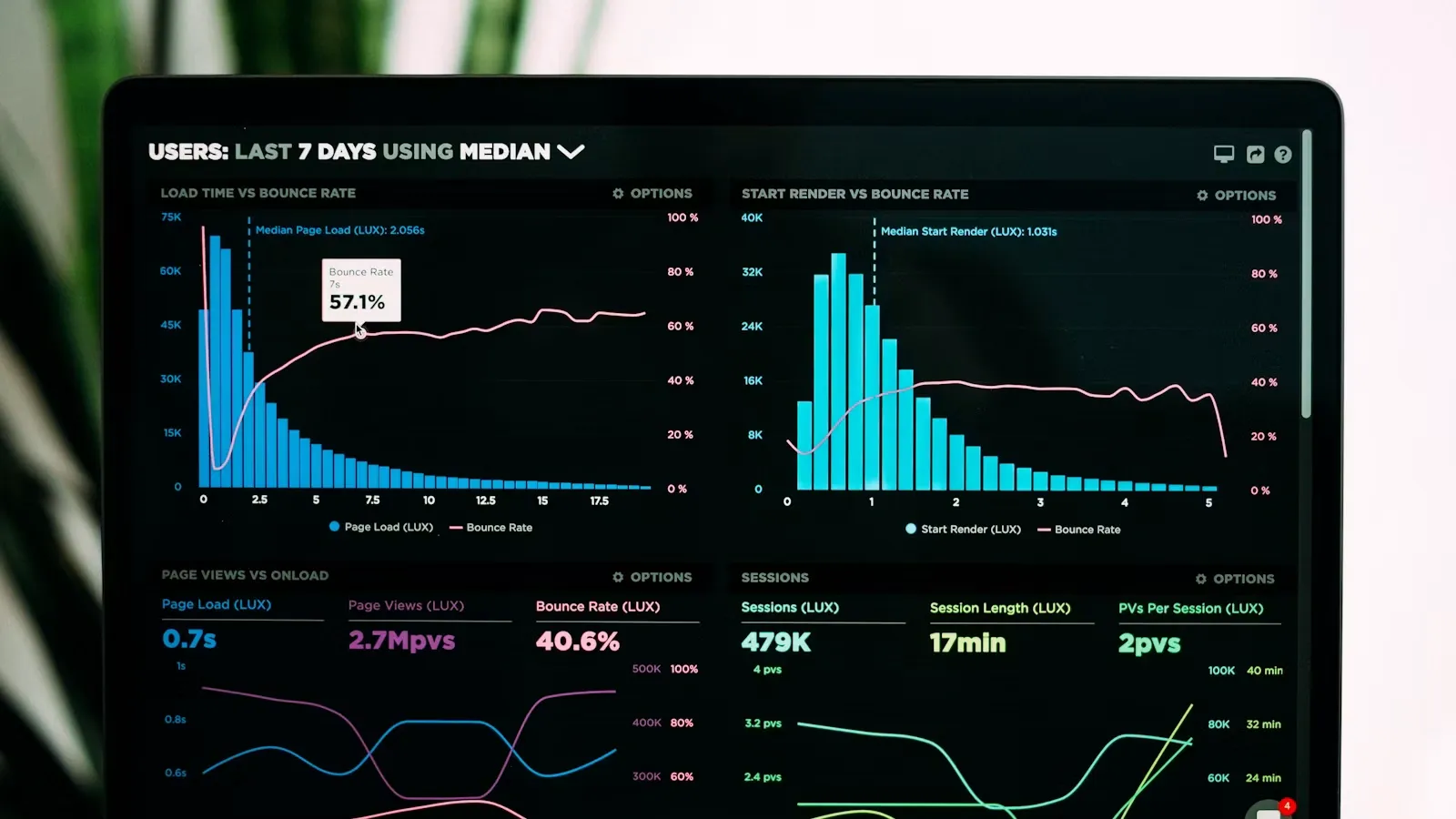
A simple way to think about it: the strategy learns the history book instead of learning the market. Markets evolve continuously, and a strategy that memorizes historical data cannot adapt effectively to future environments. Professional quantitative researchers often describe overfitting as one of the largest threats to strategy development, because it creates false confidence, the backtest appears convincing while the edge does not actually exist.
Why Overfitting Happens
Most traders do not intentionally overfit; the problem emerges naturally during research. Several factors contribute to it.
Too Many Parameters
Every parameter — moving-average lengths, volatility thresholds, entry and exit conditions, risk filters — creates additional flexibility. More flexibility often increases backtest performance, but it also increases the probability of fitting noise. A strategy with dozens of adjustable parameters may appear intelligent while actually becoming fragile.
Excessive Optimization
Optimization is a useful tool; excessive optimization is dangerous. Repeatedly modifying parameters until historical performance reaches an attractive level can gradually transform a robust strategy into a curve-fitted model that adapts to historical imperfections rather than genuine market behavior.
Small Sample Sizes
A strategy tested across a small number of trades may produce misleading results, because random outcomes can appear statistically meaningful. Professional researchers prefer larger sample sizes because they reduce the influence of chance. The smaller the sample, the greater the risk of overfitting.
Curve Fitting
Curve fitting is one of the most recognizable forms of overfitting. It occurs when a strategy is adjusted repeatedly until historical performance looks ideal. The resulting equity curve often appears impressive while the strategy becomes increasingly fragile — small changes in market conditions can cause performance to collapse. The smoother the backtest appears, the more carefully traders should evaluate whether genuine robustness exists.

The Difference Between Optimization and Overfitting
One of the biggest misconceptions in trading research is assuming optimization and overfitting are identical. They are not. Optimization is necessary; overfitting is harmful. The challenge is understanding where one ends and the other begins.
Improves strategy quality while preserving robustness, seeking parameter ranges that remain effective across different environments. It produces stable results, reasonable parameter sensitivity, and consistent performance. Small changes do not dramatically alter outcomes.
Occurs when optimization becomes excessive and the strategy chases historical perfection. Performance becomes highly dependent on specific parameter values, and small adjustments produce large performance differences — a warning sign of fragility.
Professional researchers often ask a simple question: does the strategy work because it discovered a market edge, or because it discovered historical noise? That question frequently separates robust strategies from overfitted ones.
How Many Parameters Is Too Many?
There is no universal number. A strategy with ten parameters may be perfectly reasonable; a strategy with three parameters may still be overfitted. The more important question is: how much data supports each parameter? Every parameter introduces flexibility, and additional flexibility increases the possibility of fitting historical noise. As a general principle, researchers prefer strategies where performance remains stable across ranges of parameter values rather than depending on a single optimized configuration. A moving-average strategy that performs well between 40 and 60 periods is usually more robust than one that only works at exactly 47 periods. The objective is not minimizing parameters at all costs — it is ensuring parameters represent meaningful market behavior rather than historical coincidence.
Why Overfitted Strategies Look Amazing
One reason overfitting remains such a persistent problem is that overfitted strategies often look better than robust strategies, creating a psychological trap. Consider two backtests.
Moderate returns, stable behavior, reasonable drawdowns, consistent performance.
Exceptional returns, minimal drawdowns, extremely smooth equity curve, extraordinary Sharpe ratio.
Many traders choose Strategy B immediately. Professional researchers become suspicious — because markets are inherently uncertain, and perfect-looking results often indicate that historical noise has been captured, not that risk has been eliminated. The most dangerous strategies are not obviously flawed; they are those that appear flawless.

The better-looking backtest is not always the safer strategy.
The Hidden Cost of Backtest Overfitting
Overfitting creates costs that extend beyond poor performance — it also damages decision-making. Once traders become convinced they have discovered a highly profitable strategy, several secondary problems emerge: excessive confidence, larger allocations, increased leverage, reduced skepticism, and inadequate validation. The stronger the illusion, the greater the potential damage. This explains why many experienced quantitative researchers spend more time attempting to disprove strategies than to prove them. A strategy that survives skepticism is far more valuable than one that survives optimization.
Example of an Overfitted Trading Strategy
Consider a trader who develops a momentum-based strategy and spends several months optimizing parameters until the backtest appears highly attractive. The historical results look exceptional — but after deployment, performance deteriorates rapidly.
| Metric | Backtest Results | Live Results |
|---|---|---|
| Annual Return | 42% | 4% |
| Sharpe Ratio | 2.1 | 0.5 |
| Maximum Drawdown | 8% | 24% |
| Win Rate | 61% | 48% |
| Profit Factor | 1.9 | 1.1 |
Why Most Retail Traders Overfit Their Strategies
Retail traders face unique incentives that often encourage overfitting. Many are searching for perfect indicators, perfect entry signals, and perfect parameter combinations, so the research process becomes a search for historical perfection. Professional firms generally approach research differently. Instead of asking “how can we maximize historical returns?” they ask “how can we build a strategy that survives future uncertainty?” That difference in mindset changes everything.
Data Insight: Strategy Degradation & Overfitting Risk
Overfitting is dangerous partly because strategy deterioration often happens gradually rather than suddenly. A backtest may look exceptional, initial live performance may even appear promising, and then results begin to weaken — a phenomenon sometimes called strategy degradation. Research in quantitative finance has repeatedly shown that many apparent market edges weaken after deployment due to changing conditions, increased competition, structural shifts, and overfitting during research.
This has led professional researchers to develop frameworks such as the Probability of Backtest Overfitting (PBO), the Deflated Sharpe Ratio (DSR), White’s Reality Check, and Walk-Forward Analysis. Their purpose is simple: determine whether a strategy discovered a real edge or merely exploited historical randomness.
The more parameters a strategy contains, the higher the probability that at least part of the observed performance is the result of chance rather than skill.For this reason, many firms view trading strategy validation as equally important as strategy development, a profitable backtest is only the beginning; the real challenge is proving the edge survives outside the data used to create it. the real challenge is proving the edge survives outside the data used to create it.
How to Detect Overfitting
The good news is that overfitting is not impossible to detect. Professional traders use several validation techniques designed to identify fragile strategies before capital is deployed. No single method is perfect, but combining multiple approaches significantly reduces risk.
Out-of-Sample Testing
Instead of using all available data for development, researchers split the dataset: in-sample data is used for development, optimization, and hypothesis testing, while out-of-sample data is used only for validation and never seen during development. If performance remains strong in both, confidence increases; if it collapses outside the training period, overfitting becomes more likely. This mirrors a fundamental scientific principle: test ideas on data that was not used to create them.
Walk-Forward Testing
Often considered one of the most realistic forms of validation, walk-forward testing repeatedly cycles through optimization, validation, and forward testing, continuously exposing the strategy to new conditions. Robust strategies generally perform reasonably well across multiple periods; overfitted strategies often deteriorate quickly.
Monte Carlo Analysis
Rather than evaluating a single historical sequence, Monte Carlo simulations generate thousands of alternative outcomes by randomizing trade order, execution paths, and return sequences. This provides insight into drawdown risk, capital volatility, and outcome variability. A strategy that appears strong in a single backtest may reveal significant weaknesses across many possible futures.
Cross Validation
Borrowed from machine learning, cross validation tests a model across multiple independent data segments rather than one isolated period. If performance varies dramatically between segments, overfitting risk increases; if results remain stable, confidence improves. Consistency is often a stronger indicator of robustness than peak performance.

Why Professional Traders Try to Break Strategies
One of the biggest differences between retail and institutional research is mindset. Retail traders often try to prove a strategy works; professional researchers often try to prove it doesn’t. It sounds counterintuitive, but it creates stronger systems.

A strategy that survives aggressive testing is far more valuable than one that survives selective testing. Institutional validation often involves stress testing, sensitivity analysis, scenario analysis, robustness testing, and regime testing. The objective is not finding evidence that supports the strategy — it is finding evidence that challenges it.
Only after a strategy survives these challenges does it earn capital allocation. The same standard should guide buyers evaluating backtested trading strategies on AlgoNetwork before committing capital. This philosophy explains why many institutional strategies appear less impressive than retail backtests: they have already survived skepticism.
Can AI Trading Systems Overfit?
A common misconception is that artificial intelligence eliminates overfitting. In reality, AI systems can be even more vulnerable to it — the greater the model complexity, the greater the potential for learning historical noise. Machine learning models often have access to hundreds of features, large parameter spaces, and sophisticated optimization processes.
Without proper controls, this flexibility can produce spectacular backtests that fail in production. Traders using complex models should understand the AI trading bot risks created by feature overload, data snooping, model complexity, and training bias.
Common AI overfitting risks include feature overload (too many inputs create opportunities to fit noise), feature selection bias (examining hundreds of variables increases the probability of finding relationships that appear predictive purely by chance), data snooping (repeated experimentation increases false discoveries), model complexity (complex models can memorize history rather than learn patterns), regime dependency, and training bias.
This is why modern AI trading teams increasingly focus on explainability, robustness, validation frameworks, and model monitoring. The strongest AI systems are not necessarily the most complex — they are often the most disciplined.
Retail vs Professional Validation Frameworks
| Validation Area | Retail Approach | Professional Approach |
|---|---|---|
| Backtesting | Single Test | Multiple Validation Layers |
| Optimization | Performance Focused | Robustness Focused |
| Out-of-Sample Testing | Sometimes Ignored | Standard Practice |
| Walk-Forward Analysis | Limited Usage | Extensive Usage |
| Monte Carlo Testing | Rare | Common |
| Risk Analysis | Basic | Multi-Layered |
| Deployment Readiness | Assumed | Verified |
| Monitoring Plan | Minimal | Structured |
The key lesson is not that professionals have better ideas — it is that they have stronger validation processes.
The Relationship Between Overfitting and Strategy Failure
Overfitting is rarely the direct cause of trading losses. Instead, it acts as a hidden weakness that eventually exposes itself when a strategy encounters reality. A strategy may appear successful for weeks or months after deployment, then begin to deteriorate. Many traders assume market conditions changed, volatility increased, or execution quality declined — and sometimes those factors contribute. But often the root cause existed much earlier: the strategy was overfitted during research. In other words, many trading bots fail after deployment because many strategies were already failing before deployment — the failure simply had not been revealed yet. This is why experienced researchers often view overfitting as a research problem rather than a trading problem.
How Overfitting Creates False Confidence
Perhaps the most dangerous aspect of overfitting is psychological. Overfitted strategies often generate beautiful equity curves, impressive Sharpe ratios, low drawdowns, and strong win rates.
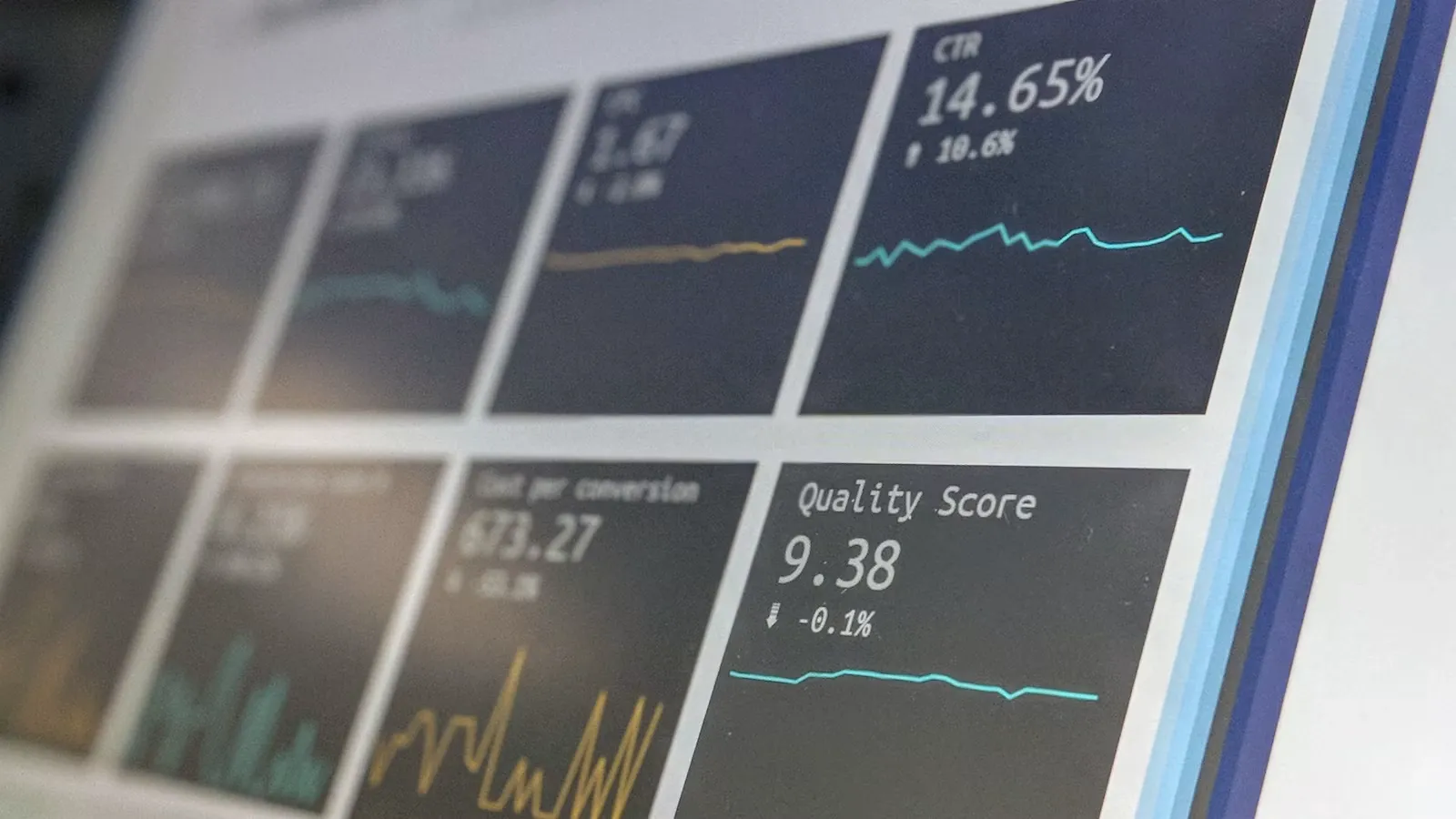
These metrics create confidence, confidence influences decisions, and decisions influence risk. As confidence grows, traders often increase position sizes, deploy more capital, reduce skepticism, and accelerate deployment. This is why algorithmic trading risk controls should be defined before confidence influences leverage or capital allocation.
The result is that overfitted strategies frequently receive more capital than robust strategies — which is one reason overfitting can become so expensive. The stronger the illusion, the larger the eventual consequences.
Why Overfitting Is Connected to Almost Every Trading Failure
Many common trading failures originate from overfitting. Unexpected drawdowns occur because the historical data underestimated future risk. Strategy degradation happens because the apparent edge never truly existed. AI model failure follows when the model learned noise rather than market structure. Poor live performance appears because historical optimization masked weaknesses. And excessive confidence develops when investors trust performance metrics that lacked robustness. This is why overfitting appears throughout the entire strategy lifecycle — it is not simply a backtesting problem; it is a decision-making problem.
Strategy Failure Begins Long Before Deployment
Many traders think of deployment as the moment risk begins. Professional firms often think differently — for them, risk begins during research. Every parameter adjustment, optimization cycle, and feature-selection decision introduces potential bias. This is why institutional research teams invest heavily in validation frameworks. They understand a simple truth: a weak strategy is easier to identify than a misleading one. A weak strategy fails quickly; an overfitted strategy may survive long enough to create significant damage.

How to Build Robust Trading Strategies
If overfitting is the problem, robustness is the solution. Robust strategies are not designed to maximize historical performance — they are designed to survive uncertainty, which often requires a different mindset.
Focus on Logic Before Optimization
Strong strategies begin with a reasonable hypothesis. Optimization should improve the hypothesis, not create it. When a strategy only works after extensive optimization, caution is warranted.
Prefer Simplicity Over Complexity
Simple strategies are often easier to validate. Complexity creates additional opportunities for fitting noise; more parameters do not automatically create better systems — in many cases, they create more fragile ones.
Test Across Multiple Environments
Robust strategies should demonstrate stability across bull markets, bear markets, high-volatility periods, and low-volatility periods. A strategy that only works in one environment may not be robust.
Embrace Imperfect Backtests
The most reliable strategies rarely produce perfect-looking historical performance. Some drawdowns are normal and some variability is healthy. A realistic backtest is frequently more trustworthy than a flawless one.
Monitor Continuously
Validation does not end after deployment. Professional systems continuously monitor performance, risk, execution quality, and regime changes, because markets evolve and strategies should be evaluated accordingly.
Weak strategies often skip one or more layers; robust strategies respect all four. Traders who want to formalize a hypothesis before optimization can use AlgoBuild to build an algorithmic trading strategy in plain English and backtest it before deployment.
Robust Strategy Checklist
Before deploying capital, work through these questions. If several answers are “No,” additional validation may be necessary.
- ✓ Is there a logical reason the edge should exist?
- ✓ Does it rely on market behavior, not historical coincidence?
- ✓ Out-of-sample testing completed?
- ✓ Walk-forward testing performed?
- ✓ Monte Carlo analysis considered?
- ✓ Are parameters limited?
- ✓ Is the strategy understandable?
- ✓ Are execution assumptions realistic?
- ✓ Have slippage and costs been considered?
- ✓ Is performance tracked continuously?
- ✓ Can deterioration be detected quickly?
- ✓ Would the strategy still look attractive if returns were lower?
Final Verdict: The Best Backtest Is Not Always the Best Strategy
Overfitting remains one of the most misunderstood risks in trading. It is dangerous precisely because it often looks impressive. The strongest backtests are not always the strongest strategies — in many cases, the opposite is true. Professional traders understand that successful strategy development is not about maximizing historical performance; it is about maximizing confidence that performance can survive future uncertainty. A strategy should not be judged solely by returns, Sharpe ratio, win rate, or equity-curve appearance — it should also be judged by robustness, validation quality, adaptability, and research discipline. Ultimately, overfitting is not a technology problem; it is a research problem. The traders who learn to identify it early gain one of the most valuable advantages in systematic trading.
Frequently Asked Questions
What is overfitting in trading?
It occurs when a trading strategy becomes excessively optimized for historical data and learns noise instead of durable market behavior.
What is backtest overfitting?
It happens when repeated optimization creates a strategy that performs exceptionally well on historical data but poorly in live markets.
How do you detect overfitting?
Common methods include out-of-sample testing, walk-forward analysis, Monte Carlo simulations, cross validation, and robustness testing.
Can profitable backtests be wrong?
Yes. Many profitable backtests fail because historical performance does not guarantee future performance.
Is optimization the same as overfitting?
No. Optimization seeks improvement; overfitting occurs when optimization becomes excessive and begins fitting historical noise.
Can AI models overfit financial markets?
Absolutely. Machine learning models are particularly vulnerable when complexity, feature selection, and validation procedures are not managed carefully.
How do professional traders avoid overfitting?
They typically use multiple validation layers, out-of-sample testing, walk-forward analysis, stress testing, and continuous monitoring.
About the Author
The Algorier research team researches algorithmic trading systems, quantitative strategy development, validation methodologies, AI trading risks, systematic investing, and trading infrastructure. Research for this guide included analysis of overfitting literature, quantitative finance research, machine learning validation frameworks, strategy degradation studies, and institutional trading workflows.