
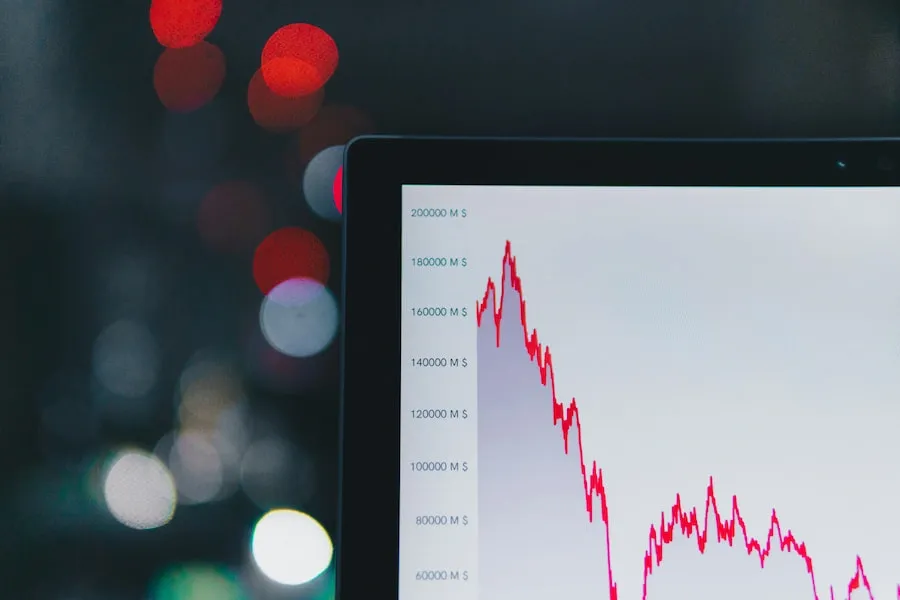
A trading strategy produces exceptional backtest results.
It generates a high Sharpe Ratio.
The Maximum Drawdown is low.
Profit Factor looks impressive.
Everything appears ready for live trading.
Then one market condition changes.
Performance collapses.
This happens more often than many traders realize.
The reason is simple:
A profitable strategy is not necessarily a robust strategy.
Some trading systems perform well only because they were optimized for a specific historical period. Others continue producing consistent results despite changing volatility, market trends, execution costs, or parameter adjustments.
The difference lies in robustness.
Trading strategy robustness testing is the process of evaluating whether a strategy remains stable when realistic conditions change.
Rather than asking:
“Did this strategy work?”
Robustness testing asks:
“Will this strategy continue working when conditions inevitably change?”
That distinction makes robustness testing one of the most important stages of professional quantitative research.
As physicist Richard P. Feynman famously said:
Although Feynman was referring to scientific research, the principle applies equally well to systematic trading.
An elegant trading strategy means very little if small changes in market conditions immediately destroy its performance.
In this guide, you’ll learn what trading strategy robustness testing is, how it differs from strategy validation, why profitable strategies sometimes fail robustness tests, and the techniques professional traders use to determine whether a trading strategy is genuinely resilient.
- What Is Trading Strategy Robustness Testing?
- Why Robustness Matters
- Robustness Testing vs Strategy Validation
- Robust Strategy vs Fragile Strategy
- Why Profitable Strategies Still Fail Robustness Tests
- How Do You Test Trading Strategy Robustness?
- How to Interpret Robustness Test Results?
- Trading Strategy Robustness Test Example
- Parameter Sensitivity Testing
- Walk Forward Analysis
- Market Regime Testing
- Cross-Market and Timeframe Testing
- Slippage and Transaction Cost Testing
- Missing Trade Simulation
- Monte Carlo Simulation
- Robustness Is About Stability, Not Perfection
- Research Insight: Why Strategy Stability Matters
- Common Mistakes in Robustness Testing
- Robustness Testing Checklist
- Final Verdict
- Frequently Asked Questions
- Richard P. Feynman, The Character of Physical Law (1965)
- Marcos López de Prado, Advances in Financial Machine Learning (2018)
What Is Trading Strategy Robustness Testing?
Trading strategy robustness testing is the process of determining whether a strategy continues performing acceptably after realistic changes are introduced to its assumptions, parameters, or market environment.
The objective is not to maximize historical performance.
The objective is to determine whether the strategy’s edge remains stable when the real world becomes less predictable.
Professional researchers intentionally challenge trading strategies by introducing controlled changes, such as:
- different market regimes,
- parameter adjustments,
- execution delays,
- transaction costs,
- missing trades,
- data variations,
- and changing volatility.
If small changes produce only modest differences in performance, the strategy is generally considered more robust.
If performance deteriorates dramatically after minor adjustments, the strategy may be fragile—even if its original backtest appeared exceptional.
Robustness testing therefore evaluates the stability of the trading edge, not simply its historical profitability.
Why Robustness Matters
Financial markets are constantly evolving.
Liquidity changes.
Volatility expands and contracts.
Participant behavior shifts.
Economic conditions change.
No trading strategy will ever experience the exact same environment that existed during its historical backtest.

Because of this uncertainty, professional traders are less interested in finding the “best” historical strategy than they are in finding strategies that continue performing reasonably well when conditions inevitably differ from the past.
A robust strategy does not need to produce identical results under every scenario.
Instead, it should demonstrate that its overall behavior remains consistent despite realistic variations.
This concept is particularly important in algorithmic trading, where strategies may execute thousands of trades automatically without continuous human supervision.
Small weaknesses that appear insignificant during research can become substantial losses once deployed in live markets. These gaps help explain why trading bots fail after deployment even when the historical strategy appears sound.
Robustness Testing vs Strategy Validation
The terms robustness testing and strategy validation are closely related, but they are not identical.
Strategy validation is the broader process of determining whether a trading strategy has accumulated sufficient evidence to justify live deployment.
Robustness testing is one important component of that process.
Validation asks:
“Can this strategy be trusted?”
Robustness testing asks:
“How well does this strategy survive realistic changes?”
A typical validation workflow may include:
- complete backtesting process,
- out-of-sample testing,
- Walk Forward Analysis,
- forward testing,
- paper trading,
- performance evaluation,
- and robustness testing.
Each stage contributes different evidence.
Robustness testing focuses specifically on determining whether the observed trading edge remains stable when assumptions become less ideal.
Robust Strategy vs Fragile Strategy
Two strategies can produce nearly identical historical returns while exhibiting completely different levels of robustness.
Consider the following example.
| Metric | Strategy A | Strategy B |
|---|---|---|
| Annual Return | 27% | 25% |
| Maximum Drawdown | 12% | 13% |
| Profit Factor | 1.82 | 1.78 |
| Parameter Stability | Low | High |
| Performance After Small Parameter Changes | Significant deterioration | Minimal change |
At first glance, both strategies appear similarly attractive.
However, Strategy B demonstrates something more valuable.
Its performance remains relatively stable even after small adjustments to parameters.
Strategy A loses much of its profitability after only minor modifications.
Professional traders generally prefer the second strategy because stable performance suggests the strategy is capturing a genuine market behavior rather than exploiting historical noise.
Consistency under changing conditions is often a stronger indicator of long-term reliability than exceptional historical returns.
Why Profitable Strategies Still Fail Robustness Tests
One of the most surprising lessons in quantitative trading is that profitable strategies frequently fail robustness testing.
This usually happens because the strategy was optimized to historical data rather than designed to exploit a persistent market inefficiency.
Some of the most common causes include:
- overfitting,
- excessive parameter optimization,
- dependence on one market regime,
- unrealistic execution assumptions,
- sensitivity to transaction costs,
- reliance on correlated market behavior.
A strategy may therefore produce:
- excellent historical returns,
- a strong Sharpe Ratio,
- low Maximum Drawdown,
- and attractive Profit Factor,
while still proving too fragile for live trading.
This is precisely why professional strategy development does not end after a successful backtest.
Historical profitability creates an opportunity for further investigation.
Robustness testing determines whether that opportunity is likely to survive outside the historical dataset.


How Do You Test Trading Strategy Robustness?
Professional traders do not rely on a single robustness test.
Instead, they evaluate how a strategy behaves when different assumptions are deliberately challenged.

Each test attempts to answer a different question.
Rather than asking whether the strategy produced attractive historical returns, robustness testing asks whether those returns remain reasonably stable under less-than-perfect conditions.
The strongest trading strategies typically pass multiple independent robustness tests instead of excelling in only one.
How to Interpret Robustness Test Results?
| Test | Stronger Evidence | Warning Sign |
|---|---|---|
| Parameter Sensitivity | Stable performance across a broad parameter range | One isolated “perfect” parameter |
| Market Regime Testing | Logical performance across multiple market regimes | Profitability depends on one market regime |
| Execution Cost Testing | Strategy remains profitable after realistic cost increases | Small increases eliminate profitability |
| Missing Trade Simulation | Performance changes gradually | A small number of trades generate most profits |
| Walk Forward Analysis | Stable performance across multiple testing windows | Most returns come from one optimization window |
| Monte Carlo Simulation | Simulated outcomes remain within acceptable risk limits | Many plausible simulations may produce drawdowns
outside the strategy’s predefined risk limits. Those thresholds should come from a broader risk management framework. |
There is no universal pass threshold. Robustness is supported when multiple independent tests show gradual, explainable deterioration rather than sudden performance collapse.
Trading Strategy Robustness Test Example
| Test | Baseline Result | Stressed Result* |
|---|---|---|
| Annual Return | 24% | 19–22% |
| Profit Factor | 1.65 | 1.42–1.57 |
| Maximum Drawdown | 12% | 15–18% |
| Parameters ±10% | — | Strategy remains profitable |
| Transaction Costs ×2 | — | Edge remains positive |
| Randomly Remove 5% of Trades | — | Moderate performance decline |
| Walk Forward Analysis | — | Positive across most testing windows |
Illustrative example only. These figures demonstrate how robustness testing may be interpreted and should not be viewed as universal performance standards.
Although performance declines under more demanding conditions, the strategy continues producing broadly consistent results. This behavior generally provides stronger evidence of robustness than a strategy whose profitability disappears after small changes.
Parameter Sensitivity Testing
Every algorithmic trading strategy depends on parameters.
Examples include:
- moving average lengths,
- RSI thresholds,
- stop-loss distances,
- take-profit levels,
- volatility filters,
- position sizing rules.
A robust strategy should continue producing acceptable results even when these parameters are adjusted within reasonable ranges.
For example, suppose a strategy uses a 20-period moving average.
A robustness test might evaluate:
- 18 periods,
- 20 periods,
- 22 periods,
- 25 periods.
If profitability collapses after changing the parameter by only one or two periods, the strategy is likely too sensitive.
On the other hand, if performance remains broadly consistent across a range of nearby values, the strategy is more likely capturing a genuine market behavior rather than exploiting historical randomness.
This concept is often referred to as parameter stability.
Professional quantitative researchers generally prefer stable parameter regions over isolated “perfect” settings.
Walk Forward Analysis
One of the most widely used robustness techniques is Walk Forward Analysis.
Rather than optimizing a strategy once using the entire historical dataset, Walk Forward Analysis repeatedly:
- optimizes the strategy,
- tests it on unseen data,
- advances the testing window,
- and repeats the process.
This approach helps determine whether the strategy adapts successfully as market conditions evolve.
Consistent performance across multiple Walk Forward cycles provides stronger evidence that the trading edge is genuine rather than dependent on one historical period.
For this reason, Walk Forward Analysis is widely regarded as one of the strongest practical robustness tests available to systematic traders.
Market Regime Testing
Markets rarely behave the same way for extended periods.
A strategy that performs exceptionally well during a strong bull market may struggle during:
- bear markets,
- high-volatility environments,
- low-volatility environments,
- sideways markets,
- macroeconomic uncertainty.
Professional robustness testing therefore evaluates performance across multiple market regimes rather than relying on one favorable historical period.
For example, a trend-following strategy should ideally be evaluated during:
- sustained uptrends,
- prolonged declines,
- ranging markets,
- and sudden volatility spikes.
The objective is not achieving identical returns under every condition.
The objective is demonstrating that the strategy continues behaving in a logical and reasonably consistent manner despite changing environments.
Cross-Market and Timeframe Testing
Researchers may evaluate a strategy on related markets, similar asset classes, or nearby timeframes to see whether the underlying logic generalizes beyond one dataset. This is supporting evidence, not a universal requirement, and poor performance in an unrelated market does not automatically invalidate the original strategy.
A strategy does not need to succeed in every market or timeframe. Cross-market testing provides supporting evidence of robustness rather than serving as a universal requirement.
Slippage and Transaction Cost Testing
Many historical backtests assume ideal execution.
Real markets rarely behave that way.
Professional researchers therefore stress-test strategies by introducing more realistic assumptions, including:
- wider bid-ask spreads,
- execution delays,
- partial fills,
- commissions,
- increased slippage.
If a small increase in trading costs completely eliminates profitability, the strategy may be too fragile for real-world deployment.
Conversely, strategies that remain profitable despite moderate increases in execution costs generally demonstrate stronger robustness.
This test is especially important for:
- high-frequency strategies,
- scalping systems,
- short-term algorithmic trading,
- markets with variable liquidity.
Missing Trade Simulation
No execution system is perfect.
Servers disconnect.
Internet connections fail.
Exchange APIs experience delays.
Orders occasionally fail to execute.
Professional robustness testing therefore examines how the strategy performs when a small percentage of trades are intentionally removed from the historical record.
For example:
A practical robustness test can randomly remove 1%, 5%, and 10% of executed trades across multiple simulation runs, then evaluate how return, Maximum Drawdown, Profit Factor, and other performance metrics change. If a small cluster of trades drives most of the result, first assess whether the backtest contains enough independent trades.
Random removal better reflects operational uncertainty than systematically removing every nth trade.
Monte Carlo Simulation
One of the most powerful robustness techniques is Monte Carlo Simulation.
Rather than changing the trading strategy itself, Monte Carlo methods repeatedly rearrange or resample historical trade outcomes to estimate how performance might vary under different sequences of wins and losses.
Typical questions include:
- How much larger could future drawdowns become?
- Could the same strategy experience longer losing streaks?
- How stable is the equity curve under different trade sequences?
- How sensitive are returns to randomness?
Unlike a standard backtest, which shows only one historical path, Monte Carlo Simulation evaluates thousands of plausible alternative paths.
This provides a broader understanding of uncertainty surrounding future performance.
As Marcos López de Prado emphasizes throughout his research on quantitative finance, robust strategy evaluation should measure not only expected returns but also the uncertainty surrounding those expectations.
Monte Carlo Simulation does not create entirely new market regimes. Its conclusions depend on the historical trades and assumptions used in the simulation. It should complement, not replace, out-of-sample testing, Walk Forward Analysis, and forward testing. Comparing backtesting vs forward testing helps separate historical simulation from evidence generated on new market data.
Robustness Is About Stability, Not Perfection
One misconception among new traders is believing that a robust strategy should perform equally well under every possible condition.
That expectation is unrealistic.
Every trading strategy experiences periods of weaker performance.
Markets evolve continuously.
Volatility changes.
Liquidity changes.
Participant behavior changes.
The objective of robustness testing is therefore not finding a strategy that never deteriorates.
Instead, it is identifying strategies whose performance changes gradually and predictably rather than collapsing after relatively small changes.
A strategy that remains reasonably profitable despite moderate parameter adjustments, changing market conditions, and realistic execution costs is generally far more valuable than one producing spectacular historical returns under only one specific configuration.
As quantitative researcher Robert Pardo writes in The Evaluation and Optimization of Trading Strategies, the goal of strategy development is not to discover the best historical result, but to develop strategies that continue performing under future market conditions.
That principle lies at the heart of robustness testing.
Research Insight: Why Strategy Stability Matters
The goal of robustness testing is not to prove that a strategy will always be profitable.
That is impossible.
Instead, robustness testing evaluates whether a trading strategy continues behaving reasonably when market conditions inevitably change.
This principle is widely recognized throughout quantitative finance.
As Marcos López de Prado explains in Advances in Financial Machine Learning, financial markets are highly adaptive systems, meaning relationships observed in historical data may weaken or disappear over time.
Similarly, Robert Pardo, whose work helped popularize Walk Forward Analysis, argues that successful strategy development should focus on identifying strategies that remain stable across different market conditions rather than maximizing historical backtest performance.
Together, these ideas reinforce an important lesson:
The objective is not finding the best historical strategy.
It is finding the strategy most likely to survive the future.
- Marcos López de Prado. Advances in Financial Machine Learning. 2018.
- Robert Pardo. The Evaluation and Optimization of Trading Strategies. Second Edition. 2008.
- Richard P. Feynman, The Character of Physical Law. MIT Press, 1965.
- Marcos López de Prado, Advances in Financial Machine Learning. Wiley, 2018.
- Robert Pardo, The Evaluation and Optimization of Trading Strategies. 2nd Edition, Wiley, 2008.
- David H. Bailey et al., The Probability of Backtest Overfitting, Journal of Computational Finance, 2014.
Common Mistakes in Robustness Testing
An incomplete evaluation may also miss data problems that stress tests cannot repair. No amount of parameter or cost testing can validate a backtest affected by look-ahead bias or future-data leakage.

Some of the most common mistakes include:
Optimizing Until the Strategy Looks Perfect
Repeatedly adjusting parameters until historical performance appears ideal often produces fragile strategies that fail once market conditions change.
Testing Only One Market Environment
Strategies should be evaluated across multiple market regimes.
Strong performance during one prolonged bull market does not necessarily indicate long-term robustness.
Ignoring Execution Reality
Backtests that exclude commissions, spreads, slippage, or execution delays frequently overestimate real-world performance.
Assuming Stable Parameters
A strategy requiring constant parameter adjustments is generally less robust than one producing consistent results across a broader parameter range.
Evaluating Returns Without Stability
Exceptional returns alone do not demonstrate robustness.
A complete review also examines trading strategy performance metrics together with:
- parameter stability,
- drawdown consistency,
- recovery behavior,
- execution sensitivity,
- and validation results.
Robustness is ultimately about consistency, not perfection.
Robustness Testing Checklist
Before deploying a trading strategy, professional researchers often verify that it has successfully passed multiple robustness evaluations.
✓ Stable parameter ranges
✓ Multiple market regimes tested
✓ Walk Forward Analysis completed
✓ Realistic commissions and slippage included
✓ Execution delays considered
✓ Missing-trade simulation performed
✓ Monte Carlo analysis completed (where appropriate)
✓ Consistent risk-adjusted performance
✓ Forward testing completed
✓ No evidence of excessive overfitting
No single item proves robustness.
Confidence increases when multiple independent tests produce consistent conclusions.

Robustness emerges from multiple independent stress tests rather than a single successful backtest.
Caption
Robustness emerges from multiple independent stress tests rather than a single successful backtest.

A robust strategy maintains relatively consistent behavior under realistic changes, while a fragile strategy deteriorates quickly when assumptions are modified.
Caption
A robust strategy maintains relatively consistent behavior under realistic changes, while a fragile strategy deteriorates quickly when assumptions are modified.
Final Verdict
A profitable backtest answers an important question:
“Did the strategy work historically?”
Robustness testing asks a far more difficult one:
“Will the strategy continue working when the future looks different from the past?”
That distinction explains why professional traders rarely trust historical performance alone.
Instead, they deliberately challenge strategies by varying parameters, testing different market regimes, introducing realistic execution costs, evaluating sensitivity to missing trades, and performing forward validation.
The strongest strategies are not those with the highest historical returns.
They are the ones whose performance remains broadly consistent when realistic conditions change.
Modern quantitative research platforms increasingly support this process by presenting standardized validation evidence—including backtesting, forward testing, and key risk metrics such as Maximum Drawdown, Sharpe Ratio, and Profit Factor—so traders can evaluate overall strategy robustness instead of relying on a single impressive result.
Traders can describe even the most complex trading ideas in plain English and use AlgoBuild to build and backtest a trading strategy without coding. The resulting backtest can then be subjected to the robustness tests described in this guide.
Buyers using a trading strategy marketplace such as AlgoNetwork should review parameter stability, market-regime coverage, execution-cost stress tests, drawdown behavior, and forward-testing evidence before allocating capital.
Frequently Asked Questions
What is trading strategy robustness?
What is the difference between robustness testing and strategy validation?
Why is robustness testing important?
How do I know if a trading strategy passed robustness testing?
Does a robust strategy need to work in every market condition?
Can a profitable strategy fail robustness testing?
This is common. A strategy may produce outstanding historical returns yet prove highly sensitive to small parameter changes, transaction costs, or different market regimes.
What is parameter sensitivity testing?
Is Walk Forward Analysis a robustness test?
Walk Forward Analysis is widely considered one of the most effective robustness testing techniques because it repeatedly evaluates strategy performance using unseen market data across changing time periods.
Can Monte Carlo Simulation improve robustness testing?
Can a robust strategy still lose money?
Robustness does not guarantee profitability.
It indicates that the strategy behaves consistently under realistic conditions and is less likely to fail because of small changes in assumptions or market environments.
Risk Disclaimer
Robustness testing reduces uncertainty but cannot eliminate investment risk. Even thoroughly tested trading strategies may underperform when market conditions change unexpectedly. Historical testing should always be combined with sound risk management and continuous monitoring after deployment.
About the Author
Written by: Algorier Research Team
Reviewed by: Quantitative Strategy Research Specialist
Last Updated: July 2026
The Algorier Research Team researches algorithmic trading, quantitative strategy development, validation methodologies, and systematic investing. This guide draws on quantitative finance literature and professional research practices to explain how experienced traders evaluate whether a trading strategy is robust enough to withstand changing market conditions before live deployment.