

- Quick Answer
- Vibe Trading vs Algorithmic Trading at a Glance
- What Is Algorithmic Trading?
- What Is Vibe Trading?
- The Biggest Difference: Creation Layer vs Execution Layer
- Human-Written Rules vs AI-Translated Rules
- Does Vibe Trading Still Use Algorithms?
- Deterministic Vibe Trading vs Agentic Trading
- Natural Language Trading vs Algorithmic Trading
- Who Actually Makes the Trading Decision?
- Once Rules Are Explicit, Testing Requirements Converge
- Transparency and Reproducibility
- Marketplace Transparency Is Different From Creator Transparency
- What Risks Are Different?
- The Most Important Combined Risk
- When Vibe Trading May Make More Sense
- When Traditional Algorithmic Development May Make More Sense
- Vibe Trading or Algorithmic Trading: Which Should You Choose?
- Where Algorier Fits
- Vibe Trading vs Algorithmic Trading Checklist
- Final Verdict
- Frequently Asked Questions
Introduction
Vibe trading and algorithmic trading are often framed as competing approaches.
That framing is usually too simple.
Algorithmic trading describes a system in which computer algorithms determine or execute trading decisions according to defined logic.
Vibe trading describes an emerging AI-assisted interface in which a trader can express strategy intent through natural language and let AI handle more of the translation into formal trading rules.
Those two ideas can exist inside the same system.
A trader might say:
“Trade Bitcoin only when the long-term trend is positive and momentum recovers after a pullback.”
AI can help clarify that idea, convert it into explicit conditions, and produce a systematic strategy.
Once those conditions are finalized, an algorithm can evaluate them repeatedly and execute the resulting trades.
In that workflow, the strategy is both vibe-created and algorithmically executed.
That distinction is the key to understanding the comparison.
Vibe trading changes how humans express and build trading logic. Algorithmic trading describes how computers systematically act on trading logic.
The important question is therefore not whether vibe trading replaces algo trading.
It is:
Which part of the strategy lifecycle is actually changing?
Quick Answer
Vibe trading and algorithmic trading are not necessarily alternatives. Algorithmic trading uses computer algorithms to determine or execute trading decisions with limited human intervention, while vibe trading describes an emerging AI-assisted interface in which traders express strategy intent through natural language. In many cases, vibe trading ultimately produces an algorithmic strategy, so the biggest change is how the system is created, not whether explicit rules, testing, execution logic, and risk controls are still required.
Vibe Trading vs Algorithmic Trading at a Glance
The clearest difference appears when the two concepts are compared across the strategy lifecycle.
| Dimension | Vibe Trading | Algorithmic Trading |
|---|---|---|
| Main question | How is the trading idea expressed and formalized? | How are trading decisions systematically determined or executed? |
| Typical human interface | Natural language, conversation, AI-assisted specification | Traditionally code, explicit rules, configuration, or quantitative models |
| Rule creation | AI can translate human intent into structured rules | Rules are traditionally defined directly by humans or models |
| Execution | May be manual, algorithmic, or more autonomous depending on the system | Automated according to the algorithm |
| Human role | Describe intent, clarify assumptions, review, constrain | Design, configure, monitor, govern |
| Main additional risk | AI interpretation and translation errors | Model, data, coding, execution, and market risks |
| Testing requirement | Required once the strategy becomes explicit | Core part of systematic strategy evaluation |
| Relationship | Can produce an algorithmic strategy | Can act as the execution layer beneath vibe trading |
The categories overlap because they describe different layers.
Vibe trading is primarily about the interaction and creation layer.
Algorithmic trading is primarily about systematic decision and execution logic.
What Is Algorithmic Trading?
Algorithmic trading has a much more established meaning than vibe trading.
Under MiFID II, algorithmic trading refers to trading where a computer algorithm automatically determines individual order parameters with limited or no human intervention, including whether to initiate an order, its timing, price, quantity, or how it is managed after submission.
That definition emphasizes automation of trading decisions or order handling, not how the strategy was originally created.

A traditional algorithmic workflow might look like:
Trading hypothesis → formal rules → programming → backtest → deployment → automated execution
The strategy could be simple.
For example:
Enter long when condition A and condition B are true. Exit when condition C occurs.
Or it could involve more complex statistical models, portfolio logic, execution algorithms, or multiple data sources.
The important point is that the computer receives enough formal logic to determine what action should occur.
Historically, a trader, quant, or developer usually performed much of the translation from the original trading idea into that formal representation.
That is the part vibe trading can change.
What Is Vibe Trading?
Vibe trading is a newer and less standardized term.
In this article, vibe trading refers to an AI-assisted, intent-first trading workflow in which a trader can begin by describing a market idea in ordinary language rather than expressing every condition manually in code.
For example:
“Trade gold when the broader trend is positive, but only enter after a pullback if momentum begins improving.”
The AI may then help determine what still needs to be defined:
- Which market and timeframe?
- What defines the broader trend?
- Which momentum measure is used?
- What qualifies as a pullback?
- When exactly does entry occur?
- What closes the position?
- What risk limits apply?
Once those questions are answered, the output can become explicit systematic logic.
This means vibe trading does not inherently eliminate rules.
A responsible workflow should do the opposite.
It should turn an informal idea into increasingly precise rules before the strategy is evaluated or deployed.
The Biggest Difference: Creation Layer vs Execution Layer
The most useful way to compare vibe trading with algorithmic trading is to separate strategy creation from strategy execution.
Traditional algorithmic trading often looks like this:
Idea → Human Formalizes Rules → Code → Test → Algorithmic Execution
A vibe trading workflow can look like this:
Idea → Natural Language → AI Clarifies and Formalizes Rules → Test → Algorithmic Execution
Once the strategy becomes explicit, both approaches enter a broader algorithmic trading workflow involving data, testing, risk, deployment, execution, and monitoring.

Notice where the workflows become similar.
Once the strategy is explicit, both may ultimately rely on an algorithm that receives market data, evaluates conditions, and determines what action should occur.
The major difference happens before that point.
Traditional Algo Trading Requires Earlier Formalization
In a conventional workflow, the trader may need to define the strategy precisely before implementation begins.
If the strategy says:
“Buy when momentum is strong.”
someone has to decide what strong means before writing the rule.
That definition may be created directly by the trader, a quant, or a developer.
Vibe Trading Moves Formalization Into the AI Interaction
With a natural-language interface, the trader can begin earlier in the thought process.
The initial idea can still contain ambiguity.
AI can help identify that ambiguity and turn it into questions.
The workflow therefore shifts from:
“Formalize everything first, then implement it.”
toward:
“Describe the intent, then formalize it interactively.”
This can reduce the coding barrier and make strategy development more accessible.

It does not make formalization unnecessary.
The Final Algorithm May Be the Same
Suppose a traditional quant and a vibe trading user eventually produce the same rule:
Evaluate a defined market at candle close. Enter long only when condition A and condition B are true. Exit when condition C occurs.
From the perspective of the execution engine, the origin of that rule may not matter.
One version came from manual design and coding.
The other came from natural-language intent translated through AI.
If the final conditions are identical, the algorithm can behave identically.
That leads to an important principle:
Vibe at the input does not require vibes at execution.
Human-Written Rules vs AI-Translated Rules
Traditional algorithmic trading typically places humans closer to the formal strategy specification.
A trader or quant determines the logic.
A developer, or the same person, converts that logic into executable code.
With vibe trading, AI becomes part of the translation layer.
The workflow changes to:
Human intent → AI interpretation → explicit rules → executable system
That creates a new risk that traditional algorithmic development does not face in exactly the same form:
translation risk.
Human-Written Rules Can Still Be Wrong
Traditional algorithmic trading is not protected from mistakes.
Humans can:
- define poor strategies
- introduce coding errors
- use unsuitable data
- overfit historical results
- make unrealistic execution assumptions
Vibe trading inherits all of those risks.
AI-Translated Rules Add an Interpretation Layer
Vibe trading adds another question:
Did the AI interpret the strategy the way the trader intended?
Suppose the user says:
“Exit when momentum weakens.”
The AI might interpret that as:
exit when momentum becomes negative
while the trader meant:
exit as soon as momentum declines from its previous value.
Both are plausible interpretations.
They are not the same strategy.
This is why AI-assisted strategy creation should expose important assumptions rather than silently choosing them.
The benefit of vibe trading is not that ambiguity becomes acceptable.
The benefit is that AI can help resolve ambiguity without requiring the trader to begin with programming syntax.
A structured trading strategy prompt can reduce this ambiguity by forcing important terms, timing, exits, and risk conditions to be specified before testing begins.
Does Vibe Trading Still Use Algorithms?
Often, yes.
This is one of the most important points in the entire comparison.
Natural-language interaction can be the front end.
An algorithm can still be the back end.
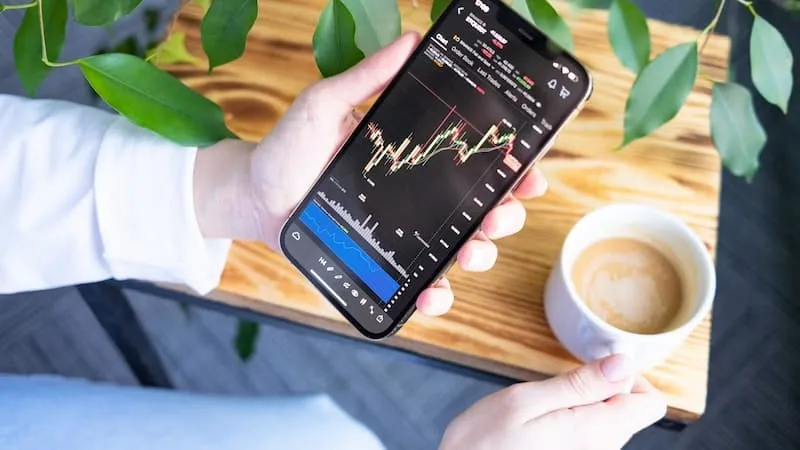
A trader may describe the strategy conversationally, review the resulting rules, test them, and then allow a deterministic system to execute those rules repeatedly.
The architecture becomes:
Natural-Language Intent → Explicit Strategy Logic → Algorithmic Execution
In that case, vibe trading is not replacing algorithmic trading.
It is changing how the algorithm is authored.
This also means the familiar requirements of algorithmic trading still apply once the strategy becomes systematic.
The strategy still needs defined data, consistent logic, realistic testing, risk controls, and execution assumptions.
AI may make it easier to build the system.
It does not remove the financial requirements underneath it.
Deterministic Vibe Trading vs Agentic Trading
One reason this comparison gets messy is that people often mix up three different things:
- traditional algorithmic trading
- vibe trading with deterministic algorithmic execution
- agentic trading
They overlap, but they are not the same.
A deterministic vibe-trading workflow can begin with natural language:
“Trade pullback entries only when the higher-timeframe trend remains positive and short-term momentum starts recovering.”
AI helps clarify the terms, formalize the conditions, and produce explicit rules.
Once those rules are defined, the strategy can behave deterministically. The same inputs should produce the same decision.
That is still very close to ordinary algorithmic trading from the point of view of execution.
An agentic system is different.
Instead of executing a fixed set of predefined conditions, an AI agent may continue interpreting changing information after deployment. It may retrieve data, weigh context, decide which signals matter, choose an action, and interact with tools within granted permissions.
This changes the architecture of decision-making.
A deterministic strategy says:
If these conditions occur, take this action.
An agentic system says something closer to:
Observe the environment, reason about the situation, and choose the action that seems appropriate within the defined objective and permissions.
That is a much bigger shift than merely using natural language to author a rule-based strategy.
This distinction matters because people sometimes hear vibe trading and assume it automatically means dynamic AI decision-making in live markets.
Not necessarily.
A vibe-trading system can still end in highly structured, rule-based, deterministic execution.
That is why the cleanest way to describe the relationship is:
Vibe trading may change how the strategy is created. Agentic trading changes how the strategy continues making decisions after it is deployed.
Natural Language Trading vs Algorithmic Trading
Another source of confusion is the relationship between natural language trading and algorithmic trading.
These are not opposing categories.
Natural language trading usually describes the authoring interface. Algorithmic trading describes the systematic execution logic.
A trader may describe an idea in plain English:
“Buy only after a breakout if the broader trend is positive and volume confirms the move.”
That sentence is not yet an algorithm.
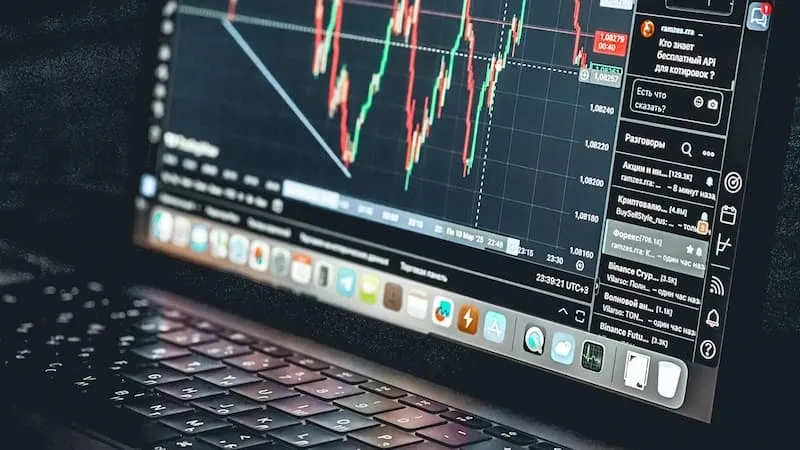
But once AI or a structured system turns it into explicit conditions, the result can become an algorithmic strategy.
So the correct comparison is not:
natural language trading or algorithmic trading
It is often:
natural language trading for creating an algorithmic trading strategy
This matters because many readers assume algorithmic trading always requires manual coding while vibe trading eliminates algorithms.
That assumption is wrong in both directions.
Some algorithmic trading systems can be built with low-code or no-code tools.
Some vibe-trading systems still depend on explicit algorithmic rules once the conversational stage ends.
The better way to understand the overlap is this:
- algorithmic trading describes what the system does with formal logic
- natural language trading describes how a human may specify or refine that logic
- vibe trading sits in the broader family of intent-first, AI-assisted trading workflows
In other words:
Natural language can be the front end. Algorithmic logic can still be the engine.
Who Actually Makes the Trading Decision?
This is probably the single most useful question in the entire comparison.
Instead of asking whether one label is more advanced than another, ask:
Who actually decides the trade?
The answer depends on the system architecture.
Traditional Algorithmic Trading
In a conventional rule-based system, the human decides the logic in advance.
The trader or quant determines the conditions, the programmer implements them, and the algorithm executes those instructions.
The machine is making the immediate trading action, but it is doing so according to human-defined rules.
AI-Assisted Vibe Strategy With Algorithmic Execution
In a vibe-trading workflow, the human may not specify the rules directly in code.
Instead, the human specifies the intent.
AI helps translate that intent into explicit rules.
Once those rules are accepted, the algorithm executes them.
In this architecture, the human still governs the strategy concept, but AI participates in the formalization layer.
Agentic Trading
In a more agentic setup, the human may define the objective, constraints, or permissions rather than every exact decision rule.
The AI can then continue interpreting market conditions and selecting actions during operation.
This moves more decision responsibility into the runtime system itself.

These architectures are easy to blur together because all of them may involve software and some degree of automation.
But the difference matters enormously.
A system that executes predefined rules creates one type of risk.
A system that continues interpreting the environment and choosing actions dynamically creates another.
That is why a good comparison should focus less on branding and more on delegated responsibility.
Once Rules Are Explicit, Testing Requirements Converge
This is where a lot of marketing language falls apart.
Once a trading strategy becomes explicit, the evaluation burden starts to look much more similar regardless of how the strategy was created.
The complete backtesting guide covers the broader historical-testing process that applies once those rules are fixed.
Whether the strategy was:
- coded manually
- assembled with a no-code interface
- translated from natural language by AI
the important questions converge once the system becomes systematic.
Data Integrity Still Matters
The strategy still depends on appropriate historical and live data.
If the data are wrong, delayed, revised, misaligned, or unavailable at the relevant time, the evaluation can become misleading.
That is true whether the original rule came from a quant notebook or from a conversational prompt.
Execution Assumptions Still Matter
A rule that looks attractive in theory can weaken sharply once realistic spreads, slippage, liquidity constraints, or order-handling assumptions are included.

Natural language does not create an exemption from market mechanics.
Out-of-Sample Evaluation Still Matters
A strategy that looks impressive on the same historical data used to refine it may simply be overfit, creating an overfitting problem rather than evidence of a durable edge.
In fact, AI-assisted creation can make this problem worse because generating variations becomes cheaper and faster.
A vibe-created strategy should therefore face the same or greater scrutiny, not less scrutiny.
That scrutiny belongs inside a broader trading strategy validation process rather than being replaced by AI-assisted generation.
Risk Still Matters
An elegant prompt does not mean the resulting strategy has acceptable drawdowns, concentration, turnover, or exposure.
Those constraints should sit inside a broader algorithmic trading risk management framework.
If the final trading behavior can affect capital, then the usual standards of strategy evaluation still apply.
This is one of the strongest reasons not to frame vibe trading as a replacement for algorithmic trading.
Once the strategy becomes an actual system, it inherits the same financial obligations.
The interface may change. The standards of evidence do not disappear.
Transparency and Reproducibility
One important difference between traditional algorithmic development and vibe trading is where ambiguity tends to live.
In a conventional workflow, the rule is often explicit from the beginning.
Someone wrote the condition directly.
In a vibe-trading workflow, the process may begin with ambiguous language and only later become formalized.
That makes transparency especially important.
What Did the AI Turn the Request Into?
A responsible vibe-trading workflow should not stop at a polished conversation.
It should make the resulting strategy specification inspectable.
The user should be able to see what the AI interpreted the request to mean.
If the original instruction was:
“Buy the breakout only when the move is supported by strong volume.”
the user should be able to review how breakout and strong volume were translated.
Without that visibility, the user may believe one strategy is being tested while another is actually being executed.
Reproducibility Depends on Explicit Final Rules
Traditional algorithmic trading usually benefits from a simple principle:
the same code with the same data should produce the same behavior.
Vibe trading can reach the same reproducibility, but only after the strategy is fully formalized.
If parts of the system remain dependent on vague language or unstable interpretation, reproducibility becomes weaker.
That is why transparency is not just a nice user-experience feature.
It is part of strategy governance.
Marketplace Transparency Is Different From Creator Transparency
This distinction also matters in the context of Algorier.
From the creator’s perspective, strategy logic needs to become explicit enough to build, test, and review.
From the buyer’s perspective, the logic itself does not necessarily need to be exposed publicly. According to the Algorier Whitepaper, the creator’s underlying strategy logic remains private, while standardized evidence such as backtests, forward tests, and performance metrics help buyers evaluate the strategy.
So transparency has layers:
- builder transparency helps ensure the strategy is correctly formalized
- marketplace transparency helps others assess the evidence without receiving the private logic itself
This is an important nuance, because transparency does not always mean publishing every implementation detail to every audience.
What Risks Are Different?
Vibe trading does not remove the classic risks of algorithmic trading.
It adds a new category on top of them.
Risks More Strongly Associated With Vibe Trading
These mostly come from the translation layer between intent and implementation:
- ambiguous prompts
- silent assumption filling
- AI interpretation errors
- hidden changes during revisions
- overconfidence caused by fluent explanations
- confusion between what the user meant and what the system actually built
These are not usually the central risk in a manually coded strategy, because the formalization step is more visible from the start.
Risks Shared With Traditional Algorithmic Trading
Once the strategy becomes systematic, the familiar risks return:
- weak or nonexistent edge
- bad data
- survivorship bias or look-ahead problems
- unrealistic execution assumptions
- overfitting
- unstable market relationships
- poor risk configuration
- implementation bugs
A vibe-created strategy can still fail for every ordinary reason an algorithmic strategy fails.
The Most Important Combined Risk
The real danger is not choosing between vibe trading risk and algorithmic trading risk.
It is forgetting that a vibe-created strategy can suffer from both.
A trader may think:
“The AI built the strategy, so the hard part is done.”
That is exactly backward.
The AI may have accelerated one part of the workflow while leaving every financial challenge intact and adding translation risk on top.
That leads to the most accurate summary of the comparison:
Vibe trading adds interpretation risk. It does not eliminate traditional algorithmic-trading risk.
For that reason, the right question is not:
Which label sounds more advanced?
It is:
Which risks does this workflow introduce, and which ones still remain after the strategy becomes systematic?
When Vibe Trading May Make More Sense
Vibe trading is not automatically better than traditional algorithmic development.
Its main advantage appears when the bottleneck is turning a trading idea into a formal system.
When the Trader Understands the Idea but Cannot Code It
A trader may know exactly what market behavior they want to investigate without knowing Python, Pine Script, C++, or another programming language.
Traditional algorithmic development can create a gap between:
knowing what you want to test
and
being able to implement it
A natural-language workflow can reduce that gap.
The trader can begin with the market logic, then use AI to help expose the details that still need formal definitions.
When Strategy Prototyping Is Slow
Some trading ideas contain multiple filters, timeframes, conditions, and risk rules.
Implementing every variation manually can make experimentation slow.
AI-assisted formalization can accelerate the creation stage, especially when the purpose is to turn an idea into something testable rather than manually write every implementation detail.
That speed is useful only if testing remains disciplined.
Generating more strategies faster is not evidence that any of them are better.
When Discretionary Ideas Need to Become Systematic
A trader may use concepts such as:
- strong momentum
- clean breakout
- healthy pullback
- abnormal volatility
- trend confirmation
These concepts may make sense during discretionary trading but remain too vague for systematic execution.
Vibe trading can be useful when the goal is to turn those ideas into measurable conditions.
The value is not that AI preserves the ambiguity.
The value is that it can help remove it.
When Traditional Algorithmic Development May Make More Sense
There are also situations where a conventional development workflow may provide more control.
Highly Specialized Infrastructure
Institutional or specialized trading systems may depend on custom data pipelines, proprietary infrastructure, unusual execution logic, or internal systems that cannot easily be represented through a general conversational interface.
Direct engineering control may be more appropriate.
Latency-Sensitive Trading
Some strategies depend heavily on execution speed, infrastructure location, networking, market microstructure, or highly optimized code.
The main challenge in those systems is not describing the trading idea.
It is engineering the infrastructure required to execute it.
Complete Source-Level Control
Some teams need precise governance over every implementation detail.
They may require formal code review, internal libraries, deployment procedures, testing frameworks, audit requirements, and strict version control.
For those workflows, direct algorithmic development may remain the preferred interface even if AI assists individual development tasks.
Existing Quantitative Teams
If a trader or team already has the programming skills, infrastructure, and research workflow needed to turn ideas into tested algorithms efficiently, natural-language strategy creation may solve a smaller problem.
The important point is not whether vibe trading is newer.
It is whether it removes a meaningful bottleneck in the actual workflow.
Vibe Trading or Algorithmic Trading: Which Should You Choose?
For many users, this is the wrong question.
The two approaches can belong to different stages of the same system.
Choose the creation workflow based on how you want to express and formalize the strategy.
Choose the execution architecture based on how the resulting strategy should operate.
A useful decision framework is:
| Situation | More Natural Starting Point |
|---|---|
| You have trading ideas but limited coding ability | Vibe trading |
| You want conversational strategy prototyping | Vibe trading |
| You want to formalize discretionary rules | Vibe trading |
| You already have explicit rules and development infrastructure | Traditional algorithmic development |
| You need highly specialized execution infrastructure | Traditional algorithmic development |
| You need deterministic automated execution after natural-language creation | Vibe trading + algorithmic trading |
| You want AI to keep reasoning dynamically during live operation | Agentic architecture, which requires a separate risk and governance model |
This table should not be read as a performance ranking.
None of these creation methods determines whether the resulting strategy has an edge.
Where Algorier Fits
Algorier sits directly in the overlap between vibe trading and algorithmic trading.
According to the Algorier Platform Whitepaper, AlgoBuild allows users to describe trading strategies in plain English, including the market, timeframe, entry conditions, exit conditions, and risk rules. The platform then translates that description into algorithmic logic and evaluates the resulting strategy through backtesting and forward testing.
That makes the creation layer conversational while the resulting strategy can still become systematic.
The relationship can be summarized as:
Trading Idea → Plain-English Description → Algorithmic Strategy → Backtest and Forward Test → Deployment Decision
This does not mean natural-language input removes the need for precise rules.
It also does not mean AlgoBuild should be treated as an unrestricted autonomous trading agent.
The Whitepaper positions it as a system for translating describable trading logic into algorithms, subject to the required data being available and the logic being computationally expressible.
For strategies that are eventually published through AlgoNetwork, the creator’s underlying logic remains private, while buyers can evaluate standardized backtest and forward-test evidence before deciding whether to purchase and run a strategy. Buyers retain control over their own risk settings and supported broker or exchange account.
With AlgoBuild, traders can describe even complex trading ideas in plain English, build and backtest a trading strategy without coding when the required data are available, and review the resulting evidence before deciding whether it deserves further evaluation.
Vibe Trading vs Algorithmic Trading Checklist
A workflow is closer to vibe trading when:
- the strategy begins as natural-language intent
- AI helps interpret or formalize the idea
- the user interacts conversationally during strategy creation
- some implementation work is delegated to AI
- the main new challenge is preserving intent during translation
A workflow is closer to traditional algorithmic trading development when:
- strategy rules are explicitly defined before implementation
- humans directly specify the algorithm or quantitative model
- source-level implementation control is central
- specialized engineering infrastructure is a major part of the system
A workflow can be both when:
- the trader describes the strategy in natural language
- AI converts it into explicit rules
- those rules are reviewed and tested
- a deterministic algorithm eventually executes them
A workflow becomes more agentic when:
- AI continues interpreting changing conditions after deployment
- decisions are not limited to a fixed predefined rule set
- the AI selects actions dynamically within granted objectives and permissions
The key diagnostic question remains:
Where does human intent stop, and where does machine decision-making begin?
Final Verdict
Vibe trading does not make algorithmic trading obsolete.
In many cases, it changes the route used to reach an algorithm.
Traditional algorithmic trading commonly follows:
Idea → Explicit Rules → Code → Test → Automated Execution
Vibe trading can shift the early stages toward:
Idea → Natural Language → AI-Assisted Formalization → Test → Systematic Execution
The creation interface changes.
The financial requirements underneath the strategy do not disappear.

Once a vibe-created strategy becomes systematic, it still depends on data quality, explicit logic, realistic testing, execution assumptions, risk controls, and monitoring.
Vibe trading also introduces a new problem that traditional algorithmic systems face less directly:
translation risk between what the trader intended and what the AI actually built.
So the most accurate comparison is not:
Which one replaces the other?
It is:
Which layer of the trading system is each concept describing?
Algorithmic trading describes systematic machine-driven trading logic and execution.
Vibe trading describes an emerging way for humans to create and direct trading systems through AI and natural language.
They can coexist in the same strategy.
Vibe trading can change how an algorithm is created without changing the fact that the final trading system still needs to behave like a serious algorithmic system.
Frequently Asked Questions
What is the difference between vibe trading and algorithmic trading?
Is vibe trading a type of algorithmic trading?
Does vibe trading replace algo trading?
What is AI vibe trading vs algorithmic trading?
What is natural language trading vs algorithmic trading?
Is vibe trading the same as agentic trading?
Is vibe trading easier than algorithmic trading?
Is vibe trading more profitable than algorithmic trading?
- European Securities and Markets Authority. MiFID II, Article 4: Definitions. Provides the regulatory definition of algorithmic trading, including automated determination of order parameters with limited or no human intervention.
- Borch, Christian. “Machine learning and social theory: Collective machine behaviour in algorithmic trading.” European Journal of Social Theory, Vol. 25, No. 4, 2022, pp. 503–520. DOI: 10.1177/13684310211056010. Academic work examining the relationship between human strategy design and automated market systems.
- Algorier. Algorier Platform Whitepaper, Version 1.0. July 2026. Product statements regarding AlgoBuild, plain-English strategy creation, algorithm generation, backtesting, forward testing, AlgoNetwork, strategy privacy, deployment, and buyer-controlled risk are based on the official Whitepaper.
Risk Disclaimer
Trading involves risk, including the possibility of substantial losses. Strategies created manually or with AI can contain flawed assumptions, implementation errors, unsuitable data, overfitting, unrealistic execution assumptions, or inappropriate risk settings.
Natural-language interfaces and AI-generated strategy logic do not guarantee that a trading strategy is valid or profitable. Backtests, forward tests, simulations, and historical performance do not guarantee future results.
This article is provided for educational and informational purposes only and does not constitute investment, financial, or trading advice.
About the Author
Written by: Algorier Research Team
Last Updated: August 2026
The Algorier Research Team covers algorithmic trading, trading strategy development, backtesting, systematic risk, strategy evaluation, and trading automation.