

AI trading bots are no longer experimental tools used only by quantitative firms. Today, automated trading systems execute a significant share of global market volume across equities, crypto, forex, and derivatives markets. Institutional firms rely heavily on algorithmic execution, while retail traders increasingly use AI-assisted platforms to automate strategies, manage risk, and reduce emotional decision-making.
But despite the explosion in popularity, most content around AI trading bots still falls into two extremes: overly technical developer tutorials, or unrealistic “get rich with AI” marketing. Neither helps traders make better decisions.
This guide takes a different approach. Instead of hype, we’ll break down what AI trading bots actually do, which strategies are commonly used, how traders evaluate automated systems, the biggest mistakes beginners make, and how no-code automation platforms are changing algorithmic trading. Algorier operates as a full-stack algorithmic trading platform — covering strategy creation, backtesting, execution, and monitoring.
- What Is an AI Trading Bot?
- Why They Became Popular
- The 4-Layer Automation Stack
- How They Actually Work
- Types of AI Trading Bots
- Crypto vs Stocks
- Coding vs No-Code
- The Rise of Strategy Marketplaces
- Why Most Retail Bots Fail
- Why Marketing Is Misleading
- Best Platforms in 2026
- Which Bots Actually Work?
- How to Evaluate a Bot
- A Realistic Daily Workflow
- Common Mistakes
- Are They Profitable?
- Can Beginners Use Them?
- Final Thoughts
- FAQ
What Is an AI Trading Bot?
An AI trading bot is software that analyzes market data and executes trades automatically based on predefined rules, machine-learning models, or statistical conditions. In practical terms, the bot monitors market conditions, identifies trade opportunities, manages risk, and executes trades automatically.
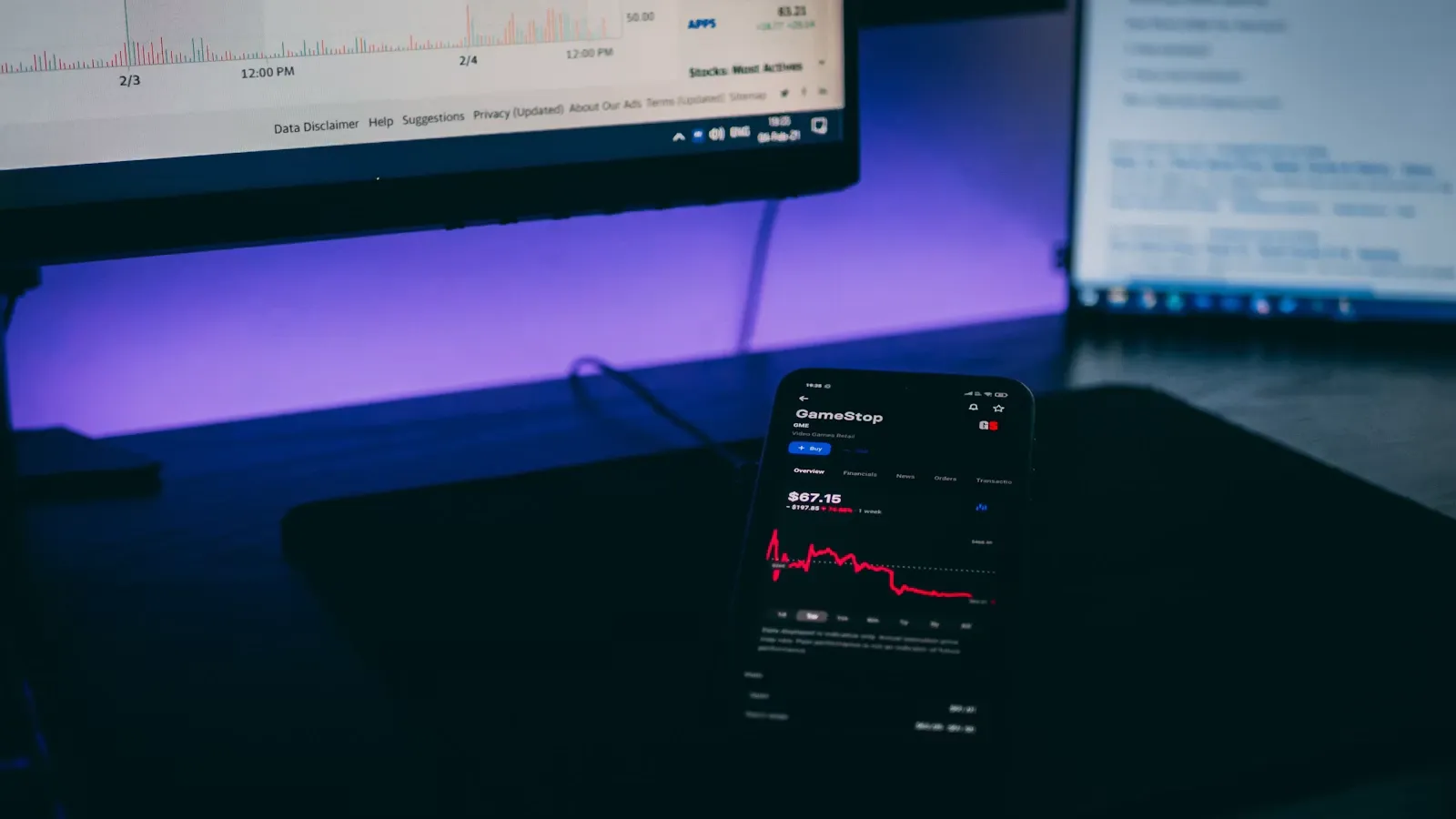
Some bots rely on technical indicators, trend-following systems, statistical models, or quantitative strategies. Others integrate AI-assisted optimization, predictive modeling, or reinforcement learning. The goal is not magic — the goal is consistency.
Why AI Trading Bots Became So Popular
The rise of automated trading isn’t random. Modern markets move too quickly for manual execution alone. Crypto markets operate 24/7, forex reacts instantly to macroeconomic events, and equity markets experience rapid intraday volatility around earnings, news, and institutional flows.
That created demand for systems capable of monitoring multiple assets simultaneously, reacting instantly, reducing emotional decisions, and enforcing structured risk management. Research from firms including Coalition Greenwich and JP Morgan has consistently indicated that algorithmic execution now represents a major share of institutional trading activity across global markets.
At the retail level, search demand for terms like best AI trading bot, crypto AI trading bot, and no-code trading bot has increased significantly over the past few years. The market is clearly moving toward automation-first workflows.
The 4-Layer Trading Automation Stack
Modern algorithmic trading infrastructure is no longer just about generating trade signals. Professional automation systems operate through multiple coordinated layers designed to manage execution reliability, portfolio-level exposure, deployment workflows, and live monitoring. The strongest environments typically include four integrated layers.
1. Strategy Logic Layer
Defines entry logic, exit conditions, quantitative models, market structure rules, and signal-generation systems.
2. Risk Management Layer
Coordinates position sizing, portfolio exposure, volatility controls, drawdown limits, and multi-strategy risk allocation. These controls are central to algorithmic trading risk management and capital protection.
3. Execution Infrastructure Layer
Where institutional-grade execution matters: broker connectivity, exchange routing, API synchronization, latency handling, slippage mitigation, and order-state coordination.
4. Monitoring & Optimization Layer
Provides continuous operational oversight of live strategy behavior, execution consistency, infrastructure stability, portfolio correlation, and risk-adjusted performance.
These layers don’t run in isolation — they connect into a repeatable lifecycle, from idea to live optimization:

This workflow reinforces operational maturity and systematic trading discipline — strategy development is only the first step in a broader algorithmic trading workflow.
How AI Trading Bots Actually Work
Most AI trading systems follow four core stages.
1. Market Data Processing
The bot continuously analyzes price action, volume, volatility, momentum, and technical indicators. Many systems integrate data from TradingView, Binance, Coinbase, Interactive Brokers, Alpaca, MetaTrader, or custom APIs. More advanced systems may also evaluate market sentiment, macroeconomic events, order-flow behavior, or cross-market correlations. A news sentiment trading strategy is one example of turning text-based market information into explicit algorithmic signals.
2. Signal Generation
Once conditions align, the bot generates a trade signal. For example: buy when VWAP trends upward, enter only if RSI confirms momentum, exit if drawdown exceeds 2%, and limit exposure to three simultaneous positions. This is where most traders spend their time — creating rules robust enough to survive real market conditions.
3. Risk Management
The most underrated part of automated trading. Weak bots focus only on entries; professional systems focus heavily on position sizing, stop-loss logic, maximum drawdown, diversification, and exposure management. Automation without risk control usually fails faster than manual trading.
4. Execution Infrastructure
Finally, the bot executes trades through the connected broker or exchange. Execution systems must handle slippage, latency, partial fills, connection stability, and order synchronization. Many beginner traders underestimate how important execution quality becomes in live trading.
Types of AI Trading Bots
Different bots are designed for different market conditions. Understanding these categories matters more than chasing “the best bot.”
Trend-Following Bots
Attempt to capture larger directional moves using moving averages, MACD, VWAP, breakout structures, and momentum filters. Popular in crypto, forex, and swing trading.
Mean Reversion Bots
Assume price eventually returns toward equilibrium, using RSI, Bollinger Bands, VWAP deviations, and volatility ranges. Widely used in equity markets, ETF trading, and intraday index strategies.
Arbitrage Bots
Exploit temporary pricing inefficiencies between exchanges or markets. Highly profitable during early crypto adoption, but increasingly competitive as institutional participation increased.
AI Portfolio Allocation Bots
Instead of executing single trades, these systems optimize broader portfolio allocation — dynamically adjusting risk exposure, asset weighting, volatility allocation, and strategy selection. Growing rapidly among long-term and hands-off investors.
AI Trading Bots for Crypto vs Stocks
Most articles ignore the differences between markets. But AI trading behaves differently depending on the asset class.
| Market | Typical Strategy Style | Main Challenge |
|---|---|---|
| Crypto | Trend-following, grid, momentum | High volatility |
| Stocks | VWAP, mean reversion, earnings momentum | Session timing |
| Forex | Macro trend, breakout systems | News-driven volatility |
| Indices | Intraday momentum, reversion | Fast institutional flow |
This distinction matters because many strategies perform well in one market and fail in another.
Coding vs No-Code AI Trading Bots
This is one of the biggest questions in the entire automation space. Should traders build bots manually, or use a no-code platform? The answer depends on experience, workflow, and goals.
Building Your Own AI Trading Bot
Custom-built systems often implement algorithmic trading in Python using pandas, NumPy, broker APIs, and cloud infrastructure. Advantages include maximum flexibility, custom logic, and full infrastructure control. Disadvantages include a steep learning curve, debugging complexity, infrastructure maintenance, and execution-reliability challenges. Many traders underestimate how much time goes into maintaining live automation.
No-Code AI Trading Platforms
The modern evolution of trading automation is no longer centered around lightweight retail tools. The market is increasingly moving toward integrated infrastructure environments supporting strategy lifecycle management, multi-strategy deployment, execution coordination, risk orchestration, and scalability. Instead of stitching together broker APIs, cloud infrastructure, execution engines, monitoring systems, and deployment pipelines manually, traders increasingly operate within unified environments.
Platforms like AlgoBuild represent a newer category of no-code trading bot builders designed to reduce the technical barriers to strategy creation and testing.

Modern no-code systems let traders backtest automatically, deploy trading systems, and manage execution without coding — so attention shifts from infrastructure toward strategy logic, optimization, and risk management.
That creation process is different from selecting an existing bot, which is the core distinction in vibe trading vs AI trading bots.
The Rise of Strategy Marketplaces
Another major shift in modern trading infrastructure is the evolution from isolated trading bots toward transparent strategy ecosystems. Historically, traders sold opaque signals, distributed invite-only systems, or operated disconnected automation workflows.
Modern strategy ecosystems increasingly prioritize strategies ready for live deployment, transparent backtesting, risk-adjusted analysis, and execution-behavior visibility.
AlgoNetwork represents a structured marketplace where traders can evaluate automated trading strategies using performance history, risk characteristics, and execution behavior. Creators on the supply side can also learn how to sell trading strategies online without exposing the underlying logic.
Now, traders increasingly expect transparent backtests, historical metrics, strategy comparisons, follower statistics, and copy-ready deployment. Instead of starting from zero, users can analyze verified systems, compare risk profiles, and deploy strategies faster. Compared with older black-box bot ecosystems, marketplace-driven automation offers significantly more visibility into strategy behavior.
Why Most Retail Trading Bots Fail in Live Markets
This is one of the biggest gaps between theoretical automation and real-world execution. Most retail trading bots fail not because the strategy concept is wrong — but because the surrounding infrastructure is weak.
Common operational failures include API instability, execution drift, latency spikes, synchronization failures, fragmented infrastructure, poor risk coordination, and overfitted backtests. Many systems appear profitable in controlled historical simulations but fail under live execution pressure — especially when slippage assumptions are unrealistic, order synchronization breaks, or portfolio exposure is poorly coordinated. Professional environments prioritize operational resilience as heavily as strategy logic.
Why Most AI Trading Bot Marketing Is Misleading
A large percentage of trading automation marketing relies on distorted performance presentation. Common examples include fake win rates, survivorship bias, martingale systems disguised as low-risk automation, cherry-picked screenshots, hidden drawdowns, curve-fitted backtests, and unrealistic passive-income claims.
This creates a major trust problem across the industry. Before selecting a platform, traders should understand the AI trading bot risks hidden behind exaggerated performance claims.
Best AI Trading Automation Platforms in 2026
The strongest platforms are no longer just “bots.” They’re becoming infrastructure environments capable of supporting systematic workflows, execution coordination, portfolio-level automation, and scalable deployment operations.
| Platform | Core Strength | Positioning |
|---|---|---|
| AlgoBuild | AI-assisted strategy deployment infrastructure | Integrated algorithmic trading workflow infrastructure |
| QuantConnect | Quantitative developer tooling | Developer-first quant research platform |
| MetaTrader | Forex automation ecosystem | Legacy forex automation environment |
| 3Commas | Crypto execution automation | Retail-focused crypto trading automation |
| TradingView + Pine Script | Technical strategy scripting | Chart-driven automation workflows |
| AlgoNetwork | Strategy ecosystem infrastructure | Transparent deployment-ready strategy marketplace |
Without operational interface visuals, automation platforms often feel theoretical rather than execution-ready. A mature monitoring layer tracks multiple strategies, exposure, and risk in one place:
Equally important is honest backtesting — equity growth always read alongside its drawdowns, not in isolation:

Which AI Trading Bots Actually Work?
This is the real question behind most searches. The answer: bots work when the underlying strategy works — not because the software has “AI” in the name.
The strongest systems usually combine robust backtesting, disciplined risk management, adaptive execution, and consistent market logic. The weakest systems usually rely on unrealistic promises, hidden performance metrics, or curve-fitted backtests. Professional traders evaluate process quality, not marketing language.
How to Evaluate an AI Trading Bot
Before trusting any automated system, evaluate these factors carefully.
Backtesting Quality
A reliable evaluation should begin with trading strategy performance metrics such as total trade count, testing period, maximum drawdown, win rate, risk-to-reward ratio, and realistic execution assumptions. Avoid platforms showing only isolated winning trades, unrealistic percentage gains, or cherry-picked screenshots.
Risk Controls
Professional systems should support maximum exposure limits, stop-loss controls, position sizing, simultaneous trade limits, and strategy pause functionality.
Transparency
Strong platforms explain how strategies behave, what conditions they trade, and how they performed historically. Opacity is usually a warning sign.
A Realistic Daily Workflow for AI Trading
One thing missing from most articles is how traders actually use automation day-to-day. A realistic workflow often looks like this:

- Review market conditions
- Check active strategy performance
- Adjust exposure limits if volatility changes
- Monitor drawdown and open positions
- Pause or rebalance underperforming systems
- Backtest new strategy variations
Automation reduces repetitive execution. It does not eliminate strategic oversight — and that distinction matters.
Common AI Trading Bot Mistakes
Most automation failures are predictable. Understanding why most trading bots fail helps traders identify problems ranging from overfitting to infrastructure instability.
Expecting Guaranteed Returns
No AI system eliminates market risk. Automation improves consistency; it does not guarantee profitability.
Over-Optimizing Strategies
A strategy that performs perfectly on historical data often collapses in live conditions. Robustness matters more than perfection.
Ignoring Market Regimes
Bots behave differently in trending markets, sideways environments, macro-driven volatility, and low-liquidity conditions. No strategy dominates every environment.
Using Black-Box Systems Blindly
Many traders deploy systems they don’t understand, which creates panic during inevitable drawdowns. Even automated trading requires strategic understanding.
Are AI Trading Bots Profitable?
This depends entirely on strategy quality, risk management, market conditions, and execution discipline. The broader evidence on whether algorithmic trading is profitable shows why automation alone cannot create an edge. The important point: automation amplifies process quality. Good systems become more consistent; bad systems fail faster.
Can Beginners Use AI Trading Bots?
Yes — but beginners should simplify aggressively. The best path is usually to start with one strategy, understand the logic fully, backtest before risking capital, use conservative risk settings, and scale slowly.
This is why no-code trading platforms are growing quickly: they lower operational complexity while preserving user control over risk, execution, and strategy selection.
Final Thoughts
AI trading bots are no longer niche developer tools — they’re becoming core infrastructure for modern trading. But the real edge isn’t “AI” alone. The edge comes from disciplined systems, transparent performance, controlled risk, and reliable execution.
The industry is moving away from black-box bots, unrealistic marketing, and infrastructure-heavy workflows — toward no-code automation, transparent strategy marketplaces, AI-assisted deployment, and accessible execution systems. That shift is making algorithmic trading dramatically more accessible than it was only a few years ago.
Frequently Asked Questions
What is the best AI trading bot?
It depends on the trader’s goals, market, and risk tolerance. Some traders prefer fully custom Python systems, while others use no-code automation platforms with built-in backtesting and execution tools.
Are AI trading bots legal?
Yes. Automated trading is legal in most jurisdictions, although regulations vary depending on the market and broker.
Can AI trading bots trade crypto?
Yes. Crypto is one of the most common markets for AI trading bots because markets operate 24/7 and volatility creates frequent opportunities.
Do AI trading bots guarantee profits?
No. All trading involves risk. AI trading bots improve execution consistency but cannot eliminate market uncertainty.
Can beginners use AI trading bots?
Yes. Modern no-code platforms significantly lower the technical barrier for beginners interested in algorithmic trading.
About the Author
This article was written by the Algorier research team, focused on automated trading systems, strategy development, and algorithmic trading workflows across crypto, forex, equities, and multi-asset markets. The team analyzes strategy automation trends, backtesting methodologies, and execution infrastructure used in modern algorithmic trading.