

- Quick Answer
- Vibe Trading vs AI Trading Bots at a Glance
- What Is an AI Trading Bot?
- What Is Vibe Trading?
- The Biggest Difference: Choosing a Strategy vs Creating One
- The Bot Can Be the Output
- AI Trading Bot Is Usually a Product, Vibe Trading Is Primarily a Process
- There Is a Large Middle Ground
- The Question That Matters: Where Does the Strategy Logic Come From?
- How Much Can You Customize?
- What Is a Vibe Trading Bot?
- AI Trading Bot vs AI Agent
- AI Bot vs Agentic Trading: The Difference Is Runtime Freedom
- Who Controls the Strategy Logic?
- How Testing Differs
- Are AI Trading Bots Black Boxes?
- The Real Comparison Is Control Across the Lifecycle
- Risk and Monitoring Differences
- When an AI Trading Bot May Make More Sense
- When Vibe Trading May Make More Sense
- Where AI Agents Fit
- Where Algorier Fits
- Vibe Trading vs AI Trading Bot Checklist
- Final Verdict
- Frequently Asked Questions
Introduction
AI trading bots and vibe trading can both involve artificial intelligence, automation, and systematic trading.
That does not make them the same thing.
An AI trading bot is typically something a trader selects, configures, or deploys after the underlying trading process already exists in some form.
Vibe trading starts from a different place.
The trader can begin with an idea:
“Trade Bitcoin breakouts only when the broader trend is positive and volume confirms the move.”
AI can help turn that intent into more explicit strategy rules, identify missing details, and eventually produce logic that can be tested and potentially automated.
The difference is therefore not simply:
bot vs AI
Both sides may use AI.
The more useful distinction is:
Are you primarily choosing an existing trading system, or using AI to help create the trading logic itself?
A vibe trading workflow can ultimately produce something that functions like a trading bot.
The bot can be the output.
Vibe trading describes how the strategy may have been created.
Quick Answer
Vibe trading and AI trading bots are not the same thing. An AI trading bot is typically an existing automated system that follows predefined rules, uses AI models, or combines both, while vibe trading is an intent-first workflow where a trader can use natural language and AI to create or refine the strategy itself. A vibe trading workflow can ultimately produce a trading bot, so the key difference is often whether you are selecting an existing system or creating the logic that the system will run.
Vibe Trading vs AI Trading Bots at a Glance
The two concepts overlap, but they usually begin at different points in the strategy lifecycle.
| Dimension | Vibe Trading | AI Trading Bot |
|---|---|---|
| Typical starting point | The trader’s own trading idea or intent | An existing automated trading system |
| Main user action | Describe, refine, and formalize strategy logic | Select, configure, evaluate, and deploy |
| Strategy ownership | Can begin from the user’s own intended logic | Logic may come from a creator, provider, developer, model, or the user |
| Customization | Can extend into conversational strategy creation | Varies from fixed settings to highly configurable systems |
| Role of AI | May translate natural language into structured strategy logic | May generate signals, adapt models, optimize parameters, or support other parts of the bot |
| Testing question | Did AI build the intended strategy, and how does that strategy perform? | How does the existing bot behave under relevant testing assumptions? |
| Automation | Can eventually become automated | Usually designed around automation |
| Runtime autonomy | Can range from deterministic rules to more agentic systems | Can range from fixed automation to AI-driven decision systems |
| Core distinction | Intent-driven strategy creation process | Automated trading system or product |
The categories are not mutually exclusive.
A strategy can be created through vibe trading and then run as an automated trading bot.
What Is an AI Trading Bot?
The term AI trading bot is used broadly, and our broader guide to AI trading bots explains how rule-based, model-driven, and AI-assisted automated systems are structured and evaluated.
Here, an AI trading bot means:
For this comparison, an AI trading bot is an automated trading system that uses AI or machine-learning methods in some part of its trading, analysis, signal generation, adaptation, or decision-support process. Some products may still combine those components with deterministic predefined rules.
That definition intentionally includes more than one architecture.
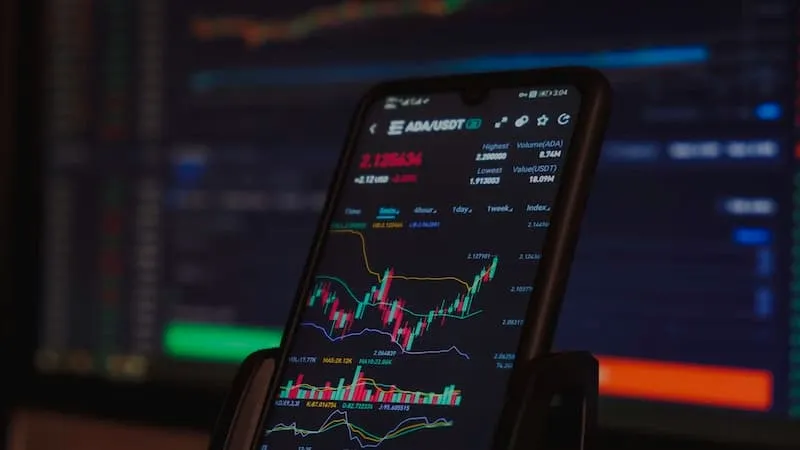
An AI trading bot does not necessarily mean an autonomous AI agent.
It also does not necessarily mean a simple fixed-rule system.
A bot might:
- execute predefined entry and exit rules
- use a predictive model as one signal
- adapt parameters within defined boundaries
- combine indicators with machine-learning outputs
- automate order submission and risk controls
The relevant point for this comparison is that a typical bot already represents some existing trading system by the time the user encounters it.
The user’s first question is often:
Do I want to use this system?
That creates an evaluation problem.
The trader needs to understand what the bot does, what can be configured, what evidence exists, what risks remain, and whether the system fits the intended use.
What Is Vibe Trading?
Vibe trading begins closer to strategy creation, using an intent-first workflow in which AI helps formalize the trader’s own idea.
Instead of searching first for an existing bot, the trader can begin with an intention expressed in ordinary language.
For example:
“I want a strategy that buys pullbacks during a strong uptrend but avoids entering when volatility becomes unusually high.”
That sentence is not a finished strategy.
Several concepts still need to be defined:
- What qualifies as an uptrend?
- What exactly is a pullback?
- How is volatility measured?
- What level counts as unusually high?
- What triggers entry?
- What closes the position?
- How much risk is allowed?
In a vibe trading workflow, AI can help turn those unresolved concepts into explicit rules.
The objective is not to let vague language remain vague.
It is to use conversation as the interface for reaching a structured trading system.
The workflow might become:
Trading Idea → Natural Language → AI Clarification → Explicit Rules → Testing → Automation
This means vibe trading can eventually lead to a trading bot.
The natural language trading workflow explains how plain-English intent can be translated into explicit, reviewable strategy rules before testing begins.
But the user started with their own strategy intent rather than starting only with an existing automated product.
The Biggest Difference: Choosing a Strategy vs Creating One
This is the most useful distinction between vibe trading and a typical AI trading bot.
Typical AI Trading Bot Workflow
A bot-oriented workflow often begins with something that already exists:
Existing Bot → Review Logic or Features → Evaluate Evidence → Configure Parameters → Set Risk → Deploy → Monitor
The user may have substantial control over configuration.
But the underlying strategy architecture often exists before the user begins.
The central decision is:
Is this existing system suitable for what I want to do?
Vibe Trading Workflow
A vibe trading workflow can begin before the strategy exists in formal form:
Your Trading Idea → Natural Language → AI Formalizes the Strategy → Review Rules → Test Evidence → Set Risk → Deploy → Monitor

The central decision becomes:
Can my intended trading idea be turned into a precise system worth evaluating?
The two paths can converge later.
Both may eventually produce automated trading.
Both may require risk settings.
Both need monitoring.
Both can fail.
What changes is where the user enters the process.
The Bot Can Be the Output
Suppose a trader describes:
“Buy ETH after a short-term pullback only when the broader trend remains positive and momentum begins recovering.”
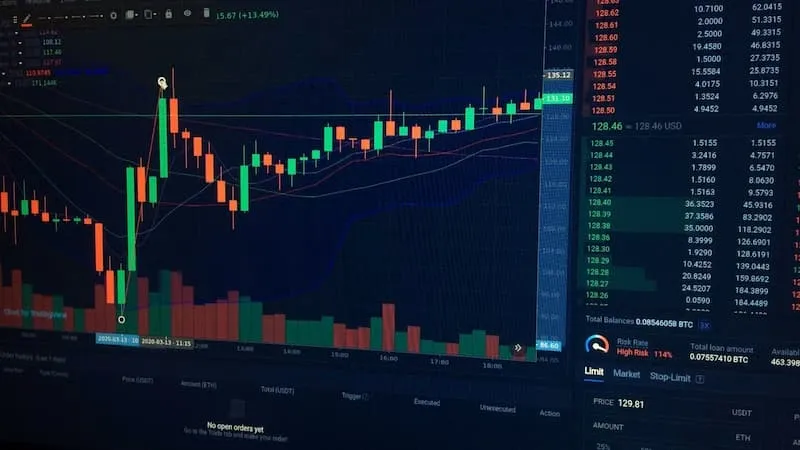
AI helps formalize the trend rule, pullback definition, momentum condition, entry timing, exit logic, and risk constraints.
The strategy is then implemented and eventually automated.
At the end of that workflow, the trader may effectively have a trading bot.
That does not erase the distinction.
It explains it.
The trading bot is the system that runs the logic. Vibe trading can be the process used to create that logic.
AI Trading Bot Is Usually a Product, Vibe Trading Is Primarily a Process
This distinction is useful, but it should not be treated as an absolute rule.
In typical retail usage, a trading bot is something a person can acquire, subscribe to, configure, build, or activate.
It is a system.
Vibe trading is primarily a workflow.
It describes how a trader interacts with AI while moving from trading intent toward a structured strategy.
A simple way to think about it is:
Product-Oriented Question
Which bot should I use?
Process-Oriented Question
How can I turn my trading idea into a system?
Those questions create different user journeys.
A trader who wants an existing solution may care most about:
- what the bot trades
- how it behaves
- what settings can be changed
- historical and forward evidence
- deployment requirements
- risk controls
A trader using vibe trading may first care about:
- whether the intended strategy can be expressed clearly
- how AI interprets the idea
- which assumptions remain undefined
- whether the resulting logic matches the original intent
- how the strategy behaves when tested
The distinction is not about which approach is more sophisticated.
It is about where the strategy logic originates.
There Is a Large Middle Ground
Real products do not fit into two perfect boxes.
A prebuilt bot may offer extensive customization.
A strategy builder may let users assemble their own logic.
An AI-assisted system may start from a template and then let the trader modify it conversationally.
A vibe trading platform may also offer existing strategies alongside custom strategy creation.
So the comparison should be understood as a spectrum:
Select Existing Logic → Configure Existing Logic → Build From Supported Components → Describe Custom Intent → Formalize Custom Strategy
The further the user moves to the right, the more the workflow shifts from selecting a trading system toward creating one.
That is where vibe trading becomes most distinct.
The Question That Matters: Where Does the Strategy Logic Come From?
Two systems can both be called AI trading bots while giving the user very different levels of control.
Likewise, two vibe trading systems can expose very different levels of transparency and customization.
Labels alone are therefore not enough.
A better evaluation starts with four questions:
- Who originally defines the strategy logic?
- What parts can the user change?
- Does AI help create the rules or only operate within existing ones?
- What becomes fixed before live execution begins?
Those questions reveal far more about the system than the word AI in its name.
They also prepare the most important distinction that comes next:
how much control the user has over the strategy, and how much decision freedom the AI retains after deployment.
How Much Can You Customize?
The difference between an AI trading bot and vibe trading becomes less obvious once customization enters the picture.
Some bots offer only a handful of settings.

Others allow extensive changes to markets, timeframes, indicators, entries, exits, parameters, and risk controls.
There are also strategy builders that let users assemble logic without writing code.
So it would be inaccurate to claim that trading bots are fixed while vibe trading is customizable.
The real distinction is how the user expresses that customization and how far the system allows the user to reshape the underlying strategy logic.
A useful spectrum looks like this:
| System Type | Typical User Control |
|---|---|
| Fixed prebuilt bot | Select the system and adjust limited settings |
| Configurable bot | Modify parameters, markets, risk, or supported conditions |
| Strategy builder | Assemble logic from predefined components |
| Vibe trading workflow | Describe intended behavior and formalize custom logic conversationally |
| Agentic system | Define objectives and permissions while AI may retain more runtime discretion |
The boundaries are not absolute.
A sophisticated trading bot might provide enough flexibility to behave like a strategy builder.
A vibe trading platform might also provide templates that reduce how much the user needs to define from scratch.
The important question is:
Are you mainly configuring logic that already exists, or expressing the behavior you want the system to create?
That distinction becomes more useful than simply asking whether the product calls itself a bot.
What Is a Vibe Trading Bot?
The phrase vibe trading bot is not yet a standardized technical category.
A practical interpretation is:
A trading bot whose strategy is created or configured through an intent-first, natural-language workflow rather than being selected only as a finished prebuilt system.
Imagine a trader who says:
“Create a strategy that trades upward breakouts only when the longer trend is positive, volume confirms the move, and volatility is not unusually high.”
AI helps convert that description into explicit conditions.
The trader reviews those rules.
The strategy is tested.
If the resulting logic is eventually automated, the output can function as a trading bot.
In that sense:
The bot can be the output of vibe trading.
This is why vibe trading vs trading bot is not always an either-or comparison.
One term can describe the creation process while the other describes the resulting automated system.
A manually coded strategy can become a bot.
A no-code strategy can become a bot.
A vibe-created strategy can become a bot.
What changes is how the trading logic reached executable form.
AI Trading Bot vs AI Agent
The difference between an AI trading bot and an AI agent is more architectural.
Both can use AI.
Both can automate tasks.
Both can potentially interact with markets.
The important difference is how much of the decision process remains predefined before the system starts operating.
A Trading Bot Usually Operates Inside a Defined Process
A typical bot has a bounded operating loop.
For example:
Receive market data → evaluate strategy logic → apply risk rules → generate signal → submit or manage order
The logic inside that loop may be simple or sophisticated.
It may contain machine learning.

It may adapt certain parameters.
But the broad process is generally known before deployment.
The bot does not necessarily need to decide what workflow to create next.
An AI Agent Can Decide How to Pursue a Goal
Agentic systems can retain more freedom over the sequence of actions used to reach an objective.
IBM describes AI-agent planning as the process of determining sequences of actions toward a goal, often involving reasoning, decision-making, tool use, action execution, feedback, and replanning when conditions change.
A trading-oriented agent might therefore be given an objective and access to tools rather than one completely fixed decision tree.
Depending on its permissions, it could potentially:
- retrieve portfolio information
- inspect market data
- use research tools
- select which action to take
- place an order
- observe the result
- adjust subsequent actions
That represents a different level of runtime discretion.
AI Bot vs Agentic Trading: The Difference Is Runtime Freedom
The cleanest way to compare an AI bot with agentic trading is to ask:
How much of the decision graph is fixed before deployment?
With a bot, more of the sequence is usually predefined.
With an agent, more of the sequence may be selected dynamically while the system operates.

Consider three simplified architectures.
Trading Bot
Predefined strategy process → market input → defined decision logic → action
The exact signal may change with market data, but the process used to reach it is relatively constrained.
Vibe-Created Trading Bot
Human intent → AI formalizes rules → rules are approved → bot executes defined strategy
AI has an important role during creation, but runtime behavior can still be deterministic.
AI Trading Agent
Human objective + permissions → AI observes context → AI plans or selects tools → AI chooses action → system acts
Here, more decision flexibility remains available after deployment.
A current real-world example is Robinhood’s Agentic Trading product, which allows a third-party AI agent to connect to a dedicated account through its Trading MCP. Depending on user authorization, the agent can access account information and place orders, including without transaction-by-transaction confirmation if configured that way. Robinhood also warns that agents can misunderstand instructions, use incomplete information, or behave unexpectedly.
This does not mean agents are inherently better or worse than bots.
It means they require a different control model.
The difference is less about whether AI is present and more about how much discretion the system retains after deployment.
Who Controls the Strategy Logic?
Another useful comparison is to follow control from the original trading idea to live behavior.
Prebuilt Bot
The core strategy may be defined by the creator or provider.
The user may control:
- whether to use it
- supported parameters
- position size
- risk settings
- markets
- deployment conditions
The degree of control depends entirely on the product.
Configurable Bot
The provider defines the framework, but the user can modify more of the strategy.
This may include indicator settings, thresholds, filters, exits, or other supported components.
Vibe Trading
The user begins closer to the strategy intent itself.
The AI helps translate:
“This is how I want the strategy to behave”
into increasingly explicit trading rules.
This gives the user more influence over where the logic begins, even though the final implementation still depends on what the system supports.
Agentic Trading
Control moves again.
The user may specify objectives, constraints, available tools, and permissions while allowing the AI to make more runtime decisions.
That means control is no longer just about strategy parameters.
It also includes:
- tool permissions
- action permissions
- confirmation requirements
- account access
- conditions under which autonomy should stop
This is why discussions about AI agents often become governance discussions very quickly.
The more runtime freedom a system has, the more its boundaries matter.
How Testing Differs
AI trading bots and vibe-created strategies both need evidence. Once the rules are fixed, both still require a disciplined backtesting process before historical performance can be interpreted.
But the order of the questions can differ.
Testing an Existing Bot
When evaluating an existing bot, the user is usually asking:
How has this existing system behaved under relevant test conditions?
That can involve reviewing:
- historical tests
- forward or paper evidence
- trade behavior
- drawdowns
- costs
- market coverage
- risk characteristics
The strategy already exists.
The main challenge is evaluating it.
Testing a Vibe-Created Strategy
A vibe-created system introduces an earlier question:
Did the AI actually build the strategy I meant?
Only after that should the user ask:
How did the resulting strategy behave?
So the workflow becomes:
Verify the translation → evaluate the strategy
That second stage belongs inside a broader trading strategy validation process rather than being replaced by AI-assisted creation.
This is a small but important difference.
A strong backtest is not helpful if it belongs to rules the trader never intended to create. Repeatedly modifying a vibe-created strategy against the same historical data can also create an overfitting problem, even when the AI has translated the original idea correctly.
Natural-language creation therefore adds a specification-checking layer before ordinary trading evaluation begins.
Testing an Agent Adds Another Layer
An agentic system can require another type of evaluation because runtime choices may not be fully represented by a fixed rule set.
The user may need to evaluate not only:
- the trading idea
- the implementation
- the historical behavior
but also:
- whether the agent respects its permissions
- how it reacts to unexpected situations
- whether its tool choices remain appropriate
- how reliably it can be interrupted or constrained
The testing problem becomes broader as autonomy increases.
Are AI Trading Bots Black Boxes?
Not necessarily.
This is an important misconception to avoid.
A simple rule-based bot can be extremely transparent.
The user may know exactly:
- which indicators it uses
- what triggers an entry
- what triggers an exit
- how risk is calculated
A machine-learning trading bot can be much harder to interpret.
But the word bot itself tells us very little about transparency.
The same is true of vibe trading.
A natural-language interface does not automatically make the resulting strategy transparent.
A system could accept a conversational request while hiding how that request was translated.
So:
“Bot” does not mean black box, and “vibe” does not guarantee transparency.
The better questions are:
- Can the user inspect the strategy specification?
- Are important assumptions visible?
- Can the system explain what was changed?
- Is the resulting behavior reproducible?
- Can the user distinguish generated explanation from measured evidence?
Transparency comes from architecture and product design, not from category labels.
The Real Comparison Is Control Across the Lifecycle
By this point, the comparison becomes clearer.
A prebuilt AI trading bot asks the user to evaluate and configure an existing system.
A vibe trading workflow can let the user participate earlier, when the strategy itself is still being defined.
An AI agent can extend automation further by retaining more freedom over decisions and actions during operation.
These models can overlap.
The same product could potentially include:
- prebuilt strategies
- configurable bots
- natural-language strategy creation
- deterministic algorithmic execution
- agentic capabilities
The useful question is therefore not:
Is this a bot, vibe trading, or an agent?
It is:
At each stage, who defines the logic, who can change it, and how much decision freedom remains after deployment?
That question gives a much more accurate picture of control than the product label alone.

Risk and Monitoring Differences
The three architectures discussed so far can fail for many of the same reasons.
A prebuilt bot, a vibe-created strategy, and an AI agent can all suffer from weak trading logic, poor data, unrealistic testing assumptions, execution problems, changing market conditions, or inappropriate risk settings.
The broader AI trading bot risks include model, data, execution, infrastructure, and monitoring failures that remain relevant regardless of how the strategy was created.
Regardless of how the strategy was created, position sizing, exposure limits, drawdown controls, and stop conditions should sit inside a broader algorithmic trading risk management framework.
What changes is the additional question the user needs to monitor.
With an Existing Trading Bot
The main question is:
Is this existing system continuing to behave the way I expected when I chose it?
Monitoring may include:
- whether trades match the documented strategy behavior
- whether drawdowns remain within expected ranges
- whether market conditions have changed
- whether execution costs, spreads, or slippage differ from testing assumptions
- whether configured risk settings remain appropriate
The user is primarily monitoring a system whose logic already existed before deployment.
With a Vibe-Created Strategy
The user has an additional responsibility:
Did the generated strategy preserve what I originally intended?
Before deployment, the user should confirm that AI did not introduce hidden assumptions or misinterpret important rules.
After deployment, monitoring still looks much like ordinary systematic trading.
The strategy should behave according to its approved logic.
So vibe trading adds translation risk without removing the ordinary risks of automated trading.
With an AI Trading Agent
Agentic systems add another question:
Is the system still acting within the authority and decision space I intended to give it?
Monitoring can therefore involve not only trading results but also:
- which tools the agent uses
- what information it relies on
- which actions it chooses
- whether confirmation is required
- whether granted permissions remain appropriate
- whether the agent can be stopped or overridden
Robinhood’s current Agentic Trading documentation illustrates why this matters. Connected third-party agents can access account information and, depending on authorization, place orders without confirmation for each transaction. Robinhood specifically warns that agents can misinterpret instructions, use incomplete or outdated information, and behave unexpectedly.
The more discretion that remains at runtime, the more monitoring becomes a governance problem rather than only a strategy-performance problem.
A useful summary is:
| System | Additional Monitoring Question |
|---|---|
| Existing trading bot | Is the system behaving as expected? |
| Vibe-created strategy | Does live behavior still match the strategy I intended and approved? |
| AI trading agent | Is the agent behaving as intended and remaining inside its permissions? |
When an AI Trading Bot May Make More Sense
An existing trading bot may be a more natural starting point when the user does not need to create a strategy from scratch.
You Want to Evaluate an Existing System
Some traders are less interested in designing strategy rules and more interested in deciding whether an existing strategy fits their goals.
In that situation, the important work becomes evaluation rather than creation.
Existing Customization Is Enough
A configurable bot may already allow the user to choose the relevant:
- market
- timeframe
- parameters
- risk settings
- deployment preferences
If those controls cover what the trader needs, a conversational strategy-building workflow may add limited value.
Speed to Deployment Matters More Than Custom Strategy Design
Starting from an existing system can reduce the amount of strategy specification required before evaluation begins.
That does not make deployment automatically safer or easier.
It simply moves the user’s work toward selecting and assessing something that already exists.
When Vibe Trading May Make More Sense
Vibe trading becomes more useful when the bottleneck is creating the trading logic itself.
You Already Have a Strategy Idea
A trader may know:
“I want to trade this type of market behavior.”
but not know how to turn the concept into software.
Natural language can provide the starting interface.
You Want Custom Logic
A prebuilt bot may come close to the intended behavior without matching it.

A vibe trading workflow can begin from the user’s own conditions instead of requiring the idea to fit entirely inside a predefined system.
Coding Is the Main Bottleneck
A trader may understand entries, exits, market conditions, and risk without knowing how to implement them programmatically.
AI-assisted strategy construction can reduce that technical barrier.
The Strategy Contains Multiple Conditions
Complex, multi-condition or multi-timeframe ideas can become tedious to implement manually.
Conversational formalization can make early strategy development faster, provided the resulting logic is still reviewed and tested carefully.
The benefit is therefore not:
AI finds a better strategy.
It is:
AI can reduce the friction between having a strategy idea and producing something explicit enough to evaluate.
Where AI Agents Fit
AI agents belong further along the autonomy spectrum.
IBM describes AI-agent planning as the process through which an agent determines sequences of actions toward a goal, potentially combining reasoning, planning, tool use, action, feedback, and replanning.
That architecture can be useful when a task genuinely requires dynamic multi-step decisions rather than execution of one predefined workflow.
But increased flexibility also increases the importance of:
- permissions
- oversight
- failure handling
- action limits
- monitoring
- auditability
An agent is therefore not simply a more advanced version of a trading bot.
It represents a different allocation of runtime decision authority.
For this comparison, the spectrum is more useful than a winner:
Prebuilt Bot → Configurable Bot → Vibe-Created Bot → More Agentic System
Moving right generally means more flexibility in how the trading process is created or operated.
It can also mean more complexity in controlling what the system is allowed to do.
Where Algorier Fits
Algorier supports a different starting point depending on whether the user wants to create a strategy or evaluate one that already exists.
AlgoBuild: Start With Your Own Trading Idea
According to the Algorier Platform Whitepaper, AlgoBuild allows users to describe trading strategies in plain English, including markets, timeframes, entry conditions, exit logic, and risk rules. According to the Algorier Platform Whitepaper v1.1, AlgoBuild lets users describe even complex trading ideas in plain English, including markets, timeframes, entry conditions, exit logic, and risk rules. The platform translates that description into algorithmic logic and centrally backtests the resulting strategy. A creator can additionally enable a live Forward Test to build an out-of-sample record.
That places AlgoBuild clearly on the intent-driven side of this comparison.
Instead of beginning only with a prebuilt bot, the user can begin with:
This is how I want the strategy to behave.
The strategy still has to become explicit and computable, and required data must be available. Natural language does not remove those constraints.
AlgoNetwork: Evaluate Existing Creator Strategies
Algorier also supports the evaluation side through AlgoNetwork, a trading strategy marketplace where buyers can compare standardized historical backtests and, when enabled by the creator, live Forward Test records before choosing a strategy.
Creators can publish strategies to AlgoNetwork, where every listing includes a standardized historical backtest. The creator controls whether the strategy logic remains private or is shown in plain English through Open Logic, and whether a live out-of-sample record is published through Forward Test. Buyers can evaluate the available evidence and run purchased strategies on their own connected broker or exchange accounts with their own risk settings.
That creates two distinct paths:
Create:
Your Idea → AlgoBuild → Algorithm → Test
Evaluate:
Creator Strategy → AlgoNetwork → Review Evidence → Configure Your Risk
Neither path guarantees that a strategy will perform successfully.
They simply begin from different user needs.
With AlgoBuild, traders can describe even complex trading ideas in plain English, build and backtest a trading strategy without coding when the required data are available, and decide whether the resulting strategy deserves further evaluation before deployment.
Vibe Trading vs AI Trading Bot Checklist
Use these questions to determine which type of system you are actually evaluating.
Strategy Origin
- Does the trading logic already exist?
- Are you selecting a creator’s system?
- Or are you starting with your own trading idea?
Customization
- Can you change only parameters?
- Can you change actual entry and exit logic?
- Can you describe entirely new behavior?
AI’s Role
- Does AI generate a signal inside an existing bot?
- Does AI help create the strategy?
- Does AI continue choosing actions during operation?
Testing
- Are you evaluating an existing strategy?
- Do you first need to verify that AI built the intended strategy?
- Can the system’s behavior be reproduced?
Runtime Control
- Is the trading process fixed before deployment?
- Can the system choose different tools or actions dynamically?
- Which actions require human approval?
Risk
- Who controls position sizing?
- What exposure limits exist?
- Can trading be stopped?
- Does additional AI autonomy introduce additional permissions that need monitoring?
If these questions are answered clearly, labels such as bot, vibe trading, and agent become much less confusing.
Final Verdict
Vibe trading and AI trading bots overlap, but they describe different parts of the trading workflow.
An AI trading bot is typically an automated system that already contains a trading process when the user begins evaluating or configuring it.
Vibe trading can begin earlier.
The trader starts with an idea, expresses it through natural language, and uses AI to help convert that intent into explicit strategy logic.
That logic can eventually become a trading bot.
So the most useful distinction is not:
Vibe trading or trading bot?
It is:
Are you choosing an existing trading system, or creating the logic that the system will run?
AI agents extend the spectrum further.
A conventional bot generally operates inside a more predefined process.
An agent may retain greater freedom to determine which steps, tools, or actions to use while operating.
None of these labels tells you whether a strategy is profitable, safe, transparent, or suitable.
Those properties still depend on the actual system, data, testing, execution, risk controls, and governance.
A bot can be the product. Vibe trading can be the creation process. Agentic trading can change how much decision freedom remains at runtime.
Frequently Asked Questions
What is the difference between vibe trading and an AI trading bot?
Is a vibe trading bot the same as an AI trading bot?
Can vibe trading create a trading bot?
What is the difference between an AI trading bot and an AI agent?
What is AI bot vs agentic trading?
Are AI trading bots always black boxes?
Is vibe trading more customizable than an AI trading bot?
Is an AI agent better than a trading bot?
- IBM. “What Is AI Agent Planning?” Explains AI-agent planning, goal-directed action sequencing, decision-making, tool use, feedback, and replanning in agentic systems.
- Robinhood. “Agentic Trading Overview.” Official documentation describing connections between third-party AI agents and dedicated Robinhood Agentic accounts, available permissions, order placement, monitoring, and associated risks.
- Robinhood. “Trading With Your Agent.” Official documentation describing agent-enabled order placement and user responsibility for activity in an Agentic Trading account.
- Algorier. Algorier Platform Whitepaper, Version 1.1. September 2026. Product statements concerning AlgoBuild, AlgoNetwork, plain-English strategy creation, strategy privacy, backtesting, forward testing, deployment, and buyer-controlled risk are based on the official Whitepaper.
Risk Disclaimer
Trading involves risk, including the possibility of substantial losses. Prebuilt trading bots, AI-generated strategies, and agentic systems can contain flawed logic, misunderstand instructions, rely on unsuitable data, overfit historical information, behave differently under live execution conditions, or operate with inappropriate risk settings.
Backtests, forward tests, simulations, AI analysis, and historical results do not guarantee future performance.
This article is provided for educational and informational purposes only and does not constitute investment, financial, or trading advice.
About the Author
Written by: Algorier Research Team
Last Updated: September 2026
The Algorier Research Team covers algorithmic trading, trading strategy development, backtesting, systematic risk, strategy evaluation, and trading automation.