

Every successful investment portfolio represents a series of decisions. Which assets should be included? How much capital should be allocated to each position? When should the portfolio be rebalanced? Professional investors spend years developing frameworks to answer these questions. For many individual investors, however, building a portfolio entirely from scratch is neither practical nor necessary. Instead of inventing a new investment approach, many investors choose to replicate an existing one.
Portfolio replication is the process of constructing a portfolio that closely mirrors another portfolio, benchmark, investment strategy, or asset allocation model. The objective is not copying trades blindly — it is systematically reproducing the characteristics, risk profile, and performance of a proven investment approach. Index funds replicate market benchmarks, ETFs replicate underlying indices, institutional investors replicate factor exposures, and algorithmic systems automate replication through predefined rules and periodic rebalancing.
“Don’t look for the needle in the haystack. Just buy the haystack.“ — John C. Bogle, founder of Vanguard
Although Bogle was referring to index investing, the same principle explains why portfolio replication has become such an important investment technique. Rather than attempting to predict every market movement, investors can seek to systematically reproduce an established investment process. In this guide, you’ll learn what portfolio replication is, how professional replication strategies work, the different methods used by institutional investors, common implementation challenges, and how algorithmic trading makes replication more efficient and scalable.
- What Is Portfolio Replication?
- Why Investors Replicate Portfolios
- Replication vs Index Investing
- How to Replicate a Portfolio Step by Step
- Portfolio Replication Methods
- Portfolio Replication Example
- What Is Tracking Error?
- Replicating a Hedge Fund Portfolio
- Replication in Algorithmic Trading
- Can AI Help Replicate Portfolios?
- Common Replication Challenges
- Why Tracking Error Matters
- Replication vs Copy Trading
- Who Should Use Portfolio Replication?
- Best Practices
- Is Portfolio Replication Worth It?
- Final Verdict
- FAQ
- References
What Is Portfolio Replication?
Portfolio replication is the process of constructing an investment portfolio that closely matches the behavior of another portfolio, benchmark, or investment strategy. Rather than selecting investments independently, the objective is to reproduce the original portfolio’s characteristics as accurately as possible — asset allocation, sector exposure, geographic diversification, factor exposure, risk profile, and expected returns.

For example, an investor might choose to replicate a broad market index, a model portfolio, an institutional investment strategy, a hedge fund’s publicly disclosed holdings, or a rules-based quantitative portfolio. The quality of replication is typically measured by how closely the replicated portfolio tracks the original over time. Perfect replication is rarely possible; instead, investors attempt to minimize the difference between the two portfolios while considering costs, liquidity, and operational constraints. According to the CFA Institute, portfolio management is fundamentally concerned with constructing portfolios that align investment objectives with risk constraints. Portfolio replication applies the same philosophy by seeking to reproduce an existing investment process rather than designing one from the ground up.
Why Investors Replicate Portfolios
Portfolio replication is not about avoiding investment decisions — it is about making better ones. Rather than attempting to outperform every market participant, investors often choose to replicate portfolios that already demonstrate characteristics aligned with their objectives.
Diversification
Replicating a diversified portfolio allows investors to gain exposure across multiple assets instead of concentrating risk in a handful of positions. Diversification can help reduce portfolio volatility while improving long-term consistency.
Benchmark Tracking
Many investors are less interested in outperforming the market than in closely matching it. Index funds are among the best-known examples of portfolio replication: their objective is to replicate benchmark indices such as the S&P 500 rather than outperform them.
Institutional Investment Strategies
Individual investors sometimes seek exposure to approaches used by institutional asset managers. Rather than copying individual trades, they attempt to replicate the broader portfolio structure using publicly available information.
Reduced Research Time
Constructing a portfolio from scratch requires extensive research. Replication allows investors to build upon existing portfolio designs instead of starting with a blank slate. This does not eliminate due diligence; it simply shifts the focus from portfolio creation to portfolio evaluation.
Consistent Investment Process
One of the greatest advantages of replication is consistency. Once replication rules have been defined, decisions become systematic rather than emotional. This makes portfolio replication particularly well suited to algorithmic investing, where predefined rules can automate portfolio construction and periodic rebalancing.
Portfolio Replication vs Index Investing
Portfolio replication and index investing are closely related, but they are not the same concept. Index investing is one application of portfolio replication: the objective of an index fund is to replicate the performance of a specific benchmark, such as the S&P 500 or the MSCI World Index. Portfolio replication is broader — it may involve replicating a market index, a model portfolio, a hedge fund’s disclosed holdings, a factor-based strategy, or a custom investment portfolio.
| Portfolio Replication | Index Investing |
|---|---|
| Can replicate many types of portfolios | Replicates a market index |
| Flexible implementation methods | Usually follows a published benchmark |
| May involve active or systematic strategies | Primarily passive investing |
| Often customized to investor objectives | Standardized across investors |
Index investing is therefore one of the most common examples of portfolio replication — but portfolio replication extends far beyond index funds.
How to Replicate a Portfolio Step by Step
Successful replication follows a structured process. Professional investors rarely attempt to copy portfolios position by position without first understanding the underlying methodology. Instead, they follow a repeatable framework.
Step 1: Identify the Target Portfolio
The first step is selecting the portfolio to replicate — a market index, an ETF, a model portfolio, a hedge fund’s disclosed holdings, or a rules-based strategy. The more transparent the original portfolio is, the easier it becomes to replicate accurately.
Step 2: Analyze Portfolio Holdings
Next, identify the assets held within the portfolio: securities, asset classes, sector allocation, geographic exposure, and investment style. Understanding portfolio composition is essential before attempting replication.
Step 3: Determine Portfolio Weights
Replication requires more than identifying holdings — investors must also understand how capital is allocated. For example:
| Asset | Weight |
|---|---|
| U.S. Equities | 50% |
| International Equities | 20% |
| Bonds | 20% |
| Gold | 10% |
These weights determine both the portfolio’s expected returns and its overall risk profile. In an automated portfolio, algorithmic trading risk controls should enforce position limits, exposure rules, and rebalancing constraints.
Step 4: Build the Replicated Portfolio
Once holdings and weights have been identified, the portfolio can be constructed. Execution should account for transaction costs, liquidity, execution slippage, minimum investment sizes, and available capital. Perfect replication is not always practical; the objective is achieving a close approximation while minimizing unnecessary costs.
Step 5: Rebalance Periodically
Replication is not a one-time activity. Market prices change continuously, and as asset values change, portfolio weights drift away from their original allocations. Periodic rebalancing restores the intended exposure and helps maintain consistency with the target portfolio.
Step 6: Monitor Tracking Error
No replicated portfolio performs exactly like the original. The difference between the two is commonly measured through tracking error. Professional investors continuously monitor tracking error to evaluate whether replication remains sufficiently accurate over time.

Successful portfolio replication depends on a disciplined, repeatable process rather than simply copying individual positions.
Portfolio Replication Methods
There is no single way to replicate a portfolio. The appropriate method depends on the investment objective, portfolio complexity, transaction costs, available capital, and operational constraints. Professional asset managers select the replication technique that offers the best balance between accuracy and efficiency.

The most appropriate method depends on the investor’s objective, implementation costs, and desired tracking accuracy.
Full Replication
Full replication attempts to purchase every asset in the original portfolio using the same weights. It is commonly used by index funds tracking relatively straightforward benchmarks. Advantages include the highest replication accuracy, low tracking error, and a transparent methodology. Limitations include higher transaction costs, reduced practicality for portfolios containing hundreds or thousands of securities, and expensive frequent rebalancing.
Sampling Replication
Sampling holds only a representative subset of the original portfolio rather than every security, selecting assets that capture the portfolio’s overall characteristics. It is particularly useful when the original portfolio contains many securities, liquidity is limited, or transaction costs are significant. Professional ETF managers frequently use sampling when full replication would be inefficient.
Optimization-Based Replication
Optimization techniques use mathematical models to construct a portfolio that behaves similarly to the original while minimizing costs or tracking error. Instead of copying every position exactly, optimization seeks the most efficient combination of assets, minimizing objectives such as tracking error, turnover, volatility, or transaction costs. It is widely used by institutional managers because it balances precision with operational efficiency.
Factor Replication
Rather than replicating individual securities, factor replication attempts to reproduce the portfolio’s underlying investment characteristics — exposure to Value, Momentum, Quality, Growth, Low Volatility, and Size. This approach has become increasingly popular among institutional investors because factor exposures are often more important than the specific securities held. A portfolio may therefore behave similarly even if its holdings differ substantially from the original.
Synthetic Replication
Synthetic replication reproduces portfolio performance through financial derivatives — futures, swaps, and options — rather than by directly owning every underlying asset. It is often used when direct ownership is impractical, expensive, or operationally difficult. However, it introduces additional risks, including counterparty risk, derivative pricing risk, and collateral management, so it is generally used by sophisticated institutional investors rather than individual traders.
Algorithmic Replication
Modern portfolio replication increasingly relies on automation. Before automating a replication model, traders should run a realistic trading strategy backtest that includes rebalancing frequency, transaction costs, and allocation drift. instead of manually reviewing positions, software automatically calculates weights, generates orders, executes trades, monitors drift, triggers rebalancing, and evaluates tracking error. This improves consistency while reducing operational errors.
“Disciplined investing means following the process even when it becomes uncomfortable.” — Cliff Asness, founder of AQR Capital Management
Algorithmic replication embodies this principle. Rather than reacting emotionally to market movements, the system follows predefined portfolio rules consistently. This does not eliminate investment risk — it eliminates unnecessary inconsistency.
Investors who want to formalize allocation and rebalancing rules can use AlgoBuild to create an automated trading strategy and backtest it before deployment.
Portfolio Replication Example
Understanding the theory is useful; seeing replication in practice is even more valuable. Consider a simplified investment portfolio that an investor wants to replicate using equivalent investment vehicles.
| Asset | Weight |
|---|---|
| Equities | 60% |
| Bonds | 25% |
| Gold | 10% |
| Cash | 5% |
After constructing the replicated portfolio, the results over one year appear as follows. These trading strategy performance metrics should be assessed together rather than treated as isolated numbers.
| Metric | Original Portfolio | Replicated Portfolio |
|---|---|---|
| Annual Return | 12.8% | 12.5% |
| Volatility | 10.4% | 10.7% |
| Maximum Drawdown | 11.3% | 11.6% |
| Tracking Error | — | 0.42% |
The replicated portfolio does not produce identical results — and it does not need to. Evaluating its maximum drawdown alongside return and volatility helps reveal whether the replicated risk profile remains comparable to the original. A tracking error of 0.42% suggests that the replication has been highly successful. The focus is not perfection; the focus is consistency.

Successful replication aims to minimize tracking error while preserving the portfolio’s overall investment characteristics.
What Is Tracking Error in Portfolio Replication?
Tracking error measures how closely a replicated portfolio follows its target portfolio. It is one of the most important performance metrics in replication, and a lower tracking error generally indicates that the replicated portfolio is behaving more like the original. Tracking error can increase for several reasons: transaction costs, rebalancing delays, cash holdings, different execution prices, liquidity constraints, and incomplete replication.
For example, if an original portfolio returns 10% while the replicated portfolio returns 9.5%, the difference contributes to tracking error. Professional asset managers continuously monitor this metric because it provides an objective measure of replication quality. As Morningstar notes in its research on index investing, tracking error is one of the primary indicators used to evaluate whether an index fund is effectively following its benchmark. A portfolio with consistently low tracking error is generally considered to be replicating its target successfully.
Replicating a Hedge Fund Portfolio
Many investors attempt to replicate hedge fund portfolios in the hope of benefiting from institutional investment ideas. Unlike copy trading, hedge fund replication does not involve copying trades in real time. Instead, investors reconstruct portfolios using publicly available regulatory filings.

In the United States, many institutional investment managers are required to file Form 13F with the Securities and Exchange Commission (SEC). These filings disclose many long equity positions held by qualifying managers, which makes partial replication possible. As the SEC explains, Form 13F provides information about certain equity holdings of institutional investment managers. However, there are important limitations: Form 13F is reported after the reporting period, does not include every asset class, may not reflect current positions, and excludes many short positions and derivatives. As a result, investors should view hedge fund replication as an approximation rather than an exact copy. Professional researchers often combine public disclosures with additional portfolio analysis rather than relying solely on regulatory filings.
Portfolio Replication in Algorithmic Trading
Replication has become increasingly efficient through algorithmic trading. Rather than manually adjusting holdings every few weeks or months, algorithmic systems can continuously monitor portfolio allocations and automatically execute trades whenever predefined conditions are met.
A typical algorithmic trading workflow for portfolio replication includes importing the target portfolio, calculating current weights, identifying allocation drift, generating required trades, executing orders, monitoring tracking error, and scheduling future rebalancing.
Automation offers several advantages, but it also introduces monitoring, execution, and infrastructure risks that explain why trading bots fail after deployment. For institutional investors managing hundreds or thousands of positions, algorithmic replication has become an essential part of portfolio operations — and even individual investors increasingly use automation to simplify portfolio maintenance.
Can AI Help Replicate Investment Portfolios?
Artificial intelligence is adding another layer to modern portfolio replication. Traditional replication follows predefined rules; AI can assist by improving the process surrounding those rules. For example, AI may help identify similar portfolios, estimate optimal weights, detect unusual portfolio drift, recommend more efficient rebalancing schedules, simulate different allocation scenarios, and evaluate how market regime changes may affect portfolio behavior.
AI does not replace investment objectives — it supports better portfolio implementation. Investors should still understand the risks of AI trading systems, including model drift, data quality problems, and regime dependency. The final investment decisions — and responsibility for those decisions — remain with the investor.
Common Portfolio Replication Challenges
Even carefully designed replication strategies face practical challenges. Understanding these limitations helps investors develop more realistic expectations.
Tracking Error
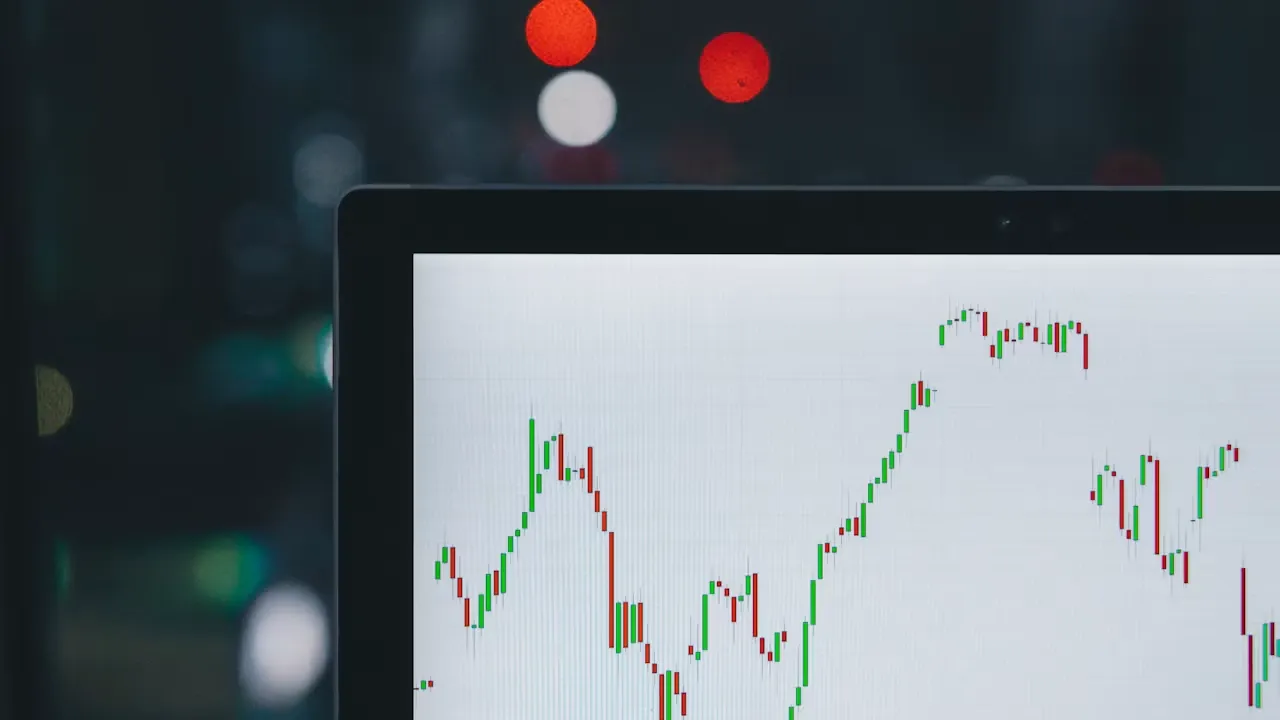
No replicated portfolio performs exactly like the original. Small differences gradually accumulate because of execution timing, transaction costs, cash balances, rebalancing frequency, and market movements. Managing tracking error is one of the primary objectives of replication.
Transaction Costs
Every portfolio adjustment generates costs — commissions, bid-ask spreads, market impact, and taxes where applicable. Frequent rebalancing may improve tracking accuracy while simultaneously reducing net returns, so professional managers balance precision against implementation costs.
Liquidity Constraints
Some securities cannot be purchased or sold efficiently. Limited liquidity can prevent investors from perfectly matching the target portfolio. Institutional portfolios containing thinly traded securities often require optimization rather than exact replication.
Portfolio Drift
Even without buying or selling assets, market movements gradually change portfolio weights. Without periodic rebalancing, the replicated portfolio may no longer resemble the original, so monitoring drift is an ongoing responsibility.
Data Availability
Successful replication depends on reliable information. Delayed disclosures, incomplete holdings, and inaccurate data can all reduce replication quality — a challenge that is particularly relevant when replicating institutional portfolios using public filings.
Data Insight: Why Tracking Error Matters
Professional investors rarely judge replication solely by comparing annual returns. Instead, one of the most closely monitored statistics is tracking error.
According to research published by BlackRock, index portfolio managers continuously seek to reduce unnecessary tracking error while balancing implementation costs such as turnover and liquidity. Similarly, Vanguard has consistently emphasized that minimizing tracking error is a key objective of index fund management because it reflects how accurately a fund follows its benchmark.
Importantly, pursuing zero tracking error is not always optimal. Attempting to eliminate every small deviation may require excessive trading, increasing transaction costs and reducing net investor returns. Professional managers therefore aim for an efficient balance: low tracking error, reasonable costs, and consistent implementation. Successful replication is measured not by perfection, but by disciplined consistency over time.
Portfolio Replication vs Copy Trading
Although portfolio replication and copy trading may appear similar, they serve different purposes. Readers who want to understand how copy trading works should distinguish trade following from portfolio construction and rebalancing.
Understanding this distinction helps investors choose the approach that best matches their objectives. Investors who prefer evaluating a ready-made systematic approach rather than rebuilding a portfolio manually can compare algorithmic trading strategies on AlgoNetwork using performance and risk evidence.
| Portfolio Replication | Copy Trading |
|---|---|
| Replicates a portfolio structure | Replicates another trader’s trades |
| Usually follows asset allocations | Usually follows trading activity |
| Often long-term focused | May involve frequent transactions |
| Rules can be predefined and automated | Depends on another trader’s decisions |
| Tracking error measures success | Trader performance measures success |

Portfolio replication reproduces an investment framework. Copy trading follows another investor’s trading activity.
Who Should Use Portfolio Replication?
Portfolio replication is not designed for one specific type of investor. It can be valuable wherever investors seek a disciplined, repeatable investment process.
Long-Term Investors
Investors building diversified portfolios over many years often benefit from systematic replication.
ETF Investors
Investors who prefer benchmark-based investing already use one of the most common forms of portfolio replication.
Financial Advisors
Advisors frequently replicate model portfolios across multiple client accounts to maintain consistent investment allocations.
Quantitative Investors
Systematic investors often automate replication using predefined allocation rules and periodic rebalancing.
Family Offices and Institutional Investors
Large portfolios frequently rely on replication techniques to maintain strategic asset allocations while controlling operational complexity.
Portfolio replication is ultimately most valuable for investors who prioritize discipline and consistency over short-term market predictions.
Best Practices for Portfolio Replication
Professional replication follows a disciplined investment process. Before deployment, confirm that the allocation and rebalancing rules have passed a structured trading strategy validation process. A practical checklist includes:
- Clearly define the target portfolio.
- Understand every major portfolio holding.
- Replicate portfolio weights — not just securities.
- Consider transaction costs before rebalancing.
- Monitor tracking error regularly.
- Review portfolio drift periodically.
- Avoid excessive trading.
- Rebalance using predefined rules instead of emotions.
Consistency often contributes more to long-term success than frequent adjustments.

Successful replication is a continuous process of monitoring, measurement, and disciplined rebalancing.
Is Portfolio Replication Worth It?
For many investors, yes. Portfolio replication offers a structured way to implement proven investment approaches without designing an entirely new portfolio. However, success depends on realistic expectations. Replication does not guarantee identical returns, cannot eliminate market risk, and cannot compensate for poor portfolio selection. It simply provides a disciplined framework for implementing an existing investment strategy.
Investors who benefit most from replication typically value diversification, prefer systematic investing, understand portfolio construction, monitor tracking error, and maintain a long-term perspective. Ultimately, portfolio replication is less about copying investments and more about consistently applying a well-defined investment process.
Final Verdict: Replicate the Process, Not Just the Portfolio
Portfolio replication has become one of the most widely used techniques in modern investing. From index funds and ETFs to institutional asset managers and algorithmic trading systems, replication allows investors to implement disciplined investment strategies at scale. Successful replication is not measured by identical holdings — it is measured by how consistently the replicated portfolio captures the objectives, risk profile, and long-term behavior of the original.
Technology has made this process faster and more efficient, but sound portfolio construction principles remain just as important as ever. Whether you are replicating a market index, a model portfolio, or an institutional investment strategy, the goal is the same: build a portfolio that follows a repeatable process rather than relying on short-term market predictions.
Frequently Asked Questions
What is portfolio replication?
Portfolio replication is the process of constructing an investment portfolio that closely matches the holdings, risk characteristics, or performance of another portfolio or benchmark.
What is the difference between portfolio replication and index investing?
Index investing focuses specifically on replicating a market benchmark, while portfolio replication refers to reproducing any investment portfolio, allocation model, or systematic strategy. All index investing is portfolio replication, but not all portfolio replication involves index investing.
How do you replicate a portfolio?
Identify the target portfolio, analyze its holdings and weights, construct a similar portfolio, rebalance periodically, and monitor tracking error over time.
How often should a replicated portfolio be rebalanced?
There is no universal schedule. Some portfolios are rebalanced monthly or quarterly, while others use threshold-based rebalancing that triggers adjustments only when weights drift beyond predefined limits. The appropriate frequency depends on the strategy, transaction costs, and desired tracking accuracy.
What is tracking error?
Tracking error measures how closely a replicated portfolio follows its target portfolio. Lower tracking error generally indicates more accurate replication.
Can retail investors replicate portfolios?
Yes. Retail investors can replicate model portfolios, ETFs, index allocations, and many publicly disclosed investment portfolios using widely available investment platforms.
Can you replicate a hedge fund portfolio?
Partially. Public filings such as SEC Form 13F allow investors to approximate many hedge fund equity holdings, although reporting delays and incomplete disclosures limit accuracy.
What is synthetic portfolio replication?
Synthetic replication uses financial derivatives — such as swaps or futures — to reproduce portfolio performance rather than directly purchasing the underlying assets.
Is portfolio replication better than copy trading?
Neither approach is universally better. Portfolio replication focuses on reproducing an investment portfolio or allocation strategy, while copy trading follows another trader’s individual trading decisions.
Can AI improve portfolio replication?
Yes. AI can assist with portfolio analysis, allocation optimization, drift detection, and rebalancing recommendations, helping investors manage replicated portfolios more efficiently while remaining subject to the same investment risks.
References
- John C. Bogle, The Little Book of Common Sense Investing
- CFA Institute — Portfolio Management Resources
- Vanguard Research Publications
- BlackRock — Index Investing Research
- Morningstar — Index Investing Research
- Cliff Asness — AQR Capital Management Publications
- U.S. Securities and Exchange Commission — Form 13F (sec.gov)
About the Author
The Algorier research team researches portfolio construction, systematic investing, algorithmic trading, quantitative portfolio management, asset allocation, and AI-assisted investment workflows. This guide references publications from the CFA Institute, Vanguard, BlackRock, the U.S. Securities and Exchange Commission (SEC), and leading institutional research on portfolio management and index investing.